

Toppan replaces plastic with paper-based trading card packaging


Key takeaways
- Toppan has developed a light-shielding paper-based pillow packaging for trading cards, achieving 98% opacity to overcome paper’s transparency.
- The solution deters “pack searching” and qualifies for Japan’s “Paper Mark” recycling symbol, as paper content exceeds 51% by weight.
- Samples are available globally from June, with mass production beginning this autumn.
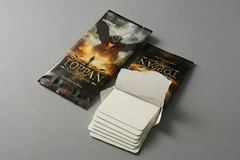
Toppan has engineered a light-shielding paper-based pillow solution to eliminate plastic use in trading cards packaging.
Previously, paper packaging was not functional for trading cards, as the cards could be seen through the paper. The Japan-based global printing and packaging provider says that its new solution has achieved 98% light-shielding, solving the visibility issue.
The light-shielding packaging is said to deter “pack searching,” where consumers attempt to identify rare cards before opening. At the same time, it aims to maintain design quality with a metallic sheen.
Toppan says its packaging design offers a high-quality finish through its equipment that minimizes the occurrence of wrinkles during pouch-making.
Packaging samples are available to trading card manufacturers globally starting in June, and mass production is set to begin this autumn.

Trading away plastic
Toppan highlights that the Japanese trading card market is expanding rapidly, driven by collaborations with industries such as apparel and hospitality.
Meanwhile, considerations about the environmental effects of packaging are resulting in new regulations, the company highlights. “This has prompted urgent calls to reduce GHG emissions, such as CO2, and accelerated the shift away from plastic. Consequently, trading card manufacturers operating globally are increasingly required to adopt eco-friendly packaging designs.”
“Leveraging its extensive expertise in paper-based packaging development and production, Toppan has selected the ideal material and developed dedicated pouch-making equipment. Through these efforts, Toppan has overcome the inherent transparency of paper, minimized wrinkling, and established a stable supply system for high-quality paper-based pillow packaging.”
The company further points out that conventional plastic trading card packaging typically combines plastic materials for structural strength and an adhesive sealant layer, which its new offering solves through the use of a paper base and a heat-seal coating layer.
Additionally, as the packaging’s paper content exceeds 51% by weight, it qualifies for the “Paper Mark” (recycling symbol for paper) in Japan, allowing companies to visually communicate their commitment to resource circulation and sustainability to consumers.
Recently, Toppan partnered with PureCycle Technologies to develop flexible films and thermoformed packaging, including a snack bar wrapper, using high-quality recycled content to address global regulatory requirements.
In India, Toppan installed a hybrid manufacturing line for producing biaxially-oriented PP film (BOPP) and biaxially-oriented PE. In Italy, the Japanese company acquired a majority stake in the BOPP film manufacturer Irplast.