



Beyond materials: Packaging technology as a tool against food waste


Key takeaways
- Industry experts highlight how F&B packaging must balance food protection with sustainability to reduce waste.
- Fiber-based and hybrid packaging solutions can extend shelf life and prevent spoilage.
- Another option is lightweighting designs to cut material use, transport emissions, and support circularity.
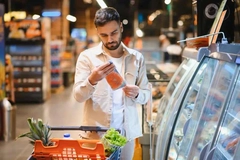
Food protection is the primary function of F&B packaging. But amid rising environmental concerns, consumers are demanding the sector design circular and safe solutions.
Every component of packaging has a part to play in protecting food and reducing waste. Conversations around barriers and coatings, paper-based, monomaterial, and recycled content solutions, are at the forefront of an industry juggling two different sustainability metrics.
As the global food waste bill continues to rise, it threatens the UN’s goal to halve global food waste by 2030. Research commissioned by Avery Dennison revealed that the economic cost of food waste across the global supply chain is forecast to reach US$540 billion by 2026.
Meanwhile, global efforts to tackle food waste are unsteady, with just 30 countries at COP 30 making commitments to tackle food loss and waste.

Packaging Insights speaks to Elopak and Stora Enso about packaging techniques that can mitigate food waste, highlighting innovations beyond packaging materials. They each stress that while reducing packaging waste is vital, technologies that reduce food waste must not be overlooked.
“Packaging materials for food products must be safe and offer reliable protection first,” says Julian Krais, head of Packaging Performance at Stora Enso.
Emilie Olderskog, global head of Sustainability at Elopak, treats functionality and sustainability as the same problem, not competing ones. “A package that fails on product protection creates waste, which undermines any sustainability gained from the material itself.”
Measuring food waste
.webp) For Elopak, fighting food waste begins at product filling with its Ultra Clean Extended machines (Image credit: Elopak).For Olderskog, the clearest measure to reduce food waste is to increase product shelf-life.
For Elopak, fighting food waste begins at product filling with its Ultra Clean Extended machines (Image credit: Elopak).For Olderskog, the clearest measure to reduce food waste is to increase product shelf-life.
“Next-generation filling machines equipped with advanced and industry-leading hygiene features can support shelf-life extension of Extended Shelf Life processed milk,” she notes.
“Longer shelf life makes chilled distribution more cost-efficient, reduces returns and write-offs from short-dated stock, and gives retailers more room to sell product before it expires. Waste that would otherwise occur at the distribution and retail stages is designed out rather than managed after the fact.”
Krais argues that several properties of packaging are critical to reduce food waste, and that highlighting one technique alone is “methodologically complicated.”
“Packaging is a critical factor in fighting food waste, and several properties contribute to that role when it comes to fiber-based products: food-safe and well-constructed materials, and barrier solutions where the end-use requires them.”
“As a materials supplier, we engineer our products to meet those properties for their intended applications.”
Functional fiber
 (1).webp) Stora Enso’s Trayforma for chilled and frozen ready meals, offers ovenability and barrier performance (Image credit: Stora Enso).Stora Enso’s fiber-based solutions package various food applications, including fresh produce, chilled and frozen ready meals, dry foods like cereals and pasta, chocolate, and confectionery.
Stora Enso’s Trayforma for chilled and frozen ready meals, offers ovenability and barrier performance (Image credit: Stora Enso).Stora Enso’s fiber-based solutions package various food applications, including fresh produce, chilled and frozen ready meals, dry foods like cereals and pasta, chocolate, and confectionery.
“Our paperboards are produced with pure, fresh fibers as the foundation. These traceable fresh fibers, stronger than recycled fibers, are suitable for direct food contact and offer excellent product protection across many end-uses,” says Krais.
One example is Stora Enso’s Trayforma for chilled and frozen ready meals, in which ovenability and barrier performance are key to product protection.
He adds: “We also offer a wide range of barrier coatings that can enhance the protective nature of paperboard to address the specific spoilage drivers of many perishable products, whether moisture, oxygen, or a combination.”
Critically, over-engineering packaging materials can create unintended costs, explains Krais, so “the right specification is the one matched to the end-use.”
Beyond the pack
For Elopak, a dairy packager, fighting food waste begins at product filling. Its Ultra Clean Extended (UCe) machines aim to reduce microbial contamination as the product enters the carton.
.webp) Olderskog says plastic reductions through lightweighting must keep products safe, usable, and compatible with existing packaging (Image credit: Elopak).“This widens the window between production and spoilage, giving dairies, distributors, and retailers a longer period before a product is at risk of becoming waste,” says Olderskog.
Olderskog says plastic reductions through lightweighting must keep products safe, usable, and compatible with existing packaging (Image credit: Elopak).“This widens the window between production and spoilage, giving dairies, distributors, and retailers a longer period before a product is at risk of becoming waste,” says Olderskog.
She notes that an increase in sterile and hygienic machines is occurring with multiple deployments of Elopak’s UCe filling machines.
Elopak’s cartons are also designed to extend shelf life. The fiber-based Pure-Pak carton protects milk from external contamination and light and provides a sterilized and sealed package.
“Liquid dairy products are sensitive to both microbial contamination and light, so it benefits most directly from the combination of ultra-clean filling and an opaque, fiber-based carton. It is also the category where shelf-life gains translate most visibly into reduced waste, because the baseline shelf life is short and the supply chain is time-pressured,” says Olderskog.
Other products also require stringent conditions to protect product quality, such as plant-based drinks and juices, where the carton protects against light and oxygen exposure.
Lightweighting as the answer?
For fiber-based solutions, both experts argue that one technique that balances food protection with circularity is lightweighting — either of the fiber or plastic components of a package.
 (1).webp) Stora Enso’s Performa Nova and Performa Lumi are lightweight designs that use fewer raw materials but still offer strength, says Krais (Image credit: Stora Enso).Olderskog tells us: “That means continuing to reduce plastic content through lightweight designs and fiber-based or hybrid closures that replace or significantly reduce conventional plastic components, while ensuring every change maintains ease of use, product safety, and compatibility with customers’ existing packaging and filling systems.”
Stora Enso’s Performa Nova and Performa Lumi are lightweight designs that use fewer raw materials but still offer strength, says Krais (Image credit: Stora Enso).Olderskog tells us: “That means continuing to reduce plastic content through lightweight designs and fiber-based or hybrid closures that replace or significantly reduce conventional plastic components, while ensuring every change maintains ease of use, product safety, and compatibility with customers’ existing packaging and filling systems.”
Krais adds that Stora Enso’s Performa Nova and Performa Lumi are lightweight designs that use fewer raw materials but still offer strength.
“This was achieved with our proprietary FiberLight Tec technology and specialized I-beam board structure. Lighter cartonboard means lighter packages and more packages per truckload, which can help reduce overall transport emissions,” he explains.
“Paperboard that meets performance and food safety expectations ultimately helps meet sustainability goals when it comes to avoidable emissions associated with food waste, as the food product itself typically forms the large majority of a packaged product’s carbon footprint.”