
Soft drink packaging industry balances sustainability, efficiency & convenience


Key takeaways
- Soft drink packaging is now focused on sustainability, efficiency, and consumer convenience, including lightweight PET, recyclable materials, and tethered closures.
- Advanced technologies such as ErgoBloc Line, Plasmax PET barriers, and aseptic e-beam lines improve operational efficiency, reduce waste, and extend shelf life.
- Circular economy initiatives, like reverse vending machines and aluminum packaging, support recycling and regulatory compliance.
Soft drink packaging is evolving in response to changing consumer expectations, regulatory pressure, and rising material costs. Packaging Insights discusses these increasingly relevant factors with Amcor, Trivium Packaging, and SLMG Beverages, the Coca-Cola distributor in India.
“Sustainability is the most consequential shift underway,” Paritosh Ladhani, managing director at SLMG Beverages, tells us. “Across the industry, companies are moving toward lightweight PET, recyclable materials, and packaging formats designed for a circular economy.”
“The adoption of recycled PET and monomaterial packaging is accelerating, driven by both consumer expectations and the need to reduce emissions and logistics costs.”
According to Uli Kobert, product line director at Amcor, lightweighting and the move toward monomaterial solutions is driven in part by the upcoming EU’s Packaging and Packaging Waste Regulations (PPWR).
“Major brands are fully aligned with these shifts, and innovation is focused on bespoke closure designs and standard product ranges. At the same time, fundamental considerations such as consumer convenience, functionality, and tamper evidence remain essential and continue to underpin product development.”
Ladhani adds that consumers are further seeking packaging that is portable, durable, and visually compelling, while preserving freshness and carbonation effectively.
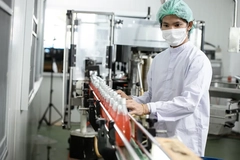
“On the manufacturing side, there is growing interest in smarter, more integrated production. High-speed lines, digital monitoring, and precision dosing are helping companies reduce waste and use resources such as water and energy more responsibly.”
Meanwhile, Andrew Thompson, business development manager for Aerosol & Beverage at Trivium Packaging, says: “As companies listen to consumer sentiment, not only are ingredients being looked at more closely, but packaging solutions are also being considered with a healthier, more sustainable mindset. Metal is an ideal packaging solution for recyclability and circularity while properly supporting beverage properties.”
Soft drink pack innovation
Ladhani explains that SLMG Beverages’ packaging investments are guided by three priorities: product integrity, operational efficiency, and long-term sustainability.
.webp) Paritosh Ladhani, managing director at SLMG Beverages.“A technology we have deployed with strong results is ErgoBloc Line, an integrated system that synchronizes blowing, labeling, filling, and capping within a single automated block. This reduces the number of touchpoints on the line, lowers energy consumption, and improves overall output consistency,” he details.
Paritosh Ladhani, managing director at SLMG Beverages.“A technology we have deployed with strong results is ErgoBloc Line, an integrated system that synchronizes blowing, labeling, filling, and capping within a single automated block. This reduces the number of touchpoints on the line, lowers energy consumption, and improves overall output consistency,” he details.
SLMG Beverages also works with Plasmax technology, which applies an ultra-thin silicon oxide barrier inside PET bottles. This is said to enhance oxygen and CO2 protection and extend shelf life while reducing plastic usage and maintaining the full recyclability of the bottle.
“On the aseptic side, the Tetra E3 line uses e-beam sterility technology to support safe, hygienic beverage packaging at higher production volumes with reduced waste and environmental footprint.”
The most recent major shift across the soft drinks packaging industry, according to Amcor’s Kobert, is the move to tethered closures and the shifting market demand across neck finishes.
“More recently, we’ve also launched a new handle for PET containers. It is designed to fit bottles with a 38 mm neck and is suitable for containers of up to 10 L, a format that is seeing growing demand from consumers.”
Thompson highlights that Trivium Packaging’s aluminum bottles are infinitely recyclable, adding that the global recycling rates for such packaging are high, with many countries and regions boasting well-established recycling infrastructure.
“Our threaded bottles offer on-the-go convenience and are reclosable. They will not break like glass and are sturdier than plastic. We offer a variety of shapes and sizes with high-definition graphic solutions that print directly to the bottle. Our most recent addition to the product line was our 1 L bottle.”
Latest tech developments
Amcor’s Kobert argues that machinery and software developments are playing an important role in the evolution of packaging for soft drinks.
“But the greatest impact still comes from people, specifically the engineering expertise within our R&D teams, who drive those marginal gains, and our technical support staff who provide invaluable support on the filling lines,” he asserts.
“Equally important is close collaboration with customers. Sharing knowledge and working together to find smart solutions are key to delivering successful outcomes, beyond the benefits that technology alone can provide.”
Additionally, Ladhani of SLMG Beverages says advanced packaging systems can meaningfully reduce energy consumption, water use, and product waste. “Our inline blending technology, for instance, delivers high mixing precision while requiring substantially less energy and water during cleaning cycles.”
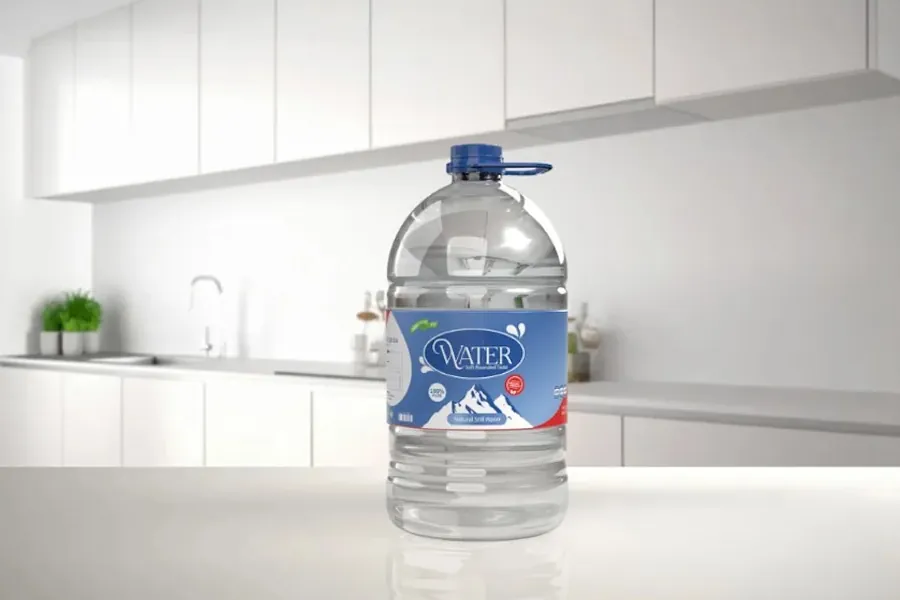 Amcor's 38 mm carry handle handle for PET containers.“Integrated systems like ErgoBloc Line further improve efficiency by consolidating multiple production stages into a single, automated process.”
Beyond the factory, technology supports sustainability across the product lifecycle, he says.
“Reverse vending systems help establish closed-loop recycling by making it convenient for consumers to return used bottles. In water management, technologies such as ultrafiltration, reverse osmosis, water recovery systems, and mechanical vapor recompression evaporators are improving water-use efficiency while supporting broader replenishment efforts.”
Challenges and opportunities
The three experts highlight rising prices, environmental sustainability, and consumers’ health concerns about soft drinks sold in plastic bottles as major challenges in the space, as well as opportunities to drive change.
Trivium Packaging’s Thompson comments: “Rising costs are affecting the prices of finished goods for consumers, and health studies are shaping consumer preferences for the products they consume. Both, when combined, create a difficult market, forcing brands and consumers to make difficult decisions about where to spend their money.”
More optimistically, SLMG Beverages’ Ladhani says: “The clearest opportunity lies in building packaging systems that scale sustainably. Consumer awareness around recycling and responsible disposal is growing, and that creates genuine momentum for circular packaging models.”
“At SLMG, we are contributing to this through reverse vending machines (RVM), which incentivize consumers to return used plastic bottles for recycling, and other recycling initiatives. We currently have over 190 RVMs deployed across railway stations, tourist destinations, and religious sites, helping normalize responsible disposal behavior at a meaningful scale.”
“The broader challenge for the industry is ensuring that sustainability, affordability, and operational performance advance together rather than in isolation,” adds Ladhani. “Packaging must remain commercially viable while meeting rising environmental and regulatory expectations. Expanding recycling infrastructure, including waste segregation and collection networks, will also be essential to fully realize the potential of circular packaging systems.”
The future of soft drink packs
 Trivium Packaging's aluminum solution for the soft drinks industry.Ladhani foresees three forces shaping the next phase of soft drink packaging: sustainability, efficiency, and circularity.
“Greater adoption of recyclable PET, aseptic solutions, and lightweight formats will continue, alongside technologies that improve shelf life without compromising end-of-life recyclability.
Production lines will become more integrated, automated, and data-driven. Real-time monitoring and precision manufacturing will grow in importance as companies work to reduce their environmental footprint while maintaining consistent output quality.”
At the consumer level, he expects recycling participation to become more deliberate.
Kobert predicts that the optimization of recycled materials for soft drink bottling will continue to evolve. “Through Amcor’s CleanStream technology, we already have recycled PP approved for contact-sensitive applications.”
“Looking ahead, there is strong potential to achieve similar outcomes for other materials, such as high-density PE.”
“Regulation continues to evolve,” he adds. “We are currently awaiting the outcome of discussions around refillable targets as defined by PPWR, which could influence bottle types and neck finishes, and therefore impact the closures recommended to customers.”
“Neck wear on refillable bottles exists. Our experience shows that two-piece closures (PP-shell and plastic liner) offer the best sealing performance. Closure design must be tailored to the product itself, as carbonated drinks require stronger closures to maintain a secure seal under higher internal pressure.”
Ladhani concludes: “Soft drink packaging has evolved from a functional requirement to a measure of how responsibly a company chooses to operate. At SLMG Beverages, we see sustainable growth as the result of combining high-performance manufacturing with genuine environmental accountability.”