

Roll of transparent nanoplex film with branding text highlighting high-voltage innovation for EVs, grid, and fusion applications by Peak
Home
Videos
Fi Europe 2025: Food...

Fi Europe 2025: FoodChain ID highlights EU–US packaging compliance gaps and AI-driven R&D

22 Dec 2025 | Foodchain ID

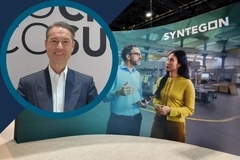
At Fi Europe 2025, experts from FoodChain ID shared insights into the evolving intersection of packaging compliance and digital innovation. We spoke to Stuart Held, the company’s VP of Sales and Robert Nieuwerf, FoodChain ID’s strategic account manager, about the key differences between EU and US packaging regulations. We also discussed how FoodChain ID’s Mentor AI R&D platform transforms and material development.
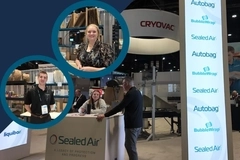

Hello everybody, this is Brad Nichols, and we are here live at Food Ingredients Europe in Paris, France, and today we are speaking with Stuart Hell, the vice president of sales at Food Chain ID.

How are you today, Stuart?

Very , thank you.

Great to be here.

And we also have with us Robert Nof, the strategic account manager at Food Chain ID.

How are you today, Robert?

I'm fine, very much.

All right, as long as I have you both here, I've got some questions.

I'd love to just jump right in.

All right, Stuart, I know that.

Can you tell us about what are some of the most significant differences between EU and US packaging compliance, particularly around chemical composition, recyclability that brands often misunderstand or overlook?

That's a great question.

So, the biggest misconception that we find almost everywhere when we're talking to both food brands and food packaging companies is an assumption that Europe and the US are largely the same in terms of the composition.

And the raw materials that can be used in packaging materials considering food, that's often a very big mistake.

They are actually very, very different.

The European Union is very, very strict in terms of the type of chemicals that are allowed to go into packaging.

Their pace is extremely fast.

The regulations change weekly, if not daily.

It's really, really challenging for both the food brands and the packaging companies to.

Keep on top of those changes.

The US conversely, has very recently deregulated from a federal level of packaging rules and regulations and now moved everything over to the state level.

So what was compliant everywhere in the US is now radically different.

You can be compliant in Maine.

You can Compliant in Massachusetts, you are unlikely to be compliant in California.

This creates significant headaches.

It's increasingly challenging to keep up with these requirements on a weekly, daily and monthly basis.

And this is where an organization like Food Chain I can really help.

We are out there in the world.

We're talking to these regulated bodies.

We are understanding what is permissible.

And what isn't, we're putting that into our tools and our expertise are aware of these changes, and then we are available to provide accurate real-time information to ensure and to give companies the confidence that the packaging they're sending out to the world is compliant, won't be returned, won't be rejected, won't require a recall, which can be incredibly expensive.

Incredibly disrupt.

That's incredible in itself.

How are shifting regulations, which you just kind of missed, especially around things like bans and escalating recyclability standards, also influencing packaging strategy for global companies that are operating in both regions?

That's another great question, and those regulations used to be a very technical.

You know, an understanding, you know, for the food brands and the packaging companies.

But now that's coming more and more mainstream.

People may be aware of this buzzword now, forever chemicals.

These are what PA chemicals are.

These are, these are typically barriers that are used in all sorts of things in clothing, in manufacturing processes.

They're specifically used in food packaging to, try and The packaging waterproof and prevent outside contaminants coming into the packaging equally and everyone in the industry will be aware of this, it is a fact that there is migration modeling.

There is migration from food packaging into the food in very, very small micro levels, and you shouldn't be alarmed over that.

But increasingly over time, the more and more exposed.

You are to these chemicals, the longer they remain in your body, and we are now finding out that these things long term can be harmful.

So food brands and packaging companies likewise driven by consumer expectation are now becoming more and more conscientious, more and more aware of these concerns being driven by the public.

So we are taking these things into much greater consideration.

There are tens and tens of thousands of them.

So if you're making a claim as a food brand or a packaging company that your products are a recycled or B PAT free, you kind of have to prove that.

So you have to know what all these chemicals are.

They're emerging every day as new discoveries.

Again, that's where Food chain ID can help.

We work hard out in the field to be aware of all of these.

Chemicals and we are providing real-time accurate data and consultancy services again so that both brands and packaging companies can be assured that not only are they meeting their regulatory obligations, but the claims they are making about the composition of their packaging are true and accurate, giving consumers the trust that they want from their food suppliers.

Thank you so much.

Moving over to a different topic, Robert, can you tell us about the the mentor AI solution the Food chain ID has and how does it support R&D teams in sort of accelerating formulation, compliance checking, material selection, and what problems does it solve the traditional tools cannot?

So basically what our R&D department currently has is that they have a day to day obligation to be more compliant.

Regulations changed again in the US go from a state or federal level to a state level.

It's really Really hard to keep up with all these levels and you don't know if your food is actually being bought in Utah and then shipped over to California, which is then again going to meet those regulations.

So being compliant all over these states is one of the big topics, but also compliant all over the world.

So that's one of the topics out there.

If you look at how mentor can support, so mentor is used as a AI tool within the R&D space which will help you combine all the information that's within the company to actually get you ahead on any of the post process reviews that you have on your R&D.

So if you're trying to get a new product in the market, you're going to have that R&D.

Check you've got to have that sensory check.

You've got to have the machine checked on the back end.

There's a lot of knowledge that's there already which you can move forward already, get the compliance, get that R&D check already done before you do all the other steps.

So lower recycle on the R&D process and therefore lower lower cost and faster go to market.

What types of companies or R&D workflows would benefit most from Minor, and how do you see AI reshaping packaging and materials innovation over the next few years?

So the types of companies that benefit the most are the companies that either mix substances, so anything that is mixed and that has some type of processing behind it.

That can be, can do, mentally, that's, that's the main topic that we're focusing on.

It doesn't mean, flavor House can't do it because flavors are subsidy in itself.

And then that flows into food processing in a later stage.

So how would packaging, help on that?

Packaging in itself is a substance.

It's a set of substances.

There's a lot of knowledge of of those substances within the packaging, processing industry.

So what you could do is just have the same mentor AI go for all that knowledge and while you're formulating a new package, have that knowledge.

Help you on formulating better, healthier or sustainability, package on the back end.

Gentlemen, thank you both.

I appreciate you talking to us today.

Hope you have a great rest of the show.

We look forward to hearing a lot more of the food chain idea in the future.

More videos

Image