
- Industry news
Industry news
- Category news
Category news
- Reports
- Key trends
- Multimedia
- Journal
- Events
- Suppliers
- Home
- Industry news
Industry news
- Category news
Category news
- Reports
- Key trends
- Multimedia
- Events
- Suppliers
Packaging Innovations 2025: EP Group on addressing EPR with new product launches
07 Mar 2025 | EP Group
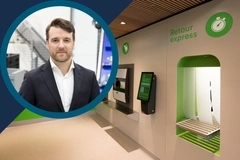
Packaging Innovations 2025 in the UK chose EP Group’s paper-based RePapaPac as the official visitor bag. We speak to Simon McMahon, EP Group’s head of marketing, about the bag’s low-carbon feature. We also discuss how the company’s solutions are addressing the UK’s EPR regulation.
I'm reporting for Packaging Insights at Packaging Innovations in the UK.
I'm at the EP Group booth with Simon McMahon, the head of marketing at EP Group.
Hi Simon.
Hi there.
Simon, Packaging Innovations has chosen your Repapa pack bag as the official visitor bag.
Can you introduce the bag and its features to us, please?
Yeah, so Repapa pack is the first truly reusable bag because of the way that it's made, the way that the material is put together, it's got much better tensile strength than most papers.
It's already been.
Become iconic on the high street through M&S and through working with Morrison's and through customers with customers in Europe so we, we developed this product and we were really, Really focused on making sure that it wasn't just us saying that this was great, that, you know, we had that third party verification, so we've worked with SGS to test the weight capacity up to 40 kg, although we say 16 for safety reasons, that's 40 kg extremely heavy, and we've done live cycle analysis on it as , which gives it its low carbon footprint.
Now talking a bit more about LCAs and the bag's sustainability features, can you elaborate more on the low carbon footprint that the bag has?
Yeah, so.
It's because of the way that the the bag is used as a reusable product with up to 50 reuses, that means that obviously that carbon footprint is immediately gonna go, gonna go down when we pair that with the material itself, the, the, the material is is.
Developed where we're using certain fibers, where we're using virgin gins to recycled and making the decisions there, we've ultimately again had it verified and tested to a low carbon footprint versus other paper carriers, not just versus plastic.
So where paper has at points been challenged on the carbon footprint when replacing, say, plastic with paper in, in certain products, we have instead, you know, we've made sure that, that that is not the case with, with Repa.
Mhm.
And Simon, can you tell us how EP Group's solutions are addressing the UK's incoming EPR regulation?
With EPR what we're trying to do is guide customers through, you know, our retail customers, our food service customers, we're we're trying to guide them through, you know, they're looking to us to be knowledgeable in this area and we've set.
Departments within the business that are dedicated to making sure that they are on top and involved in the conversation where we're linking closely with the Food Service Packaging Association where we're linking closely with and reaching out to them to make sure that we're having the conversations.
So that we're fully clued up and we can then advise our customers because, you know, for the large retailers, this is a big, this is a big impact er in in some of the areas so we're working with them, we've always had a focus on collaboration and innovation versus sustainability and then ultimately, Again, you know, what's forefront of our customers' mind is, is their customers, you know, making things easy and convenient for them.
We can't be making decisions and changing things if we introduce things like sustainability.
Reuse, just changes in behavior, it needs to work for the end consumer as.
So yeah, we're, we're being heavily relied on to be a source of that information and a guiding voice in that dialogue.
Perfect, nice.
And what can you share regarding EP's latest packaging product launches?
We've got quite a few products that are in development, products that have been recently released, products that we're trialing with customers, and again, really focused on sustainability, but like I said before, the, the sustainability really needs to be a benefit in terms of usage and in terms of convenience for, for the end users as .
What we, what we do our absolute best with our customers is, is, is find the right balance, you know, we're not going to make rash decisions and we, and we try and move them away from rash decisions in, in trying out new materials or processes if it's going to potentially become difficult for their customers, so a lot of our innovations are focused on that, there's an absolute massive growth in food delivery, which we've got a number of innovations there and that's both on, Kind of takeaway food and, and you know delivered meals and also groceries as , again working with new materials, working with reused concepts those kind of things and, and that's I think that's where EP really are, are kind of leading the way.
Now I've got one final question for you.
What are the key trends you're expecting to see here packaging innovations over the coming two days?
Sustainability is top of everyone's list.
It has been for quite some time, and the EP group approach is sustainability comes first.
We all need to reduce waste, we all need to reduce our carbon footprints, retailers are under that pressure, and you know, they want to be encouraging end users to do the same.
There's a number of things going on at the moment in terms of legislations, as, as we mentioned EPR, there's lots of changes in terms of, you know, collection rates and recycling rates across the country, and so yeah, there, there's a a real focus on sustainability again.
Everything that is talked about, everything that is developed needs to be done on a, on a collaboration basis, and again, that's where we get leaned on by our customers an awful lot, we get, we get asked what is the right solution, but we'll work then, we'll work then very closely with the retailer to go, OK, the right solution isn't just say.
The most reusable or the most recyclable or you know we have to explore all those options and I think that's where a lot of the conversation is going to be over the next few days is around what are the right sustainable solutions for the end consumer.
Thanks for speaking to Packaging Insight, Simon.
Thank you.