
Innomost turns birch bark waste into bio-based packaging barrier coating


Key takeaways
- Innomost has developed a bio-based barrier coating from upcycled Nordic birch bark for food, dried goods, and non-food packaging.
- Suberinno Suberin provides moisture, grease, along with oxygen protection and can be used alone or combined with other coating materials.
- The Finnish company currently produces the material in Kokkola and plans to establish an industrial-scale plant within two to three years.
 (Image credit: Innomost).
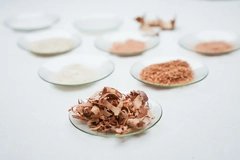
Innomost, a Finland-based biomaterials company, has developed a birch tree bark-derived barrier for food packaging, dried goods, and non-food packaging applications.
The Suberinno Suberin, derived from upcycled Nordic birch bark, offers moisture and oxygen barrier performance, providing an alternative to conventional fossil-based barriers and coatings.
“Replacing fossil-based barrier materials requires more than renewable raw materials. The coating must provide the functionality required by the packaging application and work with different substrates and formulation systems,” says Dr. Sami Selkälä, founder and chief technical officer at Innomost.
The material is currently produced at its facility in Kokkola, Finland. Innomost aims to scale production through an industrial plant within the next two to three years.

“Naturally occurring” material
Innomost explains that Suberin is a naturally occurring protective material found in plant cell walls. Its function in birch bark is to protect the tree from moisture, oils, and environmental stress.
The barrier coating boasts moisture and grease resistance, as well as hydrophobic properties, adhesion, and coating durability. Moreover, it can be used on its own or combined with other materials.
“This versatility allows coating developers, paper and board manufacturers, and converters to adjust film formation, barrier performance, and processing properties according to the substrate and intended application,” explains Innomost.
Scaling bio-based barriers
As demand for sustainable alternatives to fossil-based polymers increases, brands are turning toward bio-based solutions. In food packaging applications, it is especially important that bio-based barrier coatings protect the product to the same efficacy as fossil-based coatings.
“Suberinno Suberin is particularly interesting because it can contribute to coating formulations with moisture, grease, and oxygen-barrier properties in the same material. It can be used as a principal functional component in selected systems or combined with other coating materials to achieve the required performance,” says Niko Mellanen, chief science officer at Innomost.
In bio-based regulatory developments, the Circular Bio-based Europe Joint Undertaking expects several bio-based material projects it funds to achieve “widespread” market adoption over the coming years. However, new research found that some bio-based packaging and tableware contain potentially harmful chemicals that can move into the food they touch.
Innovations in the foodservice space are capitalizing on materials such as seaweed, pea proteins, and minerals, and are increasingly being recognized by regulations.
Earlier this year, Henkel Adhesive Technologies collaborated with Sekab to accelerate the transition from fossil-based to bio-based raw materials in adhesive production. Similarly, Notpla partnered with Dutch quick-service restaurant Kwalitaria to advance its seaweed-based coating, suitable for trays and containers.