



Interpack China 2026: Packaging Strategy Lab on EU PPWR compliance for Asian suppliers
Key takeaways
- Packaging Strategy Lab says that Asian packaging suppliers need to prioritize recyclability, recycled content documentation, and material testing to meet evolving EU PPWR requirements.
- Packaging Strategy Lab highlights opportunities for fiber-based materials, monomaterial designs, and refillable packaging.
- European packaging companies face strong competition in China, where local suppliers offer lower costs, rapid innovation, and efficient production.

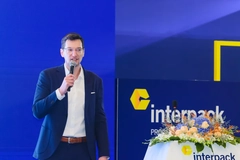 Felix Gass, founder and managing director at Packaging Strategy Lab.
Some suppliers in East Asia have made detailed test reports, material assessments, and clear plans to meet European packaging regulations. However, those with less business in Europe are still working out where to start, says Felix Gass, founder and managing director at Packaging Strategy Lab, a packaging strategy bureau based in Germany.
At Interpack China 2026 in Shanghai, Gass discussed the steps Asian brands and packaging suppliers need to take to comply with the EU’s Packaging and Packaging Waste Regulation (PPWR).
Packaging Insights sits down with Gass to explore the compliance challenges, opportunities for sustainable packaging innovation, and intensifying competition between Asian and European suppliers.
What practical steps should Asian packaging suppliers take to prepare for PPWR compliance?

Gass: The first PPWR obligations started applying in August 2026, with further requirements taking effect over the coming years. Some brands in China are still relying on their EU partners to tell them what to do. I encourage them to propose changes and bring samples, test results, and specific questions to the discussion.
Suppliers need to connect this timeline to every packaging development project. A pack that meets today’s requirements may need changes before a customer’s planned launch. Check which rules will apply when the packaging enters the EU market, then build those requirements into material choices, design, and testing from the start.
At Cosmopack Asia 2026 in Hong Kong SAR, I saw metal-free pumps, monomaterial designs, PET and PP alternatives to styrene-acrylonitrile, PE terephthalate glycol-modified, and heavy, glass-like solutions for cosmetic packaging. The complete pack needs assessment, including its closure, label, and decoration. Changing the main polymer alone does not establish recyclability.
The priorities would be improving recyclability, documenting recycled content, and reducing unnecessary weight and volume. Heavily decorated cosmetic packs deserve particular attention. Test proposed changes for product protection and filling-line performance, alongside appearance and cost.
What are the key growth prospects and challenges currently facing Asian brands and suppliers?
Gass: From 1 January 2030, PPWR restricts single-use plastic grouped packaging designed to encourage consumers to buy multiple products. Grouping necessary for handling is excluded.
The regulation also restricts hotel toiletry packs intended for one booking and discarded before the next guest, regardless of material. These changes open opportunities such as paperboard multipacks, refillable dispensers, and new filling processes.
Across PPWR, suppliers can identify further opportunities for new materials, packaging designs, and production methods.
The challenge is turning promising developments into packaging that customers approve of.
At Interpack China 2026, suppliers showed me increasingly sophisticated fiber-based packaging at lower costs. High-performance paper and wood foam were among the alternatives proposed for protective foam packaging. These materials still need testing under the customer’s actual storage and transport conditions.
Suppliers are already promoting PPWR readiness. When packaging is described as recyclable, suppliers need to specify which components were assessed, the methods used, and the intended recycling routes. For packaging containing recycled plastic, suppliers should be able to document the source and quantity of the recycled material. Such claims require specific answers.
.jpg) Chinese businesses seeking to export their products are taking steps to ensure regulatory compliance throughout their supply chains (Image credit: Interpack China).Information from upstream suppliers is often incomplete. For example, a converter may know the main material but lack data on a coating, adhesive, or purchased component. Those gaps can delay approval.
Many suppliers are looking for EU partners to test their designs. Agreeing on performance requirements, acceptable cost, and trials early reduces the risk of developing a pack the customer cannot use.
As some detailed PPWR rules are still being developed, companies should distinguish changes they can make now from investments that depend on final assessment methods or technical criteria. Customer trials can reduce uncertainty while regulatory work continues.
What information must Asian suppliers provide over declarations of conformity and supporting packaging data?
Gass: Importers must check that the manufacturer has assessed conformity and prepared the required technical documents. They must retain the declaration and make the supporting technical documents available to authorities on request. This gives European customers a clear reason to ask suppliers for detailed information.
The company holding the manufacturer role under PPWR is responsible for the declaration. An Asian supplier may hold that role, depending on the supply arrangement. Component suppliers provide information for the assessment; however, they do not automatically sign the declaration for the complete pack.
It is key to provide material specifications, component weights, dimensions, and a clear identification of the pack supplied. Companies should support compliance claims with supplier declarations, laboratory results, and relevant calculations or analyses.
Substance checks must address regulated heavy metals and, for food-contact packaging, applicable PFAS limits. The documents needed depend on the pack and the requirements that apply.
It is important to keep the records matched to production. A test report for one material does not automatically cover a substitute. It requires suppliers to report changes before using new materials or components, then check whether previous tests and conclusions remain valid.
Packaging Strategy Lab works with PackR8 to address this practical problem. The platform connects specifications, supplier records, and compliance documents to the packaging supplied. Someone still needs to check the information and follow up on missing data. Customers need confidence that the pack delivered next month still matches the pack they approved.
What opportunities or barriers do you foresee for European packaging brands expanding into Asian markets?
Gass: I would be cautious about entering China. It has always been a demanding market, and I see more barriers than broad opportunities for European packaging companies. Local suppliers are highly competitive on cost, efficient in production, and fast in development. Establishing a position can be expensive.
A European company needs a strong reason for customers to choose it. It needs to provide a compelling value proposition that differentiates its offerings from those of local suppliers in terms of performance or technology innovation. European origin alone is not a strong proposition.
I would pursue entry only with a specific customer need, a demonstrable advantage, and a realistic path to profit. Local partnerships or joint development may generate greater potential than building a new operation; such approaches include the costs of winning customers, providing local support, and setting up production in the business case.
I expect China and the wider region to remain a powerhouse for packaging innovation, speed and change. European companies should take that seriously as a source of competition, new materials, and potential partners.