


Software advances unlock digital transformation in fiber-based packaging


Key takeaways
- Aicomp outlines how ERP and configuration software can improve precision, reduce waste, and enhance sustainability across fiber-based packaging production.
- Machine learning and cloud-enabled tools such as VCPowerPack, IQ.catalyst, and EcoAgent can support automation and cost estimation.
- Waste optimization, data quality, and organizational readiness remain key challenges, as the sector shifts toward digital, integrated, and predictive operations.

The fiber-based packaging industry is positioned for “significant” digital advancement, according to Aicomp, a global software and consulting company specializing in Enterprise Resource Planning (ERP) and configuration software for the industry.
Packaging Insights sits down with Patric Klatte, head of marketing at Aicomp, to discuss how manufacturers across corrugated, folding carton, and board and paper production can implement comprehensive ERP solutions to achieve “measurable improvements in quote processing time, configuration accuracy, and material utilization.”
“Technology enables fiber packaging manufacturers to operate at levels of precision and efficiency that manual processes cannot achieve,” Klatte asserts.
Aicomp has specialized in these software domains for over two decades, working exclusively with packaging manufacturers to understand their specific challenges. Klatte argues that this focus has enabled the company to develop solutions “with breadth and depth.”

“VCPowerPack currently represents the most comprehensive packaging-specific configuration platform available for Systems Applications and Products (SAP) environments, while IQ.catalyst brings machine learning capabilities to production optimization.”
He shares more about the current opportunities and challenges in the software for paper packaging space, including waste management, cloud infrastructure, environmental sustainability expectations, and data quality.
“We’re actively expanding capabilities through internal development, strategic partnerships, and customer collaboration. Recent advances in waste optimization, predictive analytics, and sustainability integration demonstrate this commitment to ongoing innovation.”
ERP and configuration opportunities
Klatte points to waste optimization as a “substantial environmental and financial opportunity” for producers utilising ERP and configuration software.
 Patric Klatte, head of marketing at Aicomp.“Advanced algorithms can optimize cutting patterns, minimize trim waste, and improve material yield. When integrated with real-time production data, these systems continuously refine their recommendations based on actual performance,” he explains.
Machine learning applications are maturing across areas, such as cost estimation with limited input data, production routing optimization, quality prediction, and demand forecasting, he highlights. “These capabilities enable faster, more accurate decision-making throughout operations.”
“Integrated solutions that address end-to-end manufacturing challenges deliver value that isolated point solutions cannot achieve. By connecting configuration, production planning, waste optimization, and quality management, manufacturers gain comprehensive visibility and control.”
Meanwhile, sustainability differentiation can create competitive advantages, according to the expert. For example, integration frameworks are said to enable manufacturers to quantify environmental performance throughout the production process, including during material selection, waste reduction, energy efficiency, and to then communicate these benefits to customers.
“Cloud infrastructure enables smaller manufacturers to access sophisticated capabilities without extensive on-premise IT infrastructure, democratizing advanced functionality across the industry.”
Challenges specific to fiber
Fiber packaging involves substantial technical complexity, involving material science considerations such as fiber directions and board grades, Klatte points out.
This complexity further extends to production constraints like machine capabilities and logistics optimization. “Effective software solutions require deep domain knowledge encoded in the system logic,” he explains.
“Data quality remains foundational. Advanced analytics and machine learning capabilities depend on accurate historical data, reliable production measurements, and consistent data capture processes.”
The organizational readiness of producers can vary across the fiber-based packaging industry, according to Klatte. He notes that while technology capabilities are advancing rapidly, successful implementation will require process standardization, data discipline, and workforce development.
He says that Aicomp can support its clients in dealing with the highlighted challenges.
Software solutions
Automated configuration and validation eliminate non-manufacturable quotes (price proposals) and accelerate customer response.
 Aicomp integration frameworks enable manufacturers to quantify environmental performance during production.“When sales representatives enter customer specifications, advanced configuration engines validate against production capabilities, material availability, and machine constraints in real-time,” explains Klatte.
He further elaborates how Aicomp’s VCPowerPack can assist producers with costs and planning. “VCPowerPack calculates material consumption, production routing, and costs based on current parameters.”
“For board and paper manufacturers, this includes recipe management for pulp production with utility tracking. For corrugated and folding carton producers, this encompasses multi-stage conversion processes with precise area calculations and waste estimates.”
Waste management can be further improved through the use of advanced algorithms that identify patterns, optimize nesting configurations, and streamline production sequences to minimize material waste.
“These calculations consider board grain direction, machine constraints, and customer requirements simultaneously — solving optimization problems that would be impractical manually,” according to Klatte.
Another advantage of software adoption for paper producers is the automation of master data, which can eliminate manual data entry and associated errors. “This automation becomes increasingly valuable as product complexity grows.”
Environmental sustainability optimization
Klatte highlights Aicomp’s EcoAgent integration framework as a tool that can assist fiber-based packaging producers in meeting their sustainability goals.
“Our EcoAgent connects product configuration data with specialized carbon footprint and recyclability analysis tools. This enables manufacturers to quantify and communicate environmental benefits during the sales process.”
Future versions of the EcoAgen will automatically evaluate material alternatives and production methods to optimize environmental performance alongside cost and quality objectives.
He adds that integration frameworks also enable real-time calculation of other environmental metrics during configuration, such as footprint, recycled content, and recyclability.
“This transforms sustainability from a retrospective calculation to a design-time decision factor. Waste reduction through optimized calculations directly supports environmental objectives.”
“Additionally, our waste optimization capabilities help reduce material consumption through precise calculations and production planning, directly supporting sustainability objectives.”
He adds that next-generation algorithms will incorporate real-time production feedback, learning from actual cutting results to continuously refine optimization models. “This closed-loop approach will further improve material utilization beyond current capabilities.”
The future of fiber-based
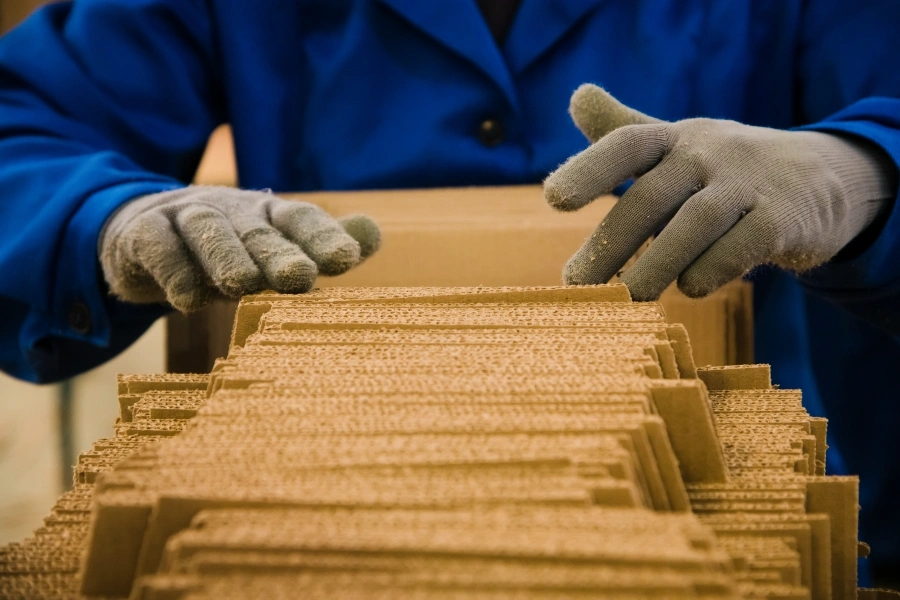 Successful implementation of tech in fiber packaging require process standardization, data discipline, and workforce development.The fiber-based packaging sector is entering an acceleration phase for digital transformation, Klatte asserts.
Once again pointing to the opportunities present in enhanced machine learning, he explains: “We’re expanding IQ.catalyst’s applications to encompass quality prediction, demand forecasting, and energy optimization.”
“Future versions will integrate multiple data streams — production measurements, material properties, market signals — to provide comprehensive manufacturing intelligence.”
“Looking forward, we’re particularly focused on democratizing advanced capabilities,” he continues.
“While large enterprises have resources to implement comprehensive customized systems, we’re working to bring waste optimization, predictive analytics, and sustainability integration to mid-market manufacturers.”
He argues that the future of the fiber packaging industry is digital, sustainable, and data-driven. “Aicomp’s role is providing the computational infrastructure that enables manufacturers to compete effectively in this evolving landscape.”
The expert reminds that the transition from reactive to predictive operations, from isolated systems to integrated platforms, and from material-focused sustainability to comprehensive resource optimization are not distant possibilities.
“They’re happening now, with manufacturers leading this transformation, achieving measurable competitive advantage.”
“Our focus remains on what we do best: solving the computational challenges unique to fiber-based packaging.”
By enabling manufacturers to configure complex products, optimizing material utilization, and quantifying sustainability, Aicomp can support producers in an “increasingly competitive and environmentally conscious” marketplace.