

Aldi and Arla trial Polytag’s UV tagging to track milk bottle recycling


Key takeaways
- Aldi and Arla are piloting Polytag’s UV-tagging technology to track milk bottle labels through the recycling system and collect real-time packaging data.
- Sun Chemical’s food-safe fluorescent ink is printed onto labels by Saica Flex using standard production methods.
- Data captured at recycling facilities will help the companies assess recycling performance and measure sustainability progress.
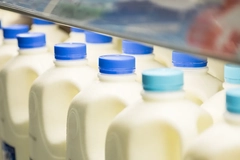
UK supermarket Aldi and dairy cooperative Arla have collaborated with recycling technology platform Polytag on an operational pilot to track milk bottle packaging through the recycling process using UV-tagging technology. This project adopts Sun Chemical’s specially developed ink on wrap-around labels to provide comprehensive recycling data.
Built on previous collaborations, the pilot aims to enhance packaging traceability and gain a better understanding of how milk bottle packaging moves through the recycling system. The labels, printed by Saica Flex, are designed to support real-time tracking of packaging as it moves through the recycling stream, offering visibility into the recycling rates and journey of dairy packaging.

Stefaan D’hoore, director of Business Development, Specialty Ink, and Coatings at Sun Chemical, says: “This next phase of the collaboration showcases Sun Chemical’s proprietary fluorescent ink technology for wrap-around labels. The ink has been tested against Recyclass’s Washing Quick Test Procedures and the European PET Bottle Platform Quicktest QT 507 with good results.”
“The ink has been approved for use on labels designed to be optimally detected by Polytag’s ink-agnostic detection units, helping to deliver robust recycling data, and doesn’t impact the quality of the recycled polymers. This deployment marks a milestone as the first commercial use of Sun Chemical’s fluorescent ink with Polytag’s technology, demonstrating how collaboration across the packaging value chain can support greater transparency and help accelerate the transition to a more circular economy.”
Informing packaging improvements
During this pilot, invisible UV tags are printed directly onto packaging labels utilizing food-safe fluorescent ink that has undergone safety and recycling testing. The companies say that the ink is applied using standard printing methods, making it a low-cost, easy-to-integrate solution that doesn’t impact production speed.
Polytag’s Plastic Detection Units installed at Materials Recovery Facilities capture barcode-level data in real-time after tagged packaging enters the recycling stream. This information is accessible via the Polytag dashboard.
Alice Rackley, CEO at Polytag, says: “This next phase deployment with Aldi and Arla milk bottle labels demonstrates the scalability and reliability of the UV-tagging solution. It’s been a pleasure working with Saica Flex to deliver this latest stage of the project, demonstrating the value of collaboration in bringing innovative packaging solutions to market. This represents continued progress in packaging design, offering brands a seamless, cost-effective path to comprehensive recycling insights.”
The data captured through UV-tagging represents a first step toward mapping the lifecycle of product packaging. It aims to help brands measure progress against sustainability targets and make data-informed decisions to identify opportunities for improving recyclability and recycling performance.
Luke Emery, plastics and packaging director at Aldi UK, comments: “This next phase with Polytag represents a step forward in how we use data to drive our sustainability strategy. By integrating this advanced traceability technology into our packaging, we can gain deeper insights into the lifecycle of our materials.”
Helena Delgado Nordmann, head of sustainability at Arla Foods UK, shares: “As Europe’s largest dairy cooperative, Arla is committed to understanding how our packaging performs beyond point of sale. By working with Polytag, we hope to gain valuable insight into how milk bottle packaging moves through the recycling system, helping us to make more informed decisions about future packaging developments and supporting our ongoing efforts to improve packaging circularity.”