




Scientists transform fish skin into biofilm for food packaging

Key takeaways
- Researchers have developed biofilms using collagen from Tambatinga fish skin, a by-product of aquaculture.
- The gelatin-based films are transparent and flexible, with lower water vapor permeability than other gelatin-based films.
- The innovation helps reduce fish waste, with potential applications in dehydrated food packaging.
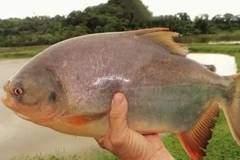
Scientists in Brazil have demonstrated that skin from a hybrid Amazonian fish can be transformed into biopolymer film for food packaging, offering a new application for aquaculture by-products.
Researchers at the University of São Paulo (USP) and Eembrapa Pecuária Sudeste, part of the Brazilian Agricultural Research Corporation in São Carlos, Brazil, have used Tambatinga skin, a collagen source, as a raw material for gelatin-based films.
The study, published in Foods, shows that the Tambatinga gelatin films are transparent, flexible, and have uniform surfaces. The film demonstrates “excellent” UV-blocking performance (below 300 nm) and lower water vapor permeability compared to other gelatin-based films, according to researchers.
Paulo José do Amaral Sobral, professor at the Department of Food Engineering at the USP, says: “We’ve been working for over 25 years on the development of films based on biopolymers, such as proteins and polysaccharides, with the aim of applying this material to food packaging and reducing the environmental impact, since there are many problems associated with the accumulation of synthetic packaging in nature.”
Reducing fish waste
In the study, skins were cleaned and subjected to a hot water–acid extraction process. The extracted gelatin exhibited high proline and hydroxyproline contents, according to researchers.
Later, films were made from the material, using 2 g of gelatin for every 100 g of film-forming solution. However, the obtained material is sensitive to moisture. “For that reason, for now, they can only be used in dehydrated products, such as nuts and chestnuts,” says Sobral.
“Tambatinga is valued by producers for its rapid growth rate, hardiness, and high carcass yield. However, one of the major challenges in the fish production chain is the substantial amount of waste generated during processing,” the researchers shared.
“Skins, heads, scales, viscera, and bones can represent up to 50% of the animal’s total weight. Although these residues are commonly used in the production of animal feed, certain fractions — particularly fish skin — represent a valuable source of collagen and bioactive peptides.”
“These components have attracted increasing attention for their potential applications in the development of biodegradable films, scaffolds, and functional food supplements.”
Last year, a materials scientist from the Massachusetts Institute of Technology, US, engineered a new class of biodegradable, plastic-like materials derived from fish offal. The material can be transformed into transparent films suitable for grocery bags, packaging, and disposable utensils.