

Amcor explores regulatory compliance for animal feed and bedding packaging


Key takeaways
- Amcor is looking into supporting animal feed and bedding producers with regulatory-compliant packaging, focusing on form-fill-seal and single-wound sheet formats.
- Packaging performance, including film strength, seal integrity, and line consistency, is key to minimizing downtime and product loss.
- Environmental sustainability drives choices, with recycled content and recycle-ready solutions supported through Amcor’s European recycling facilities.
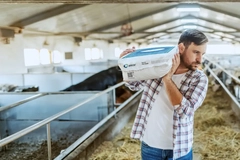
Amcor has expressed interest in the European animal feed and bedding packaging sector, as it undergoes a regulatory and operational transformation.
The packaging producer explains that the sector traditionally packages products in pre-made bags. However, Amcor reports that many producers are now adopting form-fill-seal and single-wound sheet solutions.
Amcor notes that such formats facilitate higher filling speeds, improved flexibility, and simplified packaging ranges by utilizing generic printed films with post-marking on the packing line.
Lorcan Mekitarian, sales director for the UK and Ireland at Amcor, says: “Across the UK and Europe, we’re seeing packaging decisions get more complicated. Producers are balancing performance, regulation, and material availability, often across multiple sites, and we’re working closely with them to make sure solutions perform consistently in practice.”
Packaging performance is further said to be growing in importance in regard to maintaining line efficiency. Film consistency, strength, and seal integrity can help reduce downtime, minimize product loss, and ensure stable operation on high-speed filling lines, Amcor points out.
Meanwhile, Amcor’s customers say that as producers are navigating the current regulatory requirements, including the UK’s packaging EPR and Plastic Packaging Tax (PPT), they are increasingly concerned with recyclability, material usage, and recycled content.
Meeting requirements
Requirements for feed and bedding packaging vary depending on the application, explains Amcor.
“Feed products for export or specialist segments, such as birdseed, may require multi-layer films compatible with gas flushing. Bedding products such as wood shavings and straw place greater demands on durability, requiring packaging that can withstand handling while protecting against moisture and dust.”
Amcor says it can support producers in meeting these requirements through its UK manufacturing base and wider European network, which is said to enable consistent supply and service across sites and markets, as well as access to a range of film structures and technical expertise.
The company also emphasizes the significance of receiving suitable technical support, leading packaging specialists to work closely with producers to validate film specifications, machine settings, and application performance.
Environmental sustainability is becoming an increasingly integrated part of packaging decisions, the global flexible packager adds. Recycle-ready solutions are becoming the norm, and so is the use of recycled content, where suitable.
Ken Gargan, product development manager at Amcor, adds: “Incorporating recycled content isn’t just about adding material into a structure. It requires careful consideration of how it impacts film performance, processing, and consistency on the line. The challenge is to achieve the right balance, ensuring materials remain reliable in practice while meeting evolving requirements.”
Amcor says it supports the inclusion of recycled content through its vertically integrated flexible recycling capabilities, including facilities in Heanor, UK, and Steinfeld, Germany.