


US-China researchers propose UN Global Plastics Treaty reporting framework


Key takeaways
- US and Chinese researchers have proposed a standardized global reporting framework to address data gaps in the draft UN Global Plastics Treaty.
- The framework aims to improve transparency while aligning global requirements with existing company reporting systems to limit additional burdens on the packaging industry.
- Researchers will discuss the proposals with industry sustainability leaders in Geneva ahead of renewed treaty negotiations in March 2027.

Researchers have identified a gap in the draft UN Global Plastics Treaty text, which does not require countries to report how much plastic they produce, which chemicals are used in its manufacture, or how much plastic pollution enters the environment.
Published in Science, the paper has introduced a detailed, practical framework for standardized global reporting and accountability by researchers from the University of California, Santa Barbara (UCSB), and the University of California, Berkeley, US, along with Tsinghua University, China.
Douglas McCauley, director at UCSB’s Benioff Ocean Science Lab and co-author of the paper, tells Packaging Insights: “A standardized reporting system of the kind we propose would create more transparency and trust for the global packaging industry.”
“Today, in the absence of such a reporting program, consumer distrust appears to be growing over subjects such as how their interactions with plastic producers may be contributing to plastic pollution, creating environmental justice challenges for communities, and potentially exposing their families to harmful additives. These are real problems, but some of these fears stem simply from the opacity of the plastics system.”
Cross-border collaboration
China and the US are major global producers and consumers of plastics. To develop recommendations for these countries, the team assessed 22 international data sources. The researchers also reviewed the data collection and reporting provisions under eight environmental agreements, including the Montreal Protocol and Paris Agreement.
The team compared how China, the EU, and the US assemble their national plastics figures before testing the proposed framework against five years of Chinese data to confirm its feasibility.
 Douglas McCauley, director at UCSB’s Benioff Ocean Science Lab.“While our research collaboration does not speak for industry, government, or even the whole of the scientific community in our respective countries, this collaboration between scientists from our two countries is significant,” says McCauley.
“It signifies joint recognition that we are overdue for the establishment of a rational global reporting system. And that shared sense that insights that can come from reporting can strengthen the future of the plastic industry in the two countries while providing benefits for the ecosystems and communities in our respective countries that are connected to these industries.”
“There has been much division in the Plastics Treaty community. We are happy to have found some common ground here on the importance and structure of a reporting system.”
Driving pollution reduction
The negotiations for the UN Global Plastics Treaty are set to resume in March 2027 and will be led by new Chair Ambassador Julio Cordano of Chile.
Last week, the UN Environment Programme released an informal “Aid to Negotiations” as part of efforts to develop a legally binding treaty, and to help structure engagement in the next phase of informal meetings of Heads of Delegations, set to take place in Bangkok, Thailand, next month.
The proposed reporting framework tracks the scale and flow of plastics through the economy, which is considered to be essential if the treaty goes into force. This aims to enable countries to know whether pollution is worsening, whether specific policies worked, or whether a country met its commitments.
“A robust data reporting system wouldn’t just solve problems; it could also provide some benefits to the industry. It could, for example, highlight opportunities that are low-hanging fruit for making the packaging industry more intelligent and efficient,” explains McCauley.
“By increasing transparency and visibility, standardized reporting might help companies doing work to improve the safety and sustainability of packaging receive credit and goodwill from regulators and consumers. And it prevents others from cheating the system with shortcuts.”
Improving reporting system
The paper has pointed out that the current draft Global Plastics Treaty text requires neither the collection of new data nor the harmonization of the disparate datasets that already exist. To assist in a potential signed treaty to fill these gaps, the researchers drafted language that could instead be included in the treaty.
The reporting mechanism is established on four pillars: production and trade by polymer type, chemical additives, how products are used, and how long they last; and waste management, which is split into collection, recycling, incineration, landfill, and mismanagement.
“Packaging companies already face a significant burden for meeting internal, local, or regional reporting requirements. The goal with this proposal is not to add to that burden, but to attempt to synchronize global reporting requirements with some of the reporting large companies already experience in the places they are doing business,” shares McCauley.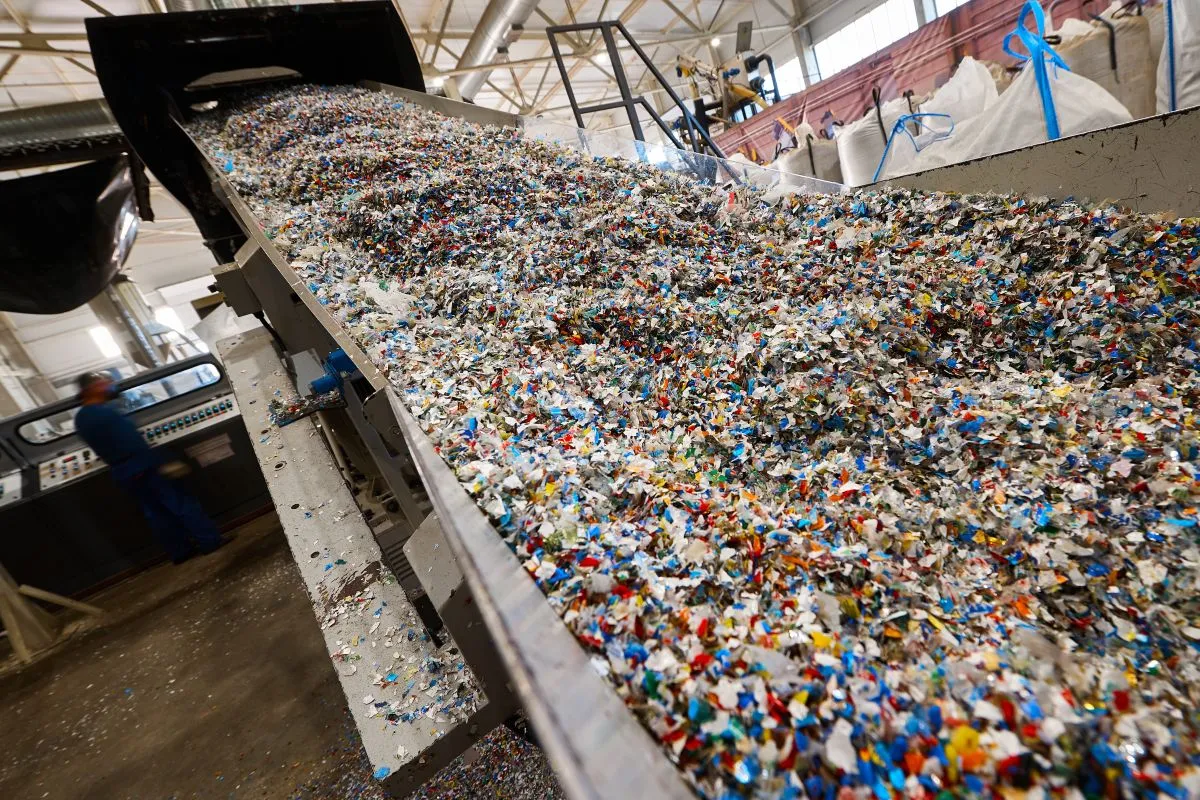 The researchers underscore that recent advances in AI could reduce the difficulty of assembling data relating to production.
“This proposal for a transparent global reporting system also comes at an interesting time, where AI tools are now rapidly reducing the time and effort required to collect and summarize data for systems like this. It is not unrealistic to think of it now within reach to do more detailed reporting than ever before, with less effort than ever before.”
He underscores the importance of building a global mandatory reporting program that is tractable to implement.
“We are making efforts to find a sweet spot on these recommendations. It is easy for scientists to come up with a very long list of all data that would prove helpful for creating transparency and improving the efficiency and sustainability of the global plastics system. But this wish list needs to meet reality,” says McCauley.
“The ultimate goal is to fine-tune reporting requirements so that they have the highest impact potential when it comes to improving the IQ of a sector like packaging while creating the least amount of burden.”
Upcoming dialogue
McCauley tells us that UCSB will convene plastic pollution data experts at World Economic Forum headquarters in Geneva, Switzerland, next month.
“A group of leading researchers on plastics data systems and industrial ecology will be gathering to engage in conversation with sustainability leads in industry to discuss potential reporting requirements and search for areas of consensus. It will be the recommendations coming out of this summit that are ultimately suggested to the plastic treaty community and secretariat.”
“In the process of conducting this research, our teams reviewed other UN treaties that have established similar reporting programs for global industries and materials. We find it encouraging that we have models from these other treaties that have been successful in keeping business moving ahead while improving the industries themselves.”
McCauley expressed hope that more than 175 other countries will recognize the value of “robust, science-informed, mandatory reporting” as negotiations proceed in the next year.
“We hope that we can take the spirit of alignment and consensus at the heart of our research program on data reporting and spread that into the treaty negotiations,” he concludes.