


Bayer launches monomaterial PP blister for Talcid in Germany


Key takeaways
- Bayer has introduced a RecyClass-certified monomaterial PP blister for Talcid antacid tablets in Germany.
- The company plans to expand the solution to 11 additional European markets in 2026 and 2027.
- Bayer notes that recycling outcomes depend on local infrastructure, while industry experts emphasize the need to balance recyclability with barrier protection and product safety.
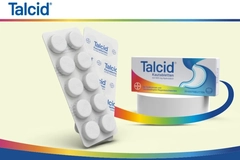 (Image credit: Bayer).
Bayer has launched a monomaterial PP blister for Talcid, its antacid treatment for heartburn and acid-related symptoms, in Germany.
The solutions’ single-material design aims to aid recycling while maintaining quality, safety, and product experience.
“This monomaterial PP design can improve compatibility with recycling processes where appropriate systems exist, while continuing to provide a strong consumer experience,” says Chris Padain, VP and global head of Design, Packaging, Product Experience and Sustainability at Bayer’s Consumer Health division.
“Its push-through performance supports intuitive use, while the monomaterial structure simplifies the packaging design. This is the kind of practical, scalable innovation that can make a meaningful difference across our portfolio.”
The solution is RecyClass Design for Recycling certified. Following a previous launch in Slovenia in 2025, Bayer plans to roll the solution across 11 additional European markets in 2026 and 2027.

Consumer demand for recyclability
As scientists continue to sound the alarm on rising levels of plastic pollution, consumers are increasingly demanding safe, circular packaging solutions.
A 2025 McKinsey survey revealed that recyclability is considered the “most critical” sustainability feature of packaging for consumers.
Bayer explains that conventional blister packs can combine different materials, which can complicate sorting and recycling.
The pharmaceutical company says that the blister packs’ RecyClass Design for Recycling certification reflects its compatibility with recycling processes.
However, Bayer highlights that while monomaterial structures can aid recycling measures, “actual recycling rates” depend on local infrastructure and may vary between markets.
Monomaterial innovations
The solution was developed through cross-industry collaboration, outlines Bayer, and it contributes to its wider portfolio of monomaterial structures. Recent innovations in the pharmaceutical packaging sector are tapping into consumer preferences for at-home healthcare treatments and portion control formats alongside the regulatory demand for recyclable, monomaterial innovations.
“Germany is Talcid’s largest European market, making it a natural next step for the new blister,” says Tobias Boldt, consumer health cluster lead for Germany and Austria.
“This launch connects Talcid’s strong German heritage with a packaging innovation that is planned to reach consumers across more European markets.”
Talcid is manufactured and supplied from Bayer’s site in Bitterfeld, Germany.
Packaging Insights recently spoke to Ampacet, Peak Nano, and Plastic Ingenuity to explore how these trends are shaping current pharmaceutical and health care packaging developments.
“Packaging solutions must increasingly incorporate recyclable, monomaterial structures while delivering the barrier performance necessary to protect sensitive pharmaceutical products from moisture, oxygen, and other environmental factors throughout their shelf life,” said Alexandre Gilles, product manager for Healthcare at Ampacet.
Meanwhile, in the nutrition packaging space, we spoke to Great Earth and ACG Group to understand how format, material, and regulatory pressures are reshaping supplement packaging design.
Patrik Falk, CEO at Great Earth, told us that fiber-based and monomaterial solutions are increasing. “Monomaterial construction, and the shift to transparent or white plastic where plastic remains, is what makes automated sorting work.”