



Packaging design can improve consumer waste sorting, study finds


Key takeaways
- A new study has shown that clear disposal guidance and simpler separation processes can improve consumers’ waste-sorting intentions.
- Researchers found that packaging design has a stronger influence where waste policies are weaker, while environmentally aware consumers respond more positively to sorting-friendly features.
- The findings suggest packaging strategies should consider post-consumer behavior alongside material innovation and environmental performance.

A recent study has revealed that consumers are more likely to correctly sort packaging when the design provides clear disposal guidance or simplified sorting processes.
The research team from Yunnan University, the Beijing Institute of Fashion Technology, and the Beijing Institute of Technology, China, finds that packaging design is more important when waste management policies are weaker. Additionally, environmentally aware consumers are found to respond more enthusiastically to sorting-friendly packaging.
Specifically, the study finds that the positive effects of Packaging Waste-Sorting Friendliness (WSF) were determined by consumer perception of sorting processes, rather than brand effort, innovation, or packaging value.
The study, published in Resources, Conservation & Recycling Advances, introduces the concept of WSF, which it defines as a “consumer’s perception of the extent to which a product’s packaging provides clear and actionable affordances that support correct waste sorting.”

It highlights that these perceptions can be cognitive, informational, physical, procedural, or system-level in nature.
The researchers explain: “The findings establish WSF as a robust antecedent of consumer sorting intention, identify perceived ease of use as its central mechanism, and reveal policy intensity and environmental-benefit awareness as important boundary conditions.”
Addressing research gaps
The researchers identify a gap in sustainable packaging design.
“Despite substantial investments in policy enforcement and packaging innovation, a fundamental question remains insufficiently examined: whether and how packaging itself helps consumers sort waste correctly?” say the researchers.
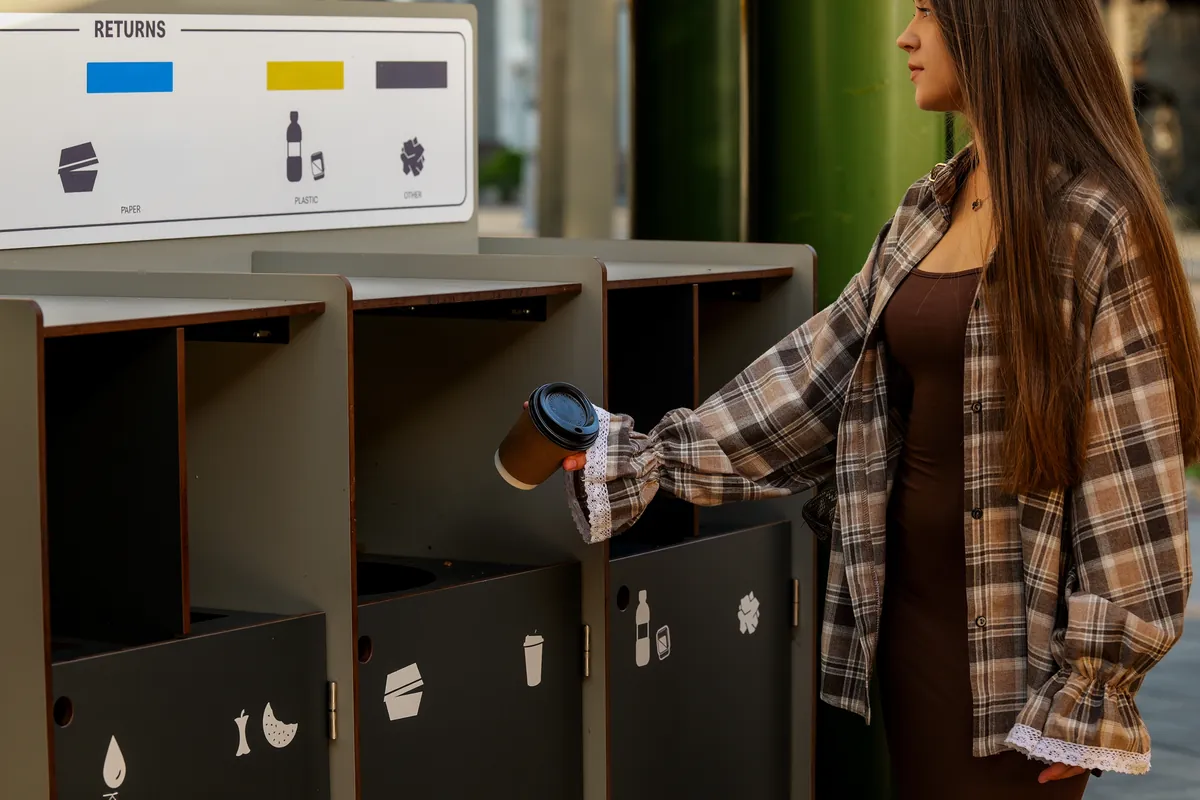 Researchers found that clear disposal guidance and simplified sorting processes encourage consumers to correctly separate packaging waste.Previously, sustainable packaging has focused on material innovation and the environmental impact of production processes, and not on the impact of design.
“Existing studies on sustainable packaging have often overlooked how packaging can support consumers’ waste-sorting behavior, focusing instead on material reduction, material innovation, loss-prevention functions, and environmental impacts of production processes.”
The same is true for industry innovation, say the researchers, highlighting that companies have introduced design solutions to help sorting, such as removing material variety and simplifying disassembly. However, the researchers argue that these practices are “fragmented” and “offer little guidance on why certain designs succeed while others fail to change behavior.”
Evaluating packaging types
The study conducted four separate experiments to determine how WSF can increase sorting intention. It examined ease of use and identified conditions, such as policy intensity and consumers’ awareness of environmental benefits.
In the experiments, the researchers manipulated consumers’ perception of WSF by changing packaging features like instructions, perforated bottle labels to make separation easier, and packaging that does not need separating.
In the first experiment, participants compared bio-based food containers, which can be discarded in food waste streams, with conventional plastic containers that require separation. The participants preferred the bio-based containers, which the researchers suggest is due to perceived ease of use, as the sorting process felt simpler.
The second experiment evaluated the impact of policy intensity on waste sorting processes, concluding that regulatory guidance on milk tea packaging increased sorting intention. Building on this, the third experiment explored policy intensity in a real-world context.
It compared Chinese participants from Shanghai, which reportedly has stricter waste rules, with participants from Beijing, which reportedly has lower policy intensity, concluding that WSF has a stronger influence where policy pressure is lower.
 The study introduces WSF, showing how packaging design can influence post-consumption behavior beyond material innovation.Lastly, the fourth experiment examined whether consumer environmental awareness has an impact on WSF. Participants were given bottles with easy labels to remove (high WSF) and bottles with difficult label separation. It found that consumers preferred the easily removed label, and this effect was stronger among consumers with higher environmental awareness.
Taking the research further
Ultimately, the researchers highlight that although the study provides evidence that packaging design helps shape consumer sorting, it argues that there are still many unanswered questions.
They share that future research could scale the WSF examples to include more packaging design types and evaluate more psychological choices that explain waste sorting preferences.
Lastly, the researchers suggest that further research could extend the pool of participants by increasing the geographical scope of participants.
The researchers conclude: “By conceptualizing WSF, this study extends sustainability research beyond its predominant upstream focus toward consumers’ post-consumption experiences, emphasizing the behavioral consequences of packaging design.”