

Boxon markets rPET Big Bags for food contact packaging


Key takeaways
- Boxon launches rPET Big Bags, which have been approved for food contact, targeting food, chemical, and industrial sectors.
- The bags meet EU regulations and support sustainability goals without compromising performance.
- The solution is said to offer improved durability, UV resistance, and better print quality compared to conventional products.
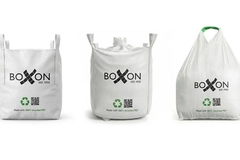
Boxon, a global packaging solutions provider, is launching a new generation of rPET Big Bags made from recycled PET bottles. The bags are designed for food, chemical, and other industrial applications. They are reportedly the first recycled Big Bags approved for direct food contact.
Starting this week, the solution is introduced across the EMEA market. The new Big Bag is said to be an “important step forward” in circular industrial packaging and meets regulatory requirements under the EU’s Packaging and Packaging Waste Regulation (PPWR) and corporate sustainability targets.
“Companies today need packaging solutions that support compliance and operational efficiency,” says Florence Abgrall, business unit manager at Boxon.
“Our rPET Big Bags make it possible to transition to recycled materials without compromising durability, handling performance, or supply reliability, while meeting strict food-contact requirements.”

Featuring operational advantages
The Big Bag combines recycled materials with high-performance characteristics and food-contact approval, allowing companies to reduce their environmental impact and maintain the strict safety and operational standards required in regulated supply chains.
The new Boxon rPET Big Bags are said to address these challenges by combining recycled content with industrial durability and reliability. They also improve performance in demanding bulk-handling environments.
The material offers operational advantages compared with traditional solutions, including improved UV resistance, higher abrasion resistance, and better form stability during transport and handling, according to Boxon.
In addition, the bags provide sharper print quality, enabling clearer markings, improved traceability, and better control in regulated supply chains.