
Carrefour commits to eliminating 5,000 tons of plastic amid oil market volatility


Key takeaways
- Carrefour plans to eliminate 5,000 tons of plastic packaging to reduce costs and environmental impact.
- Savings of over €5 million will be reinvested into price cuts of nearly 10% on some products.
- The retailer targets multipacks, refill formats, paper packaging, reusable bottles, and bakery packaging.
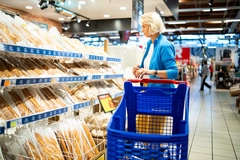
Carrefour has launched an initiative to reduce its use of packaging and lower costs by removing 5,000 tons of plastic from its product packaging. The France-based global retailer says the savings will be reinvested in price cuts of nearly 10% on some products.
The move is also a result of the high volatility in the oil markets, which has driven the price of virgin plastic up by 50%, according to Carrefour. This is said to have created “a lasting impact” on the packaging costs of FMCG, which continue to be predominantly packaged in plastic.
The retail giant further points to eco-contributions as a key reason. Eco-contributions are financial fees for packaging and paper waste paid by producers and distributors of packaged products. Carrefour says that for plastic bottles, the eco-contribution amounts to over €20,000 (US$22,854) per one million bottles.

“Carrefour was an early adopter in the fight against plastic pollution,” comments Alexandre Bompard, chairman and CEO at Carrefour Group.
Carrefour says it has already removed 25,000 tons of plastic since it launched its Act for Food initiative in 2018.
“Today, we are taking this a step further with an unprecedented initiative in the retail sector: we have chosen to invest the savings generated by fighting plastic back into our customers’ purchasing power.”
Packaging overhaul
Carrefour has introduced five actions launched to achieve its plastic packaging reduction goals, said to represent savings of over €5 million (US$5.7 million).
 Alexandre Bompard, chairman and CEO at Carrefour Group (Image credit: Carrefour).These actions aim to address supermarket aisles where plastic packaging remains the most common and to reach a “complete transformation” through new market standards.
First, Carrefour sets out to remove what it refers to as “plastic overpackaging” on promotional multipacks by 2028 for its private-label products and by 2030 for national brands. It says this equals 500 tons of plastic.
Another one of the five actions highlighted by Carrefour is: “A 30% reduction in plastic packaging for hygiene and household cleaning products by developing recycled plastic refill formats, with prices 10% to 20% cheaper; solid-product ranges and large containers. These new packaging formats have the potential to reduce plastic by 2,000 tons.”
“Replacing plastic blister packs across the entire toilet paper range with 100% paper packaging by 2030, leading to a 1,500 ton reduction in plastic,” the retailer adds.
Additionally, Carrefour intends to expand the sales of deposit-return products with pricing said to be affordable because it is on average 5% cheaper per liter than their non-reusable equivalents. It also aims to boost its selection of over 1,000 products by 2030. The goal of this action is to sell 50 million reusable bottles, cutting another 500 tons of plastic.
Lastly, Carrefour outlines its plans to implement new packaging combining cardboard boxes and plastic windows for pastries and baked goods, with an expected reduction of 500 tons of plastic.
Supermarkets and F&B brands are increasingly implementing strategies to reduce the use of plastic packaging on their aisles globally. In the Philippines, Nestlé partnered with Robinsons Supermarket to launch a plastic sachet recycling machine.
In the UK, a reuse trial report found that consumers prefer refillable systems across supermarkets. Asda boosted its packaging recyclability despite reducing its use of recycled content.