



Asda boosts packaging recyclability despite recycled content setback


Key takeaways
- Asda’s 2024 ESG report shows 97.5% of own-brand packaging is now recyclable, up from 2023.
- Use of recycled content fell to 21.58% amid inflationary pressures and regulatory impacts on supply.
- Food waste dropped to 24,984 metric tons in 2024, supporting Asda’s 2025 reduction target.
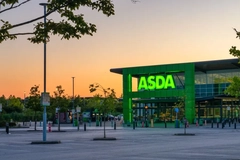
Asda’s 2024 ESG report has revealed that 97.5% of its own-branded packaging is recyclable. The report outlines the UK supermarket’s ESG targets alongside its 2024 data, highlighting a drop in recycled content use and a reduction in food waste compared with 2023.
According to the report: “The shift toward monomaterial, recyclable plastics has improved overall recyclability. Additionally, better data quality on polymer types now allows for more accurate classification.”
In 2024, 87.8% of Asda’s own-brand packaging was curbside recyclable, with an additional 9.7% was recyclable in large stores. In 2023, the overall recyclability rate for own-brand packaging was 95.8%.
As part of its efforts to reduce waste, the supermarket offers multiple take back schemes in collaboration with external partners, including for empty EpiPens, vapes, and coffee pods.

Earlier this year, partnered with Podback, a coffee pod recycling service, to recycle plastic and aluminium coffee pods. Recently, Co-op, another UK supermarket, also partnered with Podback to enable customers to return and recycle used coffee pods in stores.
Recyclate supply hurdles
The report reveals that Asda’s use of recycled content has declined from 2023.
The supermarket previously aimed to use 30% recycled content within its own brand packaging by 2025. However, in 2024, its own-brand packaging contained only 21.58% recycled content, down from 28.5% in 2023.
The report argues that “inflationary pressures” and regulations affected the supply of recycled plastic.
“This challenge is likely to persist through 2025 and beyond. Asda remains committed to working closely with suppliers to understand barriers and support progress toward recycled content goals,” says the report.
Reducing food waste
Asda aims to reduce food waste by 20% by 2025, compared to a 2015 baseline of 26,826 metric tons.
The report explains: “Reducing food waste is one of our strategic priorities. Food loss and waste can happen at every stage of the supply chain, and as a large retailer, we recognize the vital role we play in addressing this issue.”
In a recent interview, Nerida Kelton, vice president of sustainability and safe food at the World Packaging Organisation, told us about the importance of packaging in reducing food waste. She explained how the industry can mitigate food waste loss alongside environmentally conscious packaging.