



EU simplifies CLP rules for packaging sector with flexibility and legal clarity


Key takeaways
- The EU Council and EP have reached a provisional agreement to simplify CLP rules for chemicals, cosmetics, and fertilizing products.
- The deal amends packaging label readability requirements, small-pack label exemptions, and digital labeling provisions.
- The regulation aims to give industry more flexibility and legal clarity.

The EU Council and the European Parliament (EP) have reached a provisional agreement simplifying the rules of the classification, packaging, and labeling of chemicals (CLP) regulation, as well as for cosmetics and fertilizing products.
For packaging products, the provisional agreement made amendments to labeling readability, exemptions, and transitional periods for relabeling.
“The main purpose of the negotiations on this agreement was to find a mutually acceptable compromise to solutions to all the simplification clauses, initially put forward by the Commission, while in many cases securing safeguards protecting human health and the environment,” an EU official tells Packaging Insights.
The CLP regulation was first introduced in 2008 and has since undergone many revisions. The latest deal set the rules for the remaining part of the Omnibus VI package, which simplifies rules in the field of chemical products.

We also reached out to Cefic and the European Specialist Printing Manufacturers Association (ESMA) to gauge how the provisional agreement will affect the industry, but both stated it was too soon to tell.
Cefic previously stated that “CLP regulations are key pillars of the EU’s chemicals safety framework, ensuring the safe use, classification, and communication of chemical risks.”
After the EP agreed its position on the Omnibus VI package, but before the provisional agreement was struck, ESMA’s chair of health, safety, and environmental protection committee, Elaine Campling, said that: “there is still a great degree of uncertainty, though we are perhaps one step closer in the process to introduce a regulation.”
Label readability and exemptions
Amendments to the CLP regulation largely concern formatting and flexibility requirements of labels on certain packaging types.
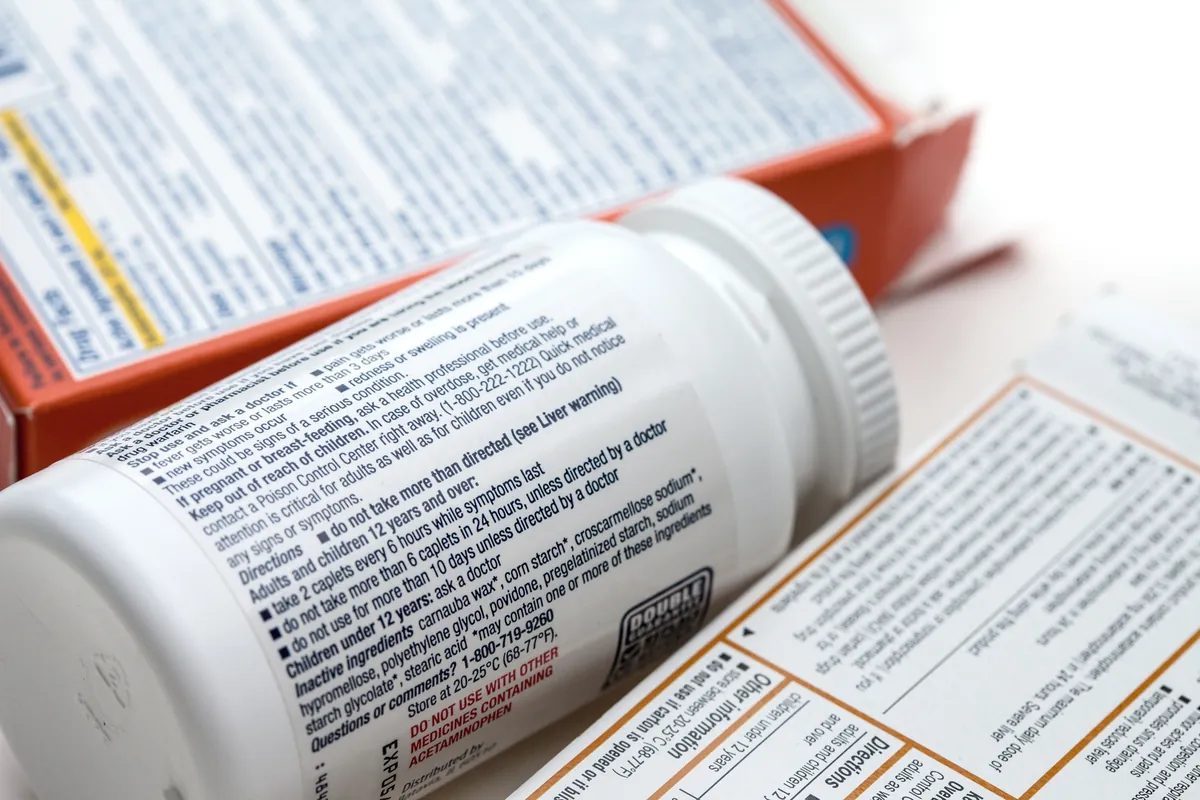 CLP regulation amendments mainly address label formatting and flexibility requirements for certain packaging types.“For CLP, the main purpose was to scrap prescriptive font sizes on the labeling of packages of any size, and give flexibility to industry and especially small- and medium-sized enterprises with only a generic clause on ‘readability,’ as well as include more information only on digital labels,” continues the EU official.
“This purpose was preserved in the agreement, but only for labels meant for business users. For labels meant for the general public, the Council and EP settled for specific font sizes.”
The EU official explains that this new provision does not apply to label elements required by other EU legislation, and that “this very important rule gives clarity and legal certainty to the industry.”
The provisional agreement also includes specific labeling exemptions for small packaging, “applicable to printer ink cartridges, among others, by using digital labels only for small, inner packaging containers, when extensive information is provided in printed form on the outer packaging.”
“This request found a more generic and simplifying solution to include other small packages as well,” adds the EU official.
Extending the relabeling period
The CLP provisional agreement also amended the transition period for relabeling obligations when one or more substances are discovered to be hazardous, but some consumer and environmental groups are critical of the amended extension.
According to the European Council, industry stakeholders complained that existing timelines are too short. “The transitional periods for placing on the market after making all the new changes have been calculated to accommodate the needs of the industry,” explains the EU official.
The revised rules give packagers and companies 15 months to relabel new substances or mixtures after a classification change adds a hazard class or makes the classification more severe.
 The provisional agreement delays key CLP application dates to January 2030, aligning them with cosmetics and fertilizer rules.“The reached agreement includes an important new paragraph requiring suppliers to cooperate across the supply chain to ensure that the labels are updated without undue delay. The new clause gives both legal certainty and flexibility to suppliers.”
However, consumer and environmental advocates, such as the European Consumer Organisation (BEUC), have raised concerns that parts of the broader chemicals simplification agenda could weaken protections by extending transition periods and delaying the removal of hazardous substances from the market.
Previously, a “stop-the-clock” amendment also postponed several revised CLP application dates to 1 January 2028, covering relabeling, label formatting, advertising, distance selling, and fuel-pump labeling provisions.
The provisional agreement extends this date to 1 January 2030 to align the date of application on all three regulations (CLP, cosmetics, and fertilizer), which the EU official explains was due to the extra time it has taken for the co-legislators to reach agreement on the second part of Omnibus VI.
Next steps
The agreement is still provisional, subject to final approval by the Council and EP at first reading, explains the EU official.
“The provisional agreement must now be politically approved by both the Council and EP. Following the legal/linguistic revision of the text, the legislative act will be formally adopted and published in the EU’s Official Journal, most probably by the end of 2026.”
“In all three regulations, there are various transitional periods with which businesses will have to comply, but the co-legislators really aimed in this respect to clarify and even simplify the legal aspects of the timelines.”