


European Commission proposes harmonized waste-sorting labels ahead of PPWR


Key takeaways
- The EC Joint Research Centre has proposed a harmonized, material-based waste-sorting label system.
- The waste labeling system uses pictograms, color blocks, and minimal text to reduce consumer confusion.
- Stakeholder engagement, education campaigns, and flexibility for future updates are flagged as critical for long-term success.

The European Commission’s (EC) Joint Research Centre has published its proposed harmonized waste-sorting label system for packaging, in line with the EU’s Packaging and Packaging Waste Regulation (PPWR).
The proposed system adopts a material-based approach that focuses on packaging materials rather than the collection destination.
The report emphasizes the need for “continuous” stakeholder engagement, flexibility for future updates, and communication and education campaigns to ensure the system’s “long-term effectiveness and acceptance.”
“Current sorting practices remain suboptimal due to packaging complexity and the absence of a unified labeling approach, which generates market fragmentation for producers and inconsistent information for citizens,” says the report.
The conceptual and visual proposal sets out a harmonized waste labeling system that aims to “remove market barriers” by ensuring consumers receive “clear, consistent, and actionable sorting instructions.”

It is based on desk research, empirical evidence from citizen workshops, surveys, experiments, expert stakeholder workshops, and consultations.
Creating a cohesive system
The proposal aims to create a waste labeling system that is informative and easy for consumers to understand. Previous studies have found that packaging labels, whether for nutrition information or environmental claims, can create consumer confusion.
The proposal presents a modular, visually coded classification system that categorizes packaging waste by material type, using pictograms, color blocks, minimal text, and accessibility features.
The report says: “System-level design aspects cover granularity (which materials require distinct labels), labeling of multicomponent packaging, meta-labels for receptacles, guidance for digital information provision, and recommendations on awareness, education, and information campaigns.”
The waste la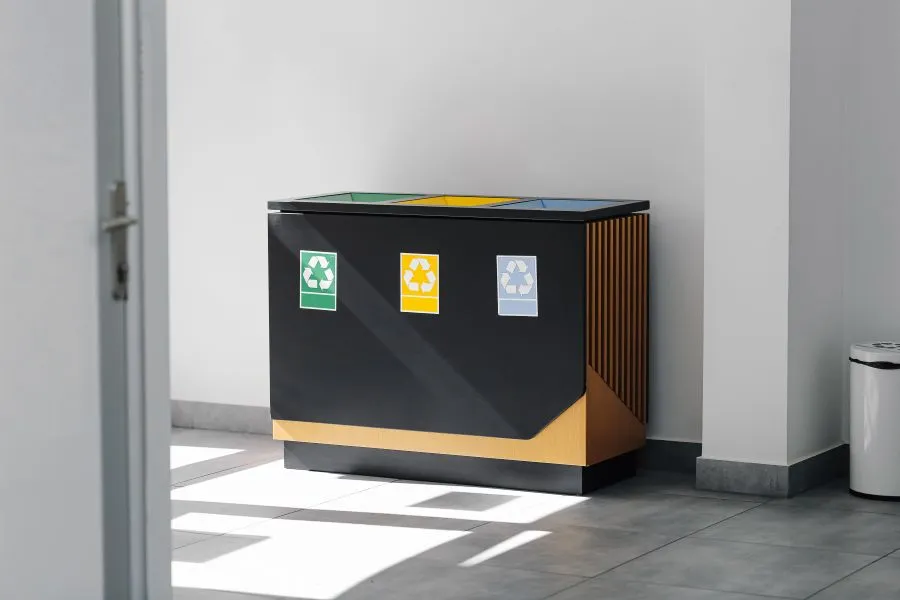 The report stresses that implementation cost should be weighed against “expected benefits.”beling system is arranged in a grid so consumers can identify the material at a glance and match the symbol on packaging to the corresponding symbol on bins across EU countries.
Cost and challenges
The proposal highlights challenges to implementing a harmonized waste labeling system. These include aligning colors, text, and digital carrier across fragment regulation contexts.
Another challenge is managing existing labeling frameworks alongside the proposed scheme in a clear, unambiguous way to avoid consumer confusion.
The report adds: “Implementation will entail costs related to adapting packaging designs, updating labeling systems, and relabeling waste receptacles, as well as phasing out existing national systems.”
The report stresses that implementation cost should be weighed against “expected benefits,” such as improved sorting accuracy, enhanced recycling performance, and reduced operational complexity.
PPWR anticipation
The proposed labeling system supports the EU’s PPWR. Recently, many packaging manufacturers and industry players have been adapting packaging material and design ahead of regulation. Some are turning to reuse or fiber-based options.
At the start of this year, the European Aluminium Foil Association and Flexible Packaging Europe established a European alliance to enhance the recycling of small aluminum packaging.
Duni Group highlighted that, while single-use packaging options remain useful, EU regulations, such as the PPWR, are driving the development of reuse solutions.
Recently, Sabert introduced PulpUltra, its range of fiber-based, PFAS-free food packaging, across Europe, the UK, and Ireland, in time for the PPWR.