


Huber + Suhner cuts plastic use with rPET packaging shift


Key takeaways
- Huber + Suhner converts its fiber optic blister packs to rPET and removes over 743,000 single-use plastic bags.
- Paper-based cable ties and FSC-certified materials replace 1.5 million plastic components across 11 product families.
- The packaging redesign aims to cut emissions, reduce installation waste, and improve handling and logistics efficiency.
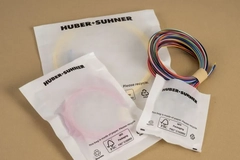
Huber + Suhner, a Swiss-based global electrical and optical solution company, has converted the packaging for its fiber optic cable blister packs to recycled PET.
It has also removed over 743,000 single-use plastic bags from use and replaced 1.5 million twist cable ties with paper-based solutions in a bid to reduce the environmental impact of its packaging.
Lana Ollier, head of Global Sustainability at Huber + Suhner, says: “Removing single-use plastic items and moving more product families to recyclable and sustainable materials show what’s possible when sustainability is designed in, not added on.”
“We’ve proven that better product packaging not only cuts emissions but protects performance and simplifies logistics.”

Huber + Suhner extended its sustainable plastic initiative across 11 key product families. Other measures include using FSC-certified recyclable paper for connected and cable ties, as well as using rPET for its Lisa, Sylfa HD, and Ianos fiber modules.
The company adds: “These changes deliver greater product durability and dust protection, while ensuring a lighter transport weight for a reduction in emissions and operational costs.”
According to Huber + Suhner, its sustainable initiative has reduced installation waste, while on-site handling has improved due to quick-open, dust-free paper solutions and stackable blister designs.
Global PET developments
Alongside PET adoption for packaging solutions, the National Association for PET Container Resources released its 2024 PET Recycling Report, revealing that the PET bottle recycling rate in North America was 30.2% in 2024 — a decrease from 32.5% in 2023, but above the decade’s average of 29.5%.
Moreover, Carbios and Wankai New Materials partnered to build and run a PET biorecycling plant in China. The construction value is estimated at €115 million (US$134 million).
Releaf, a plant-based plastic polyethylene furanoate developed by Avantium, a Dutch company specializing in renewable and circular polymer materials, received official approval for recycling within the Japanese PET bottle stream.