


Paperboard pioneers sustainable innovations in hot cup materials


Key takeaways
- Stora Enso and Pulpac each highlight rapid advances in fiber-based hot cup materials, coatings, lids, and recyclability.
- Brands increasingly demand customizable, low-impact cup designs amid tightening EU rules and rising consumer expectations.
- Ultra-thin barrier coatings, Dry Molded Fiber lids, and new circular collection streams are accelerating the shift away from plastic.

Changing consumer expectations, new material developments, and the push for sustainable solutions are reshaping how hot drink products are designed and packaged.
Packaging Insights speaks to representatives at Pulpac and at Stora Enso about their respective latest innovations in hot cup material composition, lids and closures, and recyclability, amid tightening EU regulations.
Kimmo Nevalainen, technical account manager at Cupforma Stora Enso, says: “For consumers, cups must be comfortable to hold, non-leaking, and compatible with secure lids. Lightweight, stiff cup boards designed to run smoothly on converting lines are now standard. At the same time, cups are small advertising opportunities, so an excellent print surface is key.”
“All of this is happening under tighter regulation in Europe and rising expectations from consumers for low-impact packaging, so innovation is about balancing resource use, recyclability, and day-to-day performance.”
Paperboard is a dominant material for foodservice hot cups at Stora Enso due to its reliable performance in conversion and consumer use, as well as its ability to meet strict food safety and hygiene requirements.
Material reduction demand
Pulpac manufactures fiber-based hot drink cup lids. It recently partnered with Future Materials Sweden to drive the transition from plastics to fiber-based packaging solutions by leveraging it's patented Dry Molded Fiber technology.
Sanna Fager, chief commercial officer at Pulpac, tells us: “The main challenge is matching the performance and unit economics of traditional plastic lids while using very different materials. Efficiency depends on precise forming, optimized barriers, and high-speed production that can scale.”
“A consistent lid fit also benefits from lids and cups being produced within compatible systems where tolerances are fully aligned.”
Additionally, in material developments, Nevalainen notes a growing interest in material reduction, reflecting the increasing demands for consumer and brand sustainability.
“Rather than over-engineering the cup, we see demand for very thin, high-performing barrier coatings that use only the amount needed for a short-use application like a coffee cup,” he says.
“Technologies like Stora Enso’s proprietary UltraThinPE Tec reduce coating weight significantly in Cupforma Natura PE and Cupforma Natura PE Green products and can keep the paperboard share above 95% in some products, which supports both recyclability and lower fossil-based plastic use.”
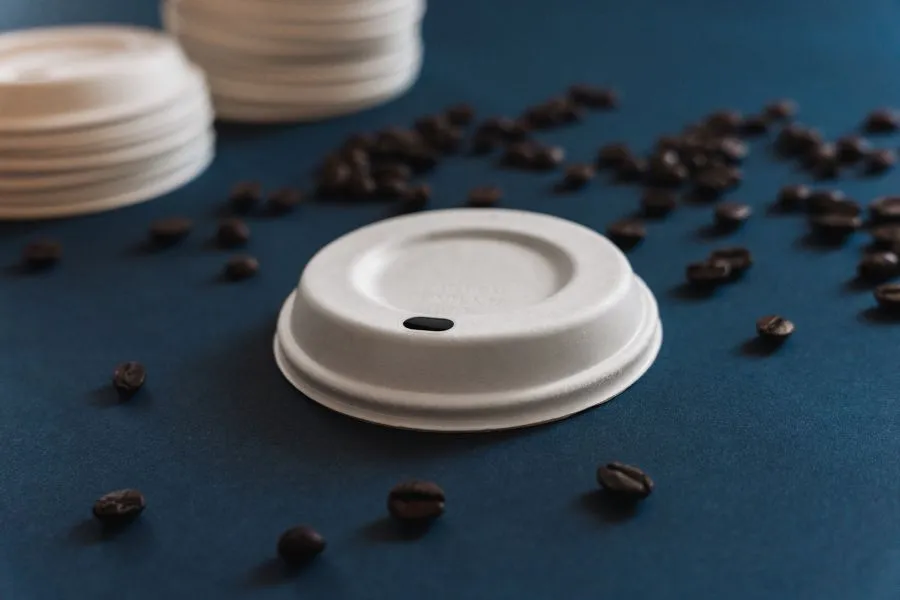 One hot cup drink design challenge is matching the performance and unit economics of traditional plastic lids while using different materials, says Pulpac’s Fager (Image credit: Pulpac).Stora Enso’s Cupforma Natura PE Green products feature a coating based on renewable materials, and its Cupforma Natura Bio products offer certified industrial compostability for the material in hot drinking cups.
Material customization
Hot drink design is also evolving in response to the rising demand for customizable F&B packaging.
Nevalainen says: “From the material producer perspective, modern fiber-based cup materials like the Cupforma range by Stora Enso have optimized surfaces and excellent smoothness to support printability.”
But it is not only print customization that adds to a brand message, explains Nevalainen.
“The material itself has become part of the message. Many brand owners explicitly want cups made from renewable, recyclable fiber with traceable origins, and they want to communicate that to their customers.”
Meanwhile, Fager notes that brands are increasingly expecting customizable products, highlighting the potential of Pulpac’s Dry Molded Fiber to facilitate specific design requests.
She adds: “Brand owners increasingly request custom lid shapes, comfort features, and subtle branding, and Dry Molded Fiber makes many of these features possible directly in line. Manufacturers can adapt quickly, which helps brands make the switch without losing identity or functionality.”
Fiber-based circularity
Nevalainen identifies a growing interest from brand owners in “truly” circular solutions. He highlights the recycling streams in Europe and North America that can accept barrier-coated cups and measures, aiming to improve collection and recycling pathways.
“A good example is The Cup Collective, a value chain partnership of material producers and brand owners. They have set up dedicated infrastructure for cup collection and are working with mills to recycle used hot-cups back into new fiber-based products at scale,” says Nevalainen.
In addition, Stora Enso’s dispersion-coated Cupforma Natura Aqua+ products are said to offer improved recyclability.
For Pulpac’s Fager, hot drink circularity is driven by a “strong shift” to fiber-based lids and streamlined waste management, despite some aesthetic challenges.
“New innovation is accelerating the move away from plastic lids, but the real impact comes when the material, performance, and waste stream align,” she says.
“It’s drawn some attention that fiber lids may look ‘used’ after use. But for a single-use item that’s exactly what we want to see — a product that serves its purpose and a material that doesn’t remain unchanged long after its job is done.”
Recently, HZ Green Pulp became the first PulPac licensee in Asia to commercially produce Dry Molded Fiber coffee lids in Malaysia. Fager says this demonstrates how quickly the shift toward fiber is becoming a reality.
High temp challenges
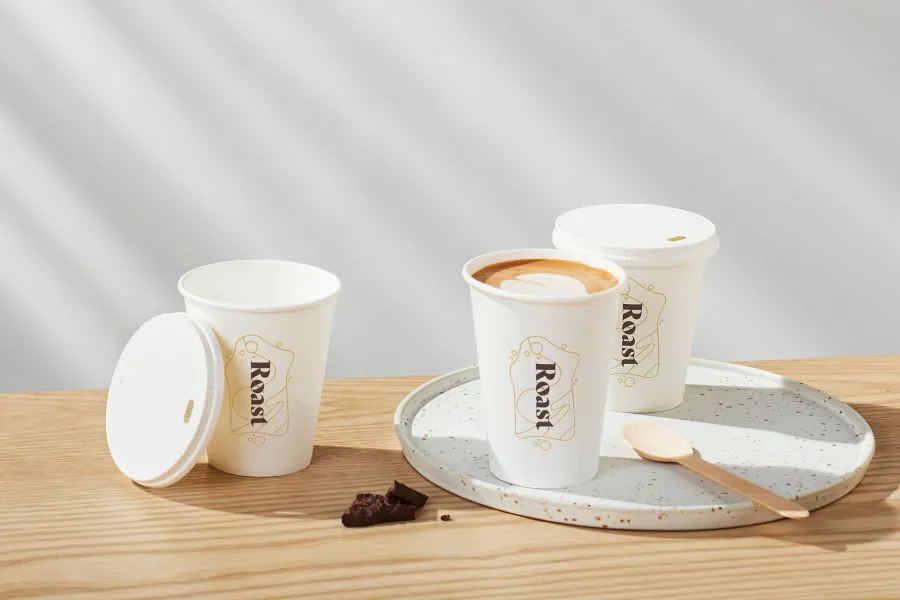 Stora Enso’s dispersion-coated Cupforma Natura Aqua+ products are said to offer improved recyclability (Image credit: Stora Enso).Hot drink packaging that aims to maintain temperature is often dependent on effective design.
“Heat performance in lids comes from getting the geometry, fit, and material recipe right,” says Fager, “and we test these parameters systematically in-house and with our partners. It’s always about finding the best balance between insulation, durability, and responsible material choices.”
Nevalainen explains that Stora Enso’s hot drink cups are engineered with a lightweight, multilayer fiber structure that creates a rigid structure and provides natural insulation.
“That means a cup that keeps its shape with hot liquids without collapsing, while staying light in weight. The heat insulation of hot drinking cups can be further improved with double-wall hot cup solutions for takeaway paper cups.”
Hot liquids also require a reliable barrier to avoid leakage. Plastic coatings are usually selected to best suit the end-use, such as coffee, tea, and soups.
Nevalainen adds: “Newer ultra-thin coatings deliver liquid resistance while using significantly less coating than traditional products, and they are engineered to be recyclable in standard paper or board streams, depending on local systems.”
While a thinner barrier coating can help reduce material consumption, Nevalainen emphasizes that hot cups must still meet the requirements for sealing, runability, and food safety features.
He names Stora Enso’s Cupforma Natura products as an example. The solution is coated with UltraThinPE Tec technology and designed to meet expectations in high-efficiency cup converting processes.