


Henkel launches low-carbon tinplate cans for adhesives


Key takeaways
- Henkel launches tinplate cans using Bluemint steel, developed with Thyssenkrupp Rasselstein and Pirlo.
- The new packaging delivers a 62% CO2 reduction versus conventional tinplate, with emissions certified by TÜV SÜD.
- The move supports Henkel’s sustainability targets while maintaining performance, with steel packaging already achieving high recycling rates in the EU.
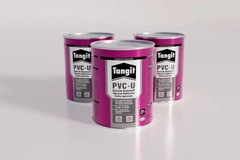
Henkel has introduced tinplate can packaging for adhesive solutions made in collaboration with the German tinplate manufacturer Thyssenkrupp Rasselstein and Pirlo, an Austrian metal packaging producer.
The Bluemint steel packaging offers a 62% reduction in CO2 emissions compared to conventional tin cans.
The global manufacturer of adhesives, sealants, and functional coatings uses tinplate cans for a variety of its products and says it is among the first manufacturers worldwide to use Bluemint steel for the packaging of pipe and contact adhesives.
“Sustainability is an integral part of our strategy, and the new packaging concept for tinplate cans is another strong demonstration of how we are delivering on our ambitious packaging targets — without compromising on the performance of our products,” says Baptiste Chieze, director of marketing, digital, and e-commerce for consumer adhesives at Henkel.
Reduced emissions
The carbon emissions of Bluemint steel are externally confirmed and certified by TÜV SÜD, a global certification organization.
“This is another important step to further reduce emissions in the production of our packaging to achieve our ambitions,” adds Chieze.
“At the same time, the use of Bluemint steel also strengthens the sustainable positioning of our leading brands, such as Tangit, among professional craftsmen and consumers.”
Henkel highlights that, in the EU, 83.7% of tinplate and steel packaging is recycled annually, making it the most recycled type of packaging.
Data released this year by European Aluminium and Metal Packaging Europe revealed that Europe hit a record aluminum can recycling rate in 2023.
In related business news, Henkel recently acquired Stahl for €2.1 billion (US$2.5 billion) to expand its specialty coatings portfolio.
It also partnered with the Swedish chemical company Sekab to replace conventional ethyl acetate with a bio-based alternative, and launched a recyclable cold seal coating for barrier-coated paper.