
Mycelium composites outperform EPS in protective packaging tests


Key takeaways
- Researchers developed mycelium-based composites from mushroom strains and agricultural waste.
- The biodegradable materials decompose within 30 days in soil and achieve cushioning, compressive strength, durability, and fire resistance comparable to or superior to EPS.
- Ganoderma orbiforme composites made with coir pith and coconut sawdust showed the strongest packaging potential.
 Chathura Madusanka and Professor Dhanushka Udayanga.
Scientists have developed mycelium-based composites (MBCs) using fungal strains and lignocellulosic waste materials, introducing a biodegradable alternative to synthetic protective packaging materials such as expanded polystyrene (EPS).
The research team, led by scientists from the Sri Lanka Institute of Information Technology and the University of Sri Jayewardenepura, Sri Lanka, used two species of wild mushrooms, Ganoderma orbiforme and Lentinus squarrosulus, isolated from the region.
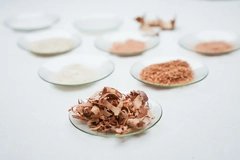
The mushrooms were used in combination with locally available and underutilized agricultural residues, including coconut sawdust, mango sawdust, and coir pith — a dust-like product from the outer husk of coconuts.
The developed composites were tested for their physical, mechanical, thermal, and chemical properties. The results indicated that the MBCs exhibit properties equivalent to or superior to those of EPS.

Dhanushka Udayanga, corresponding author of the study and professor at Sri Lanka Institute of Information Technology, tells Packaging Insights: “MBCs demonstrated cushioning performance comparable to EPS, as confirmed by the compression set test. This test evaluates the material’s ability to recover its original thickness after the removal of a compressive load.”
“Our MBCs exhibited compression set values that were comparable to, and in some cases better than, those of synthetic material/EPS, indicating excellent cushioning and recovery performance. Although the composites showed higher water absorption than EPS due to their natural lignocellulosic composition, their moisture resistance was significantly improved by applying various coatings.”
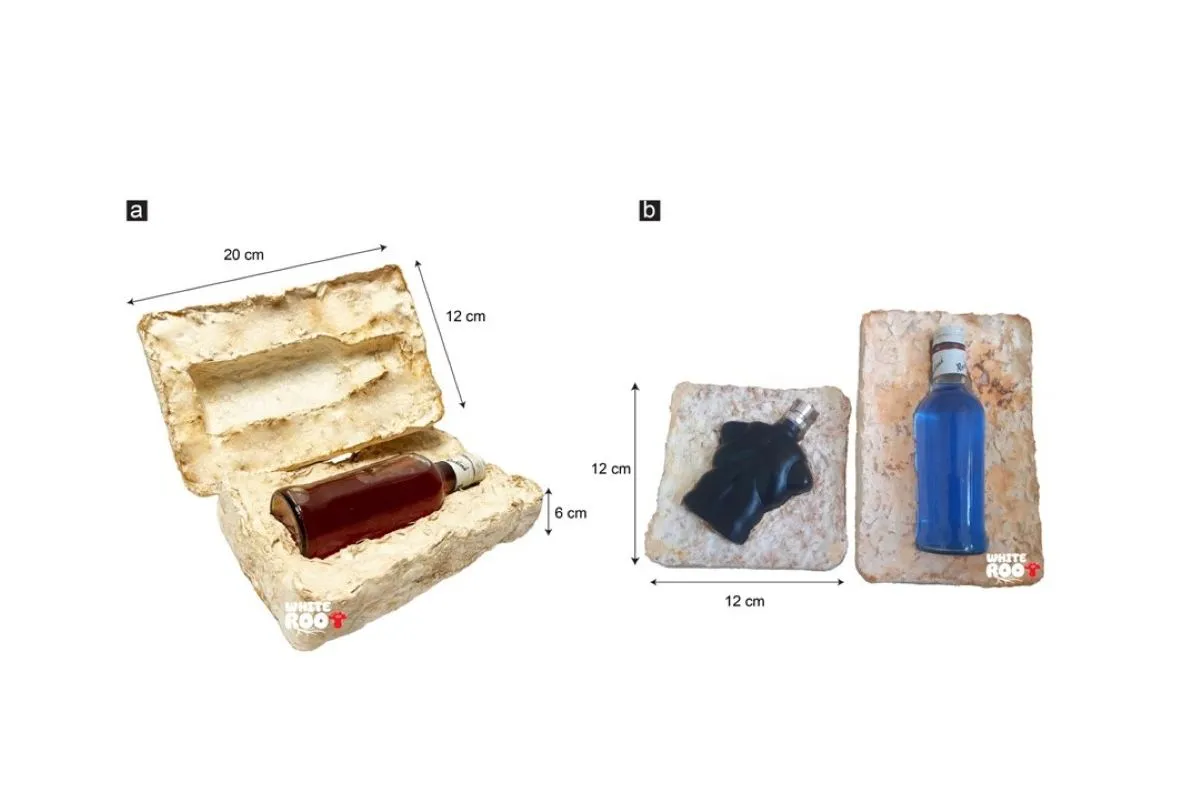 The research team created mycelium-based panels (Image credit: Dhanushka Udayanga).“Furthermore, the packaging materials were stored under normal environmental conditions for two years without any noticeable deterioration in their physical or mechanical properties, demonstrating good durability during real-world storage conditions.”
Scale-up potential
The study, published in Mycology, used fungal mycelium to naturally glue the materials together, creating light and sturdy composite structures. According to the results, one composite demonstrated a compressive strength of 0.65 MPa while maintaining low density, similar to cork and lightweight foam materials.
All the composites were fully biodegradable and broke down within 30 days under soil conditions. The research also claimed that they provide better fire resistance than EPS, meeting the UL-94 V1 standard, which means they self-extinguish after ignition.
The scientists note that water absorption varies depending on the raw materials used, with coir pith-based composites revealing improved resistance to moisture. Thermal tests confirmed that the materials remain stable at moderate temperatures.
Among the tested options, composites produced using Ganoderma orbiforme with coir pith and coconut sawdust demonstrated the strongest potential for protective packaging applications. The study notes that further research into production scale-up and process optimization will be essential to support commercialization and broader market adoption.
“Commercial-scale production requires a consistent supply of high-quality raw materials, reliable sterilization to prevent microbial contamination, and standardized cultivation conditions to ensure uniform mycelial growth. Sterilization and dehydration are energy-intensive processes; therefore, integrating renewable energy sources would help reduce production costs and improve sustainability,” says Udayanga.
“As some agricultural substrates are seasonal, establishing a reliable year-round supply chain is essential for continuous production. Since the properties of mycelium-based composites are influenced by both the growth conditions and the quality of the raw materials, every stage of the production process must be closely monitored.”
“In addition, strict quality-control measures are required to maintain consistent density, mechanical properties, and dimensional accuracy. Finally, optimizing production time, improving process efficiency, and reducing manufacturing costs are critical for achieving commercial viability,” he concludes.