




Germany’s VerpackDG tightens packaging rules under PPWR


Key takeaways
- Germany’s VerpackDG aligns national packaging law with the EU PPWR while maintaining existing dual-system and system-participation structures.
- The legislation introduces new approval and financial security requirements for producers of B2B packaging not subject to system participation.
- Non-compliant companies face distribution bans, profit repayment, and fines.

Germany has aligned its packaging legislation with the EU Packaging and Packaging Waste Regulation (PPWR). The Packaging Law Implementation Act (VerpackDG) replaces Germany’s 2017 Packaging Act (VerpackG), and comes into force on August 12.
While the PPWR is directly applicable in Germany, as with all EU countries, VerpackDG determines how EPR registration, authorization, and enforcement are administered nationally — provided they do not conflict with EU law.
Packaging Insights sits down with Dr. Marc Ruttloff, lawyer and partner at Gleiss Lutz, a commercial law firm, and Freida Wüschner Gubbins, senior regulatory compliance specialist at Adherent, to unpack the legislation and how it differs from the previous VerpackG.
While the majority of significant changes to packaging requirements correspond to the PPWR, Ruttloff and Wüschner Gubbins outline how VerpackDG also differs from the EU legislation.

“The VerpackDG partially goes beyond the PPWR requirements, most notably by introducing a new approval obligation for producers of non-system-participation-obligated packaging,” says Ruttloff. “This effectively imposes significant new duties and additional compliance burdens on companies operating in the B2B area.”
Providing certainty
Ruttloff argues that VerpackDG “largely preserves” existing dual-system structures and frameworks established under the previous VerpackG. “For most companies, the general compliance structures remain similar.”
Wüschner Gubbins says VerpackDG provides “more certainty” for producers in that it establishes which aspects of Germany’s legal system for packaging are to remain the same, and which are different under the PPWR. Namely, the dual system and system participation obligations are to be retained, she adds.
“VerpackDG also establishes an exemption from EU heavy metal limits for reusable plastic crates and pallets circulating in Germany, allowing them to remain on the market even if they exceed standard thresholds.”
She says that this will give “some relief” to producers from the PPWR’s substance restrictions.
Changes to VerpackG
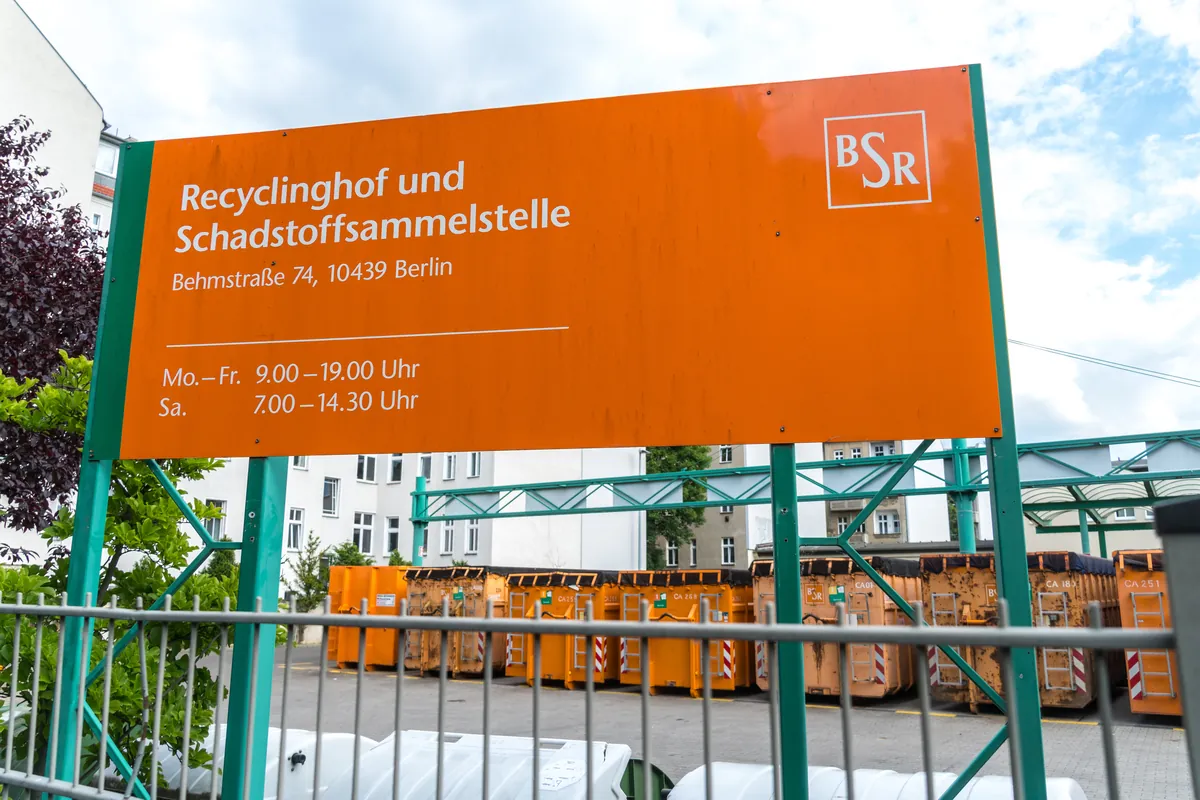 VerpackDG determines how EPR registration, authorization, and enforcement are administered nationally.As well as divergences from the PPWR, the VerpackDG also changes and provides an update to the former legislation in Germany that governed packaging.
“The most significant change concerns the B2B sector,” says Ruttloff. Under the former VerpackG, producers of non-system-participation-obligated packaging were subject only to individual take-back and recycling obligations. The VerpackDG now introduces a formal approval requirement for these producers through the “Zentrale Stelle Verpackungsregister.”
He explains that this approval requires that a producer demonstrate “adequate financial and organizational resources, provide an insolvency-proof security deposit, and have concluded a financing agreement.”
“As an alternative to the new individual approval, producers may transfer their EPR to a licensed producer responsibility organization (PRO) by voluntarily participating in a licensed system.”
PPWR alignment
Wüschner Gubbins explains that the majority of “significant changes” to packaging requirements come from the PPWR. “VerpackDG serves to support the implementation of the PPWR in Germany,” she notes, highlighting three areas that are of key concern to packaging producers.
“First, the obligation to appoint an authorized representative for EPR if the business is based outside of Germany. Secondly, for packaging not subject to system participation, new additional authorizations from the Central Agency Packaging Register will be required.”
“Thirdly, the strict new enforcement measures prohibiting the distribution of packaging from manufacturers who haven’t registered, have neglected to participate in a required PRO, or lack necessary authorizations for exempt packaging types.”
 Non-compliance with VerpackDG can result in fines and repayment of profits.She underscores that these measures will have a “knock-on effect” for distributors and fulfillment service providers, who face bans if found offering, selling, or storing non-compliant packaging.
Other stipulations concern deposit return schemes, recycling, and waste prevention measures, such as reuse.
Compliance risks
Non-compliance with VerpackDG can result in fines and repayment of profits. Wüschner Gubbins notes that the new legislation provides businesses with “clarity on potential non-compliance penalties, as specific fine amounts are not detailed directly in the PPWR.”
Moreover, she also explains that VerpackDG allows Declarations of Conformity to be submitted in either German or English, adding that “this will provide some welcome flexibility for businesses marketing packaging across multiple jurisdictions.”
“The key enforcement risk is a maximum fine of up to €200,000 (US$230,154) for violations of the VerpackDG and PPWR, combined with the possibility of disgorgement of profits,” suggests Ruttloff.
“Although the PPWR was already adopted in December 2024, in our experience, many businesses are still not sufficiently prepared for implementation.”
This sentiment is echoed by many in the industry who say that companies are still struggling to understand the full scope of their obligations, while regulatory uncertainty is delaying compliance preparations.
By tightening registration, authorization, and compliance controls, the German government aims to support fair competition, advance packaging waste prevention, and reuse and recycling infrastructure.
Ruttloff concludes that “the biggest practical compliance risks” involve misclassifying packaging, assuming the wrong economic-operator role under the PPWR, missing registration or system-participation duties, and failing to comply with EPR obligations.