


IWK Packaging Systems unveils recyclable cardboard blister machine in North America


Key takeaways
- IWK Packaging Systems launches its Cabliblue 870 system, bringing fully recyclable cardboard blister packaging to the North American market.
- Modular design enables customizable blister formats and ergonomic, tool-free operation for pharma, medical, and beauty products.
- The system aligns with industry momentum toward fiber-based solutions amid rising sustainability pressure in pharmaceutical packaging.
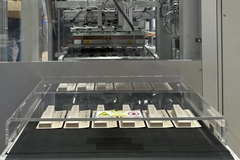
IWK Packaging Systems, a Germany-based manufacturer of pharmaceutical, health, and beauty packing equipment, has launched a machine that produces fully cardboard blister packs for the North American market.
The IWK Cabliblue 870 Blister System features card-to-card blister technology, where both the cardboard blisters are recyclable and made of the same material.
The machine features a modular design that allows for customization of various blister shapes and sizes. It can produce approximately 22 large-capacity blister packages per minute. According to IWK, the system is suitable for medical, pharmaceutical, and cosmetics products.
“The IWK Cabliblue 870 leans into the push toward fiber-based packaging, which significantly reduces reliance on single-use plastics. As a packaging material, cardboard enjoys a well-established, near-universal recycling stream. IWK’s expertise in handling cardboard as a packaging material ensures smooth transitions from plastic to cardboard blisters,” says the company.

The machine is also “highly ergonomic,” with a user-friendly design that includes accessible operating stations and tool-free changeover, and limits rest time between product processing.
The machine’s transport pallet is compatible with manual and automatic feeding and can be adjusted via a “click and tighten” motion. Additionally, sensors notify operators when the pallet is locked.
Blister pack innovation
Packaging for the medical market presents unique challenges to the industry. Pharmaceutical safety, product quality, and supply chain traceability must be maintained without compromise. At the same time, pressure is building for sustainability improvements.
Recently, ACG launched a desiccant-based cold-form blister pack to protect moisture-sensitive pharmaceutical products. The DryPod aims to reduce reliance on co-extrusion-based technology, which creates challenges such as limited machine compatibility, dependence on specific lidding foils, reduced supplier options, and irregular on-site technical support.
Pharmaceutical packaging recycling efforts have also increased. In November, Optical by National Pharmacies partnered with Opticycle to introduce a return and recycling program for contact lens packaging waste in Adelaide, Australia.
Meanwhile, UK-based pharmacy chain Boots expanded its recycling scheme for medicine and blister packaging to 800 stores across the UK.