

Shell advances chemical recycling with industry and research partners


Key takeaways
- Shell, Renewi, BlueAlp, and Utrecht University researchers are developing catalyst and adsorbent materials to improve chemical recycling processes.
- The CLEAN project targets contaminated and hard-to-recycle polyolefin films, including packaging and horticultural plastics containing EVOH layers.
- The project is backed by €1.5 million (US$1.71 million) in National Growth Fund Programme Circular Plastics NL funding.
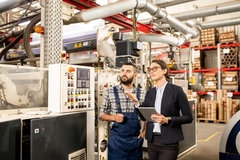
International oil company Shell, alongside recyclers Renewi and BlueAlp, has partnered with researchers from Utrecht University, the Netherlands, to develop catalyst and adsorbent materials designed to address “critical bottlenecks” in current chemical recycling processes.
In the Catalytic Low-temp Efficiency for Advanced decontaminatioN (CLEAN) project, Renewi collects, sorts, and processes plastic waste into flakes, which BlueAlp converts into pyrolysis oil. Then, Shell uses this oil as feedstock to produce new plastics and chemicals.
“It is only when you see it firsthand that you realize the true complexity of recycling,” says professor Bert Weckhuysen, the project’s lead, on a trip to Renewi and BlueAlp facilities in Belgium.
“The volume of plastic is enormous, while the waste stream itself is highly diverse and often heavily contaminated. That makes it a fascinating challenge to translate our scientific expertise into practical solutions.”
Last year, the consortium was awarded €1.5 million (US$1.71 million) in funding through the National Growth Fund Programme Circular Plastics NL to scale its operations.
Kim Meulenbroeks, innovation manager at Renewi, says: “The project is clearly defined, and with the support of the grant, participation is no longer a casual commitment. I expect developments will widen the variety of waste plastics suitable for pyrolysis. Therefore, increasing recycling volumes and lowering the amount of plastic waste going to incineration.”
Chemicals for plastic recycling
Catalysts and adsorbents are key chemicals to the plastics recycling process. Catalysts accelerate and “steer” chemical reactions, enabling the separation and processing of plastics at lower temperatures with reduced energy consumption, outlines the consortium.
Adsorbents capture unwanted substances, helping to remove contaminants from plastic waste streams.
“Working closely with industry gives us direct insight into real-world challenges, and enables us to apply our scientific expertise where it can have the greatest impact,” adds Weckhuysen.
In 2021, Shell announced its investment in BlueAlp to develop, scale, and deploy BlueAlp’s plastic waste to chemical feedstock technology.
Hard-to-recycle films
Specifically, the consortium of researchers and industry aims to tackle polyolefin films from horticulture and packaging, which are hard to recycle due to contamination and the presence of additives.
Valentijn de Neve, CEO at BlueAlp, says: “Looking across the value chain to most efficiently remove contaminants will yield much better results than looking at it in isolation.”
 As innovation in the chemical recycling sector grows, some environmental NGOs and health advocacy groups warn that the process carries risks.Polyolefin films often have a thin layer of ethylene-vinyl alcohol (EVOH) for product preservation. EVOH cannot be recycled as its high oxygen content reduces the quality of recycled plastics. According to the Utrecht researchers, current pyrolysis technologies cannot remove the EVOH, meaning that many packaging materials are incinerated.
Chemical recycling
De Neve continues that chemical recycling is already happening at scale, with investments bringing to light the challenges that scaling brings.
He adds: “We have a strong consortium in place with complementary capabilities that will look at managing contaminants in an even more efficient manner. Together, we will focus on targeting an even wider variety of plastic waste, significantly reducing what is currently incinerated.”
As innovation in the chemical recycling sector grows, some environmental NGOs and health advocacy groups warn that the process is a “false solution” to plastic pollution.
Weyinmi Okotie, clean air program manager at GAIA Africa, told Packaging Insights that waste-to-energy solutions come with many environmental, climate-related, and health impacts — largely due to the fact that chemical recycling facilities emit air pollutants.
He argues: “Incinerators are promoted as climate-friendly ways to manage waste. Some even go as far as calling incinerators renewable energy. That’s the biggest lie — burning fossil fuels as renewable energy.”
In 2024, Green Dot announced it would supply pyrolysis oil to Shell for circular plastic polymers. The polymers can be used to make contact-sensitive plastic packaging, which is designed for various contexts such as animal nutrition, food contact, medical devices, and cosmetic products.