


UK recycling capacity gap puts domestic plastics processing under pressure


Key takeaways
- A Viridor-commissioned report warns the UK may collect more plastics for recycling than it can process domestically as recycling capacity declines.
- Industry players say volatile material markets, cheap imports, high operating costs, and policy delays are weakening investment confidence.
- Viridor, Biffa, and Plastics Europe call for stronger recycled content targets, fairer trade rules, improved traceability, and long-term support for domestic recycling infrastructure.

A Viridor-commissioned report has warned that the UK’s plastics recycling capacity is shrinking, just as circular economy policies are expected to increase the amount of plastic collected for recycling, highlighting the risk that the UK may collect more plastic than it can process domestically.
It estimates that, by 2060, 4.2 million to 4.9 million metric tons of plastics will be separated for recycling in the UK. To recycle this domestically, the UK will need another 3.6 million to 4.4 million metric tons per year of domestic plastics recycling capacity.
The report by the UK-based recycling and waste management company indicates a wider industry struggle in Europe to keep recycling competitive and effective amid low-cost virgin and recycled plastic imports. Packaging Insights speaks to Viridor, Biffa, and Plastics Europe to understand current recycling pressures in the UK and EU, as well as solutions for its operational success amid the transition to a circular economy.

“The report highlights the importance of policy certainty, clear demand signals for recycled materials, and a regulatory environment that supports investment in domestic recycling infrastructure,” Tim Rotheray, chief sustainability officer at Viridor, tells us.
The report also calls for wider recycled content targets beyond packaging, the “de-risking” of chemical or advanced recycling, and improved traceability standards to tackle fraudulent recycled polymer claims — though HM Revenue and Customs (HMRC) says it currently holds very little evidence of widespread fraud.
“The introduction of long-term revenue support mechanisms for plastics recycling, with payments linked to the cost of recycling rather than volatile oil prices, would provide the certainty needed to unlock investment, much as similar mechanisms did for the UK’s wind and solar sectors,” continues Rotheray.
“Stronger controls on imported virgin and recycled plastics would help create a level playing field, ensuring imports meet the same environmental, traceability, and safety standards required of UK operators.”
Recycling capacity in decline?
According to the report, the UK has lost 22% of its plastics recycling capacity between 2023 and 2025. A spokesperson from Biffa, also a waste management company in the UK, tells Packaging Insights that “far too much” unprocessed plastic waste is shipped abroad.
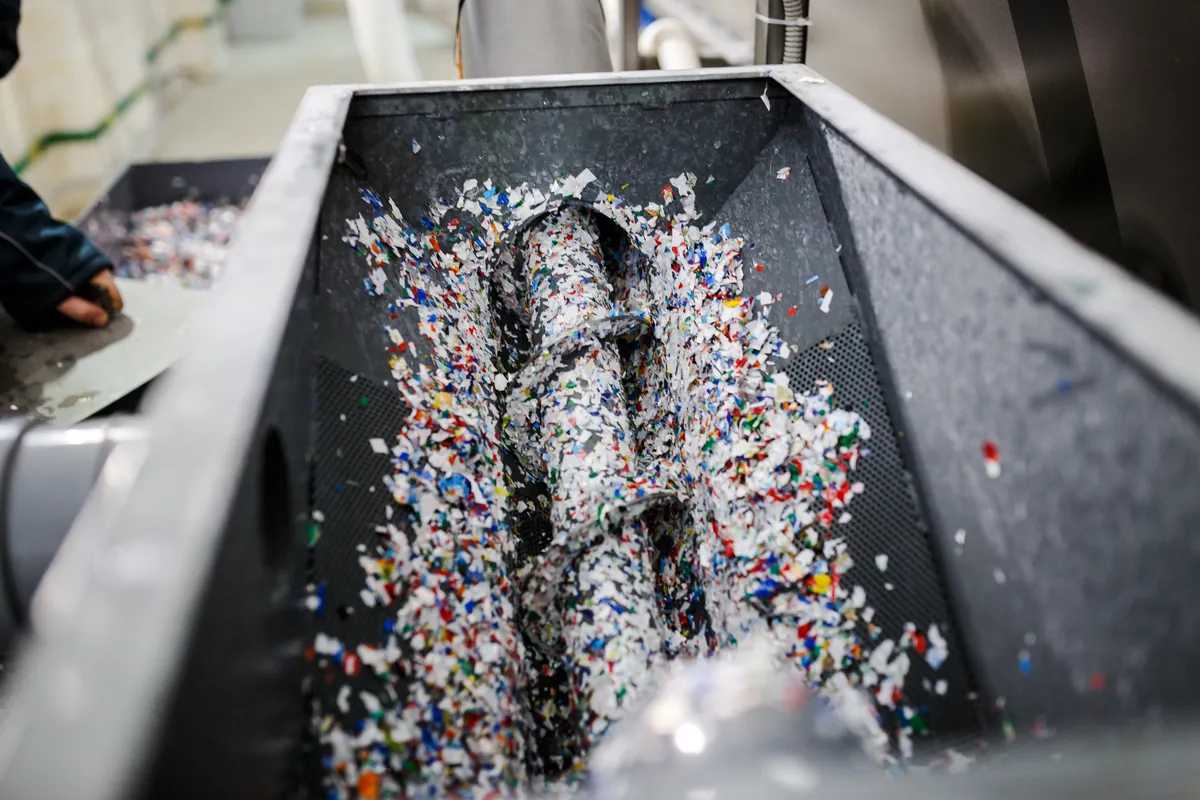 Rotheray says the report underscores the need for policy certainty, stronger demand for recycled materials, and investment-friendly regulation.“The UK could end exports of unprocessed plastic packaging waste by 2030, to support over 9,000 jobs and deliver almost £900 million (US$1.2 billion) of economic output each year, without requiring public money,” says the Biffa spokesperson.
Biffa’s Washington, UK, plant was mothballed in June 2024 and closed in February 2025. The company tells us that challenging market and regulatory conditions are behind the decision. Biffa has also called on the UK Government to cease exporting plastic waste.
The UK’s plastic packaging recycling rate is shown to be on an upward trajectory based on data from the Department for Environment Food and Rural Affairs (Defra) from 2013 to 2024. A Biffa-commissioned analysis by consultancy Hybrid Economics suggests that it is plausible to expect this trend to be sustained for the rest of the decade, pointing to the introduction of deposit return schemes and the Simpler Recycling Schemes in 2027.
Viridor’s Rotheray argues that the decline in the UK’s capacity to recycle plastics is a result of volatile material markets, high operating costs, and uncertainty around future policy frameworks.
“Low-cost virgin plastic imports from Asia, driven by significant new production capacity, have depressed prices and reduced demand for recycled materials, while volatile oil prices have made recycled feedstocks less competitive and investment more difficult,” he adds.
In addition, he notes that delays to key recycling reforms, first announced in 2018, have further “undermined investor confidence.” Recently, frustration over the delayed publication of the UK’s Circular Economy Growth Plan has drawn frustration from industry groups. In a written parliamentary answer published on June 15, Defra minister Mary Creagh said the government intends to publish the Circular Economy Growth Plan “soon.”
Falsely labeled recycled plastics
Viridor also says that policy and investment need to address fraudulent recycled polymers that enter the market and set traceability standards.
Rotheray adds: “The scale of falsely labeled recycled plastic imports is widely recognized as a concern across the sector, although it is difficult for individual operators to quantify precisely.”
“Imports should only be accepted from jurisdictions with environmental, traceability, and safety standards that are equivalent to, or higher than, those required in the UK. This would help improve transparency, support domestic recycling investment, and ensure greater confidence in recycled content claims.”
However, HMRC says it holds “very little evidence” to substantiate concerns about widespread fraud. In May, it announced a 12-week consultation to explore certification due to the potential risk of fraudulent recycled plastic claims.
An EU-wide concern
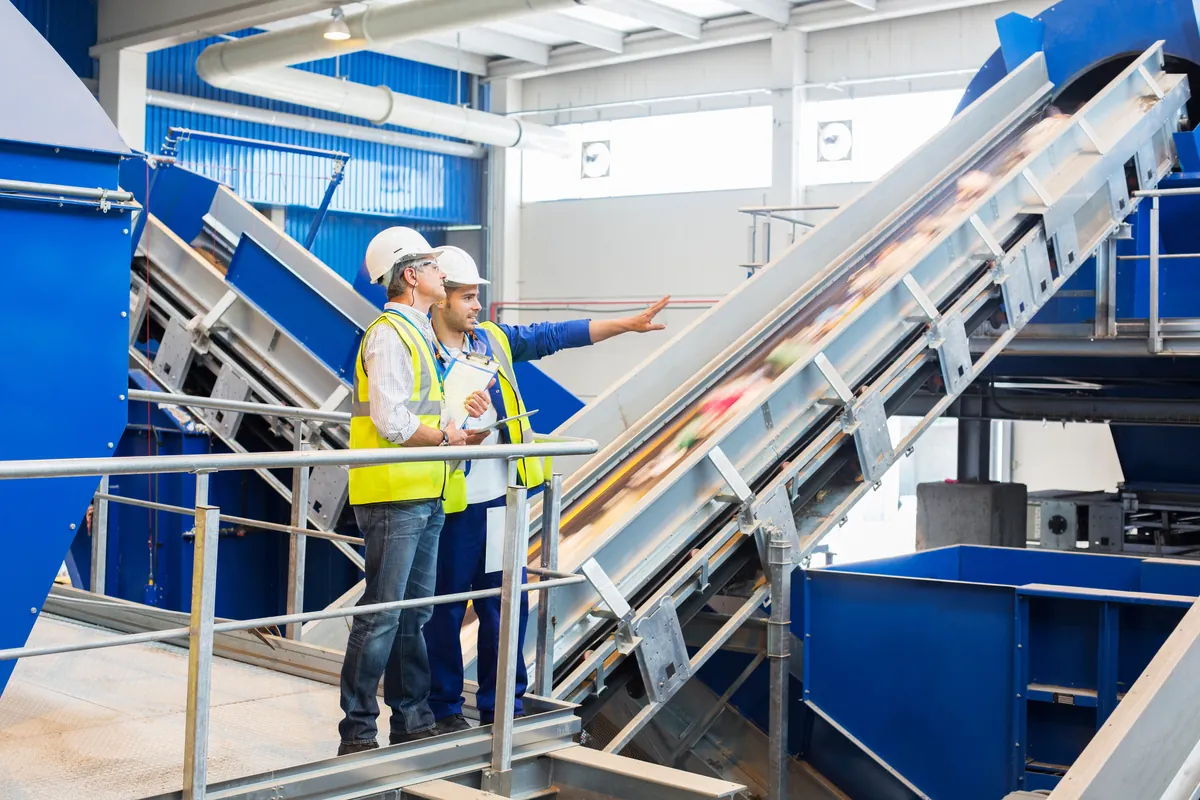 According to Biffa, the UK could end exports of unprocessed plastic packaging waste by 2030, support over 9,000 jobs, and generate nearly £900 million (US$1.2 billion) annually.Concern over the decline in plastics recycling infrastructure and capacity is not restricted to the UK. A spokesperson from Plastics Europe tells Packaging Insights that, while they can’t comment about the specific UK context, they can say that Europe is exporting sorted waste and importing recycled materials — “thereby undermining both our industrial base and our climate ambitions.”
A recent report by the European plastics industry trade body revealed that the transition to a circular plastic economy decreased “dramatically” in 2024. It outlines that, amid increasing global competition and weak investment opportunities, 15.8% of Europe’s total plastics production was circular.
“The challenge is being driven by a combination of factors: high energy and feedstock costs, rising emissions costs, increased global competition and overcapacity, and current EU policy frameworks lack the market signals, scale and speed required to reverse current trends,” adds the Plastics Europe spokesperson.
The report, titled The Circular Economy for Plastics: A European Analysis, identified that Europe’s annual growth in circular production declined from 13.6% in 2022 to 1.2% in 2024, with circular plastic production dropping to 8.7 million metric tons.
“The most urgent measures we see are to: reduce energy and carbon cost pressure, ensure fair trade and a level playing field, create stronger market-pull for circular plastics, and harmonize the single market so that waste, recycling, and EPR rules are more consistent across member states.”
Future investments
Despite industry concerns surrounding the plastics recycling industry, there is also a push to stabilize the industry.
The Biffa spokesperson points to the fact that its plastic milk bottle plant in Redcar, UK, has recently recycled its 10 billionth bottle. “More than just a local success story, this milestone speaks to the wider benefits of the UK being responsible for its own waste,” underscores the Biffa spokesperson.
In addition, the Flexible Plastic Fund (FPF), managed by the producer compliance scheme Ecosurety, has launched the FlexCircular initiative, which aims to accelerate the UK’s transition to a circular economy for flexible plastic packaging.
 A report by Plastic Europe revealed that the transition to a circular plastic economy in Europe decreased “dramatically” in 2024.Gareth Morton, discovery manager at Ecosurety and FPF lead, comments: “FPF FlexCircular is about turning the proof of collections into a real, investable circular system. By understanding what the UK needs in terms of investment, infrastructure, and policy, we can maximize the opportunity to recycle flexible plastics at scale, creating benefits for industry, consumers, and the environment alike.”
The Plastics Europe spokesperson says that the industry body is calling for the “need to expand collection and sorting, support all circular feedstocks through a technology-neutral approach, and reinvest instruments such as the EU plastics levy into circularity solutions.
The Plastics Europe spokesperson also says that the use of public procurement and EPR bonuses can reward circular content, and develop “integrated circularity hubs” combining mechanical and chemical recycling and bio-based production.
For Viridor’s Rotheray, opportunities to secure recycling capacity in the UK lie in utilizing energy-from-waste alongside increased mechanical recycling.
He notes: “Recycling and energy-from-waste play different but complementary roles. More recyclable plastic should be recycled, while energy-from-waste remains essential for managing residual waste that cannot be recycled.”
“The more plastics we recycle, the lower the emissions from energy-from-waste and the more cost-effective carbon capture becomes. The economy and climate will benefit most from a ‘both and’ rather than an ‘either or’ approach.”
Still, according to Viridor’s report, investment in the UK’s plastic recycling sector is still a long way from dealing with the amounts of plastic that the country is estimated to collect.
It approximates that by 2030, the UK will need an additional 18 material recovery facilities, 38 mechanical recycling plants, and between 13 and 25 chemical recycling plants. By 2060, it estimates a further 88 plants would be required to deal with the capacity gap for plastic recycling.