

Pack Expo 2026 live: Tetra Pak, SIG & TNA on innovating for on-the-go packaging formats

Key takeaways
- Convenience and portion control are driving demand for smaller snack packaging formats in North America.
- Recyclability is becoming increasingly important, with packaging suppliers, such as SIG, investing in recyclable materials and infrastructure.
- Protein, clean label, and functional food trends are influencing packaging development.
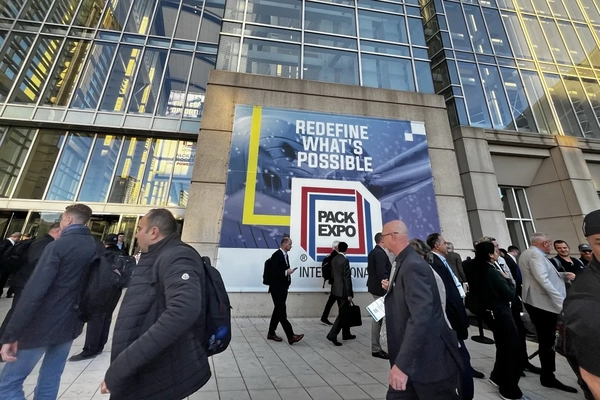
At Pack Expo International 2026 in Chicago, US (Oct 18–21), packaging companies highlight convenience and portability as key drivers of snack packaging innovation in North America.
Busy lifestyles and growing interest in portion control are prompting companies to develop smaller formats designed for on-the-go consumption, experts from SIG, Tetra Pak, and TNA tell Packaging Insights at the show.
Mukul Shukla, VP at TNA North America, says: “All markets are moving toward smaller bags, and the US is following this trend. We are seeing a lot of change in the industry, with pack sizes shifting from 20 oz bags to one-oz packs.”
“Convenience and health are among the factors driving this trend. People are looking for healthier snack options and smaller portions.”
Jami Leveen, head of sustainability and corporate relations for North America at SIG Group, echoes the statement.
“Convenience remains a major factor in people’s day-to-day lives. We want to improve material efficiency, recyclability, and acceptance, but we also have to be able to sell what people want to buy,” she says.
Shifting to recyclable single-serve
.jpeg) Mukul Shukla, VP at TNA North America.At the event, TNA is presenting its TNA Robag Quantum. Shukla highlights that the machine is well-suited to smaller bag production, offering higher speeds and faster changeovers.
“This bagmaker can work with different kinds of packaging materials, including recyclable films,” he says.
Shukla shares that Europe is experiencing a greater influence of EPR and recycling expectations compared to the US.
However, companies such as SIG are already working to advance recyclability in the US alongside convenient packaging solutions.
Leveen remarks: “Multi-serve packs have advantages, but it depends on the consumer and what they need. If you buy something in bulk but want to take it with you, you will often transfer it into plastic snack bags or wrap it in a smaller container.”
“On-the-go packs can also help tackle food waste. Food tends to be wasted less this way because you buy the portion you are going to consume, rather than taking a larger amount that you might not finish.”
As a member of the Carton Council of North America in the US, which brings together four major carton manufacturers, Leveen says that SIG wants to make sure that its packaging is recyclable.
“We have been investing in recycling infrastructure because we knew we needed to ensure our cartons were recyclable.”
“The situation has gone from it being nice to have recyclable cartons to it being essential for remaining viable. We need to make progress on the flexible packaging side as well.”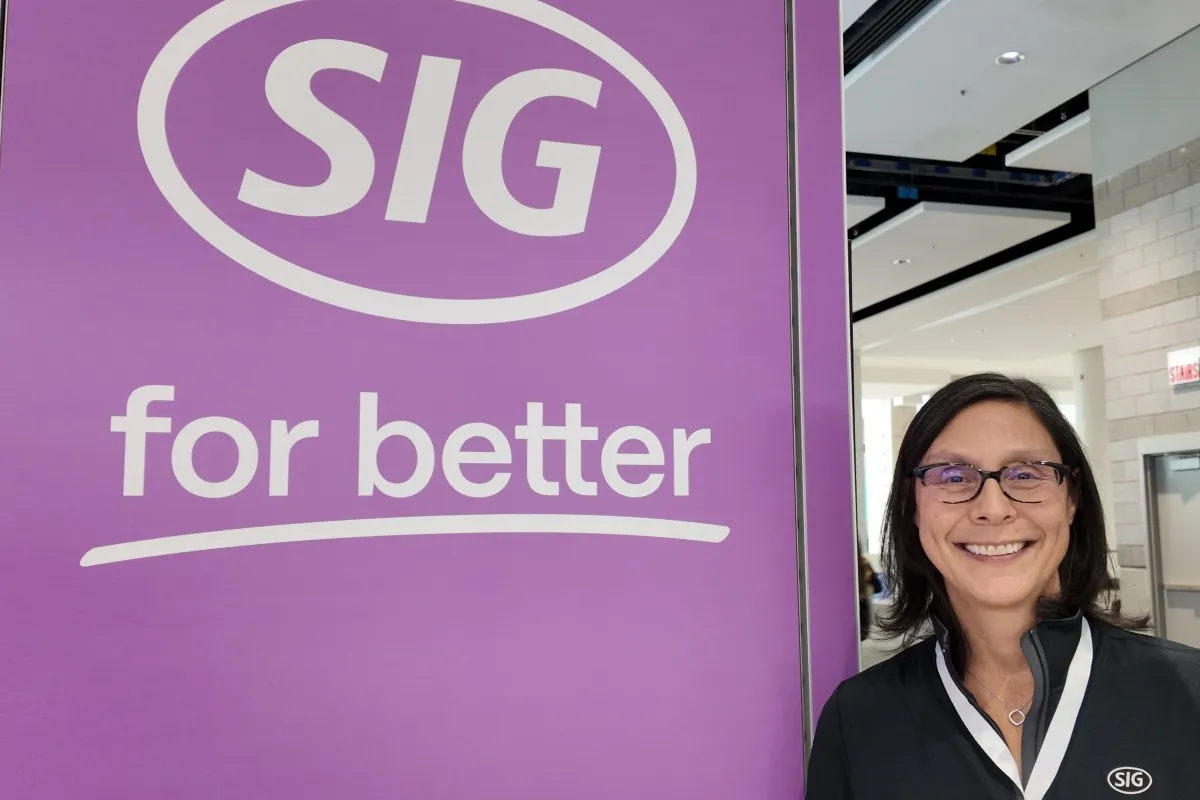 Jami Leveen, head of sustainability and corporate relations for North America at SIG Group.
Advancing recycling systems
Leveen identifies that currently, there are many opportunities for manufacturers to invest in infrastructure and ensure that consumers can do the right thing with their preferred products and packaging.
“Think about how long it has taken to reach the point where recycling facilities are widely available.”
“Twenty years ago, they were not widely available, even though the technology technically existed,” she adds.
“It takes time to build up the infrastructure. When I go to Europe, I am impressed by how easy it is to do the right thing. We just need to get there in the US.”
Cost-reducing solutions
On the show floor, Tetra Pak notes that there is a growing trend toward functional, protein, and related products in the US. The company aims to balance clean label products with fewer preservatives and consumer engagement with a product.
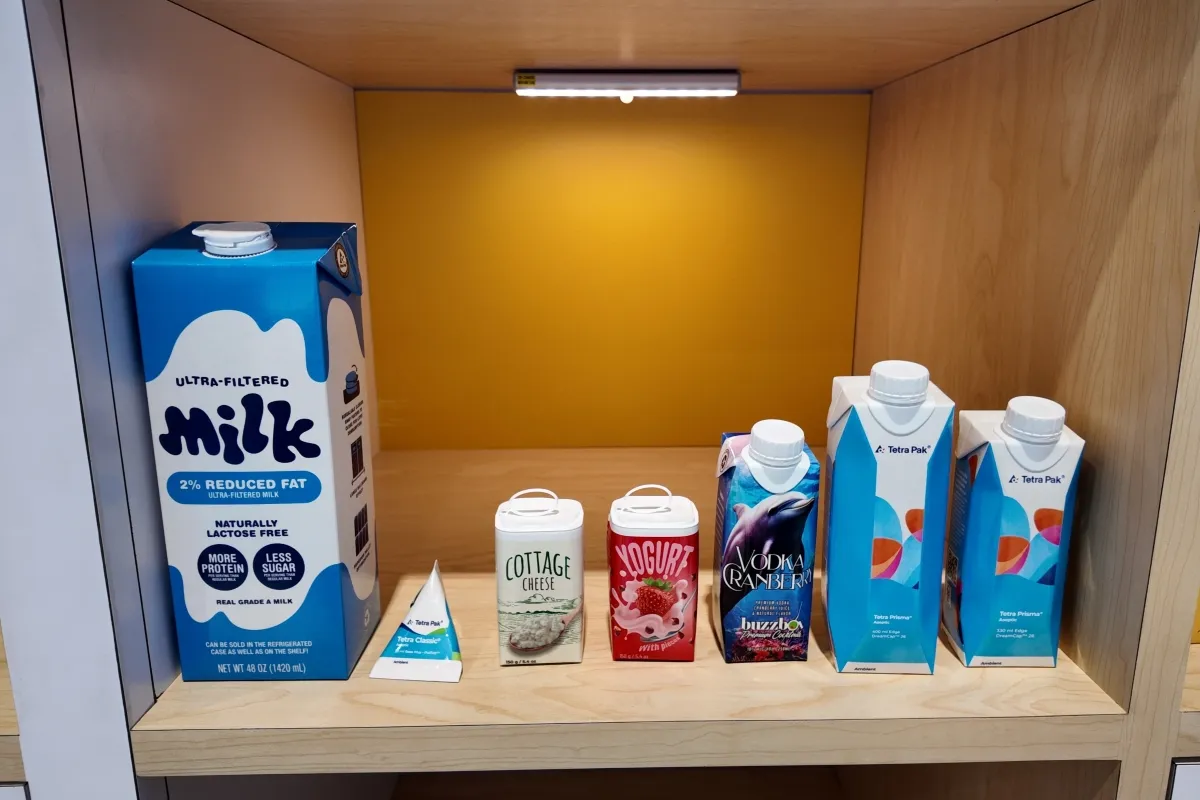 Tetra Pak shares that the shelf-stable technology can be used for products on the chilled shelf.
“An interesting development this year is our investment in snacking, particularly with our new Tetra Reva package. It is designed for products such as yogurt and cottage cheese, which are becoming increasingly popular because of their protein content and clean label appeal,” he adds.
“The package also offers an additional benefit. Although it is designed for refrigerated products, it can be carried in a backpack without the risk of spillage. That is a significant advantage for the market.”
At Pack Expo 2026, Tetra Pak is also presenting packages that are developed to help reduce costs.
“In the US, the main packaging format for protein shakes is what we call the square package. We have redesigned it while retaining its familiar appearance, reducing costs through improved production efficiency and savings inside the factory,” says Gonçalves.
With live reporting from Milana Nikolova at Pack Expo 2026.