

Tetra Pak launches carton packaging for shelf-stable tuna

Key takeaways
- Tetra Pak has equipped Spanish seafood producer Jealsa with reportedly the first carton packaging for shelf-stable tuna.
- The 200 mL Tetra Recart format debuted with Swedish retailer Axfood and is expected to become available to brands globally.
- Tetra Pak says the carton has a lower carbon footprint than steel cans and glass jars, while offering improved branding, stacking, and storage options.
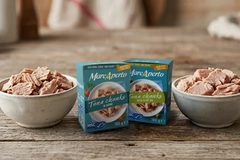
Tetra Pak has equipped Spanish seafood producer Jealsa with reportedly the first carton packaging for shelf-stable tuna.
The Tetra Recart is said to offer a paper-based alternative to traditional metal cans used to package tuna. The 200 mL format was launched last month with food retailer Axfood in Sweden. Tetra Pak says that the carton will soon be available to brands globally.
“This is packaging innovation in a category that has looked the same for generations,” says Tatiana Liceti, executive VP for Packaging Solutions at Tetra Pak.
“With the industry’s first carton for shelf-stable tuna in Tetra Recart, we are giving producers and brands a new way to stand out on shelf to protect and grow market share, support cost-competitive, scalable production, and modernize with a paper-based alternative to cans, while contributing to more sustainable food systems through smarter production and distribution.”
According to Tetra Pak’s market assessment, commissioned by Meticulous Research in 2025, the global shelf‑stable tuna market is expected to grow an estimated 12% to reach 12.4 billion units by 2030, “reflecting rising demand for affordable, versatile, and long‑lasting protein options.”
Keeping food safe
Tetra Pak says that the rectangular shape of the Tetra Recart creates “immediate shelf impact” when compared to conventional round metal cans. Moreover, its flat surfaces offer branding space while its angular edges enable improved stacking and storage.
Jesús M. Alonso Escurís, president at Jealsa, says: “Together, we are delivering a solution that responds to evolving consumer expectations. Following a successful launch in Sweden, we are already seeing strong market momentum and are confident this will continue as demand for more convenient, modern, and sustainable products grows.”
According to Tetra Pak’s comparative LCA of its carton packages and alternative packaging systems for beverages and liquid food on the European market, the carton packaging has the smallest carbon footprint of any package in its category, 85% lower than steel cans and 83% lower than glass jars.
The package also uses up to 71% FSC certified paper, sourced from responsibly managed, renewable forests, says the global packager.
Recently, Tetra Pak partnered with Italian dairy company Sterilgarda Alimenti to unveil a paper-based barrier for its Tetra Brik Aseptic 1000 Edge, reportedly the “first ever” 1 L solution of its kind.
Meanwhile, it also upgraded its Product Development Center at its US and Canada headquarters in Denton, Texas. With the investment, the global food packaging and processing company aims to support F&B brands in creating, formulating, launching, and scaling innovative products.