


Z1ro develops non-wood molded fiber pack to replace plastic and virgin pulp

Key takeaways
- Z1ro has developed molded fiber packaging using non-wood biomass such as bamboo residues, hemp hurd, and fallen leaves.
- The material is designed to replace plastic trays, foam inserts, and virgin wood pulp.
- Z1ro says its lignin-preserving process can reduce material use, improve recyclability, and lower reliance on forest-based raw materials.
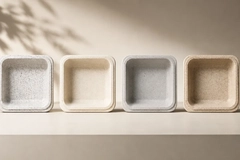 (Image credits: Z1ro).
Z1ro, a France-based materials deep-tech company, has engineered bio-designed molded fiber packaging derived from non-wood biomass sources.
Z1ro points out that many manufacturers remain dependent on virgin wood pulp, plastic materials, or emerging bio-based alternatives that often struggle with cost, scalability, or premium aesthetics. The company aims to deliver scalable alternatives to conventional wood pulp and plastic packaging.
Alexander Sobolenko, founder of Z1ro, tells Packaging Insights: “We focus on cosmetics and beauty, consumer electronics, as well as premium gifting, with custom molded fiber inserts and trays that replace plastic trays and foam inserts while protecting and presenting the product.”
“We combine cellulose fibers with locally available bamboo residues, hemp hurd, and fallen leaves. These formulations have been successfully processed on automated industrial thermoforming equipment, demonstrating their suitability for established packaging production technologies.”
Supporting PPWR goals
Z1ro says the implementation of the EU’s Packaging and Packaging Waste Regulation (PPWR) is increasing pressure across the packaging value chain to strengthen circularity, cut waste, and diversify raw material sources. The company aims to develop material solutions capable of meeting regulatory and commercial requirements. Z1ro adds that its technology is different from conventional pulp production.
 Alexander Sobolenko, founder of Z1ro.Its solution is based on biomass engineering processes developed to preserve part of the natural lignin present within plant fibers. The company utilizes lignin as a natural binding component to decrease processing intensity while maintaining compatibility with existing molded fiber manufacturing infrastructure.
“Our approach directly supports the PPWR’s priorities of packaging minimization and design for recycling: precisely fitted inserts reduce unnecessary packaging volume, while fiber-based material design prioritizes compatibility with paper recycling. For brands, this offers a concrete route to replace plastic packaging while retaining product protection, premium presentation, and a distinctive material identity,” Sobolenko tells us.
Compatible with existing lines
According to the company, preliminary technical and economic assessments show that this approach may lower energy consumption, bring down the use of chemical inputs, and reduce dependence on forest-derived raw materials.
The solution is also said to offer distinctive natural textures and aesthetics and is compatible with existing molded fiber production lines.
“The packaging industry is entering a period of transformation. New regulations, shifting consumer expectations, and growing pressure on natural resources are forcing the industry to rethink its material choices,” says Sobolenko.
“Our ambition is not simply to develop another sustainable material — we aim to build a scalable business around non-wood biomass. The next generation of packaging materials will not emerge solely from petrochemicals or traditional pulp production. It will be created at the intersection of material science, local biomass resources, industrial design, and new manufacturing models.”