



AI expands across packaging design, production and traceability

Key takeaways
- AI adoption is accelerating across packaging, while companies are moving from experimentation toward deployment.
- Companies are using AI for design optimization, production monitoring, traceability, and automated manufacturing.
- AI has the potential to speed hardware development, optimize material use, reduce manufacturing costs, and support data-driven packaging decisions.

The packaging and manufacturing industries have reached a new point in their adoption of AI, with transformations taking place across plant operations, container glass manufacturing, and automated robotics.
Packaging Insights speaks to Aicomp, Vetropack Group, Myneral Labs, and Chef Robotics to explore how AI is shifting the packaging sector, from raw material design to end-of-life reuse cycles.
René Chomsé, software engineer and data scientist at Aicomp, tells us that according to McKinsey Global Surveys, in 2024 and 2025, 13% of surveyed packaging leaders said they had launched a generative AI solution within their function.
However, the proportion abstaining from AI technology use dropped from 70% to 18%. The share saying they had something “in development” rose from 11% to 33%. “While all of that was happening, classical machine learning adoption in our customer base went up,” says Chomsé.
Chomsé notes that technology usually moves much faster than corporate or legal permission. According to Aicomp, once companies are confident a technology has become legitimate, adoption is now progressing “much faster” than it did two years ago.
Rajat Bhageria, founder and CEO at Chef Robotics, shares: “We’re seeing AI become an engineering tool rather than just a creative tool. Earlier, we saw more AI design work focused on generating packaging concepts and graphics, but now teams are using AI to overcome real-world constraints like materials, manufacturing, cost, and sustainability.”
“AI can help engineers explore a lot more variations of a design without hardware prototyping, so turnaround gets faster and cheaper with better results.”
AI tracking on the bottling line
Myneral Labs’ AI model assigns a digital identity to glass bottles. The company tells us that the AI is able to read Cetie codes, standardized for PET and glass bottles, at line speed on curved, glare-heavy, or wet glass conditions where flat labels may fail.
Max Boender, co-founder and CEO at Myneral Labs, says: “Nobody had cracked individual bottle tracking on glass, at full line speed. We built the system to capture it and the AI to read it. Every bottle stops being an anonymous unit in a batch and becomes something we can follow, one at a time, cycle after cycle. That’s not an incremental improvement, that’s a different category of visibility.”
“Per-bottle read means we know each bottle’s exact cycle count, its round-trip time, and which ones never came back, down to the specific route or customer losing them. Our machine vision system generates over 300 million data records a year per single plant, far more than any team could review by hand,” the company says.
“The AI processes that volume as it comes in and surfaces recommendations live, on the line, not in a report someone reads after the fact.”
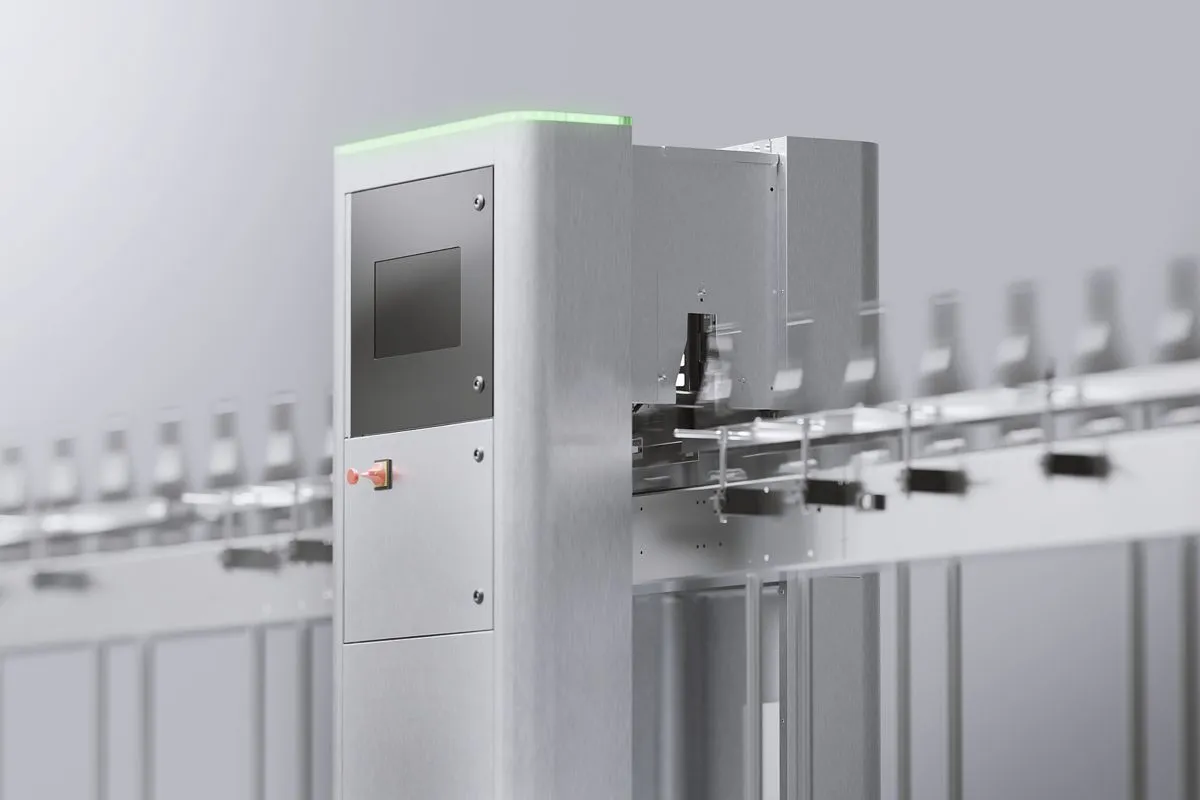 According to Myneral Labs, MynVision AI MVS logs are capable of reading quality on every pass (Image credit: Myneral Labs).Myneral Labs shares that its MynVision AI MVS reads the quality of bottles on the line. In this way, a bottle that is hard to scan after multiple uses can show surface wear before it’s visible to the eye. “That trend, aggregated across bottles, gives manufacturers a real signal for adjusting materials or coatings to extend lifespan.”
“If a mold is underperforming, or bottles on rougher routes are failing faster, the AI spots the link on its own. A manufacturer isn’t just told a bottle was rejected; they know why, instantly, without anyone digging through mould numbers or delivery routes,” the company explains.
Recently, Coca-Cola Europacific Partners’ German business, CCEP Deutschland, Vetropack, and Myneral Labs developed a digital traceability system that marks each reusable glass bottle with an individual code.
Accelerating R&D
Vetropack is using AI, computer vision, the Industrial Internet of Things, and advanced robotics to create digital replicas for thermal tempering furnaces and testing machines.
The glass packaging manufacturer has designed a digital twins project to mirror real-life processes and create possibilities for real-time monitoring, simulations, and extended data analyses.
Dr. Daniel Egger, innovation director at Vetropack Group, says: “Digital twins allow us to evaluate products and processes virtually and to compare different scenarios before implementing changes in the physical environment. This can improve decision-making by providing a better understanding of complex process interactions and by identifying optimization potential in areas such as quality, efficiency, energy consumption, and process stability.”
“Where appropriate, these digital models can be complemented by advanced analytics and AI-based methods. At Vetropack, several such approaches are currently being explored and evaluated. While we do not disclose specific performance figures at this stage, the overall objective is to shorten development and optimization cycles, reduce the need for physical trials, and enable more robust, data-driven decisions.”
Advancing hardware
AI in packaging extends beyond software dashboards, according to Chef Robotics.
Bhageria from Chef Robotics highlights that they are increasingly using robotics to assemble ingredients for packaged food. For its robotic solutions, the company uses AI to solve complex engineering challenges.
“We don’t need to build and test as many physical prototypes as before, and we’re able to work through a problem much faster than it was possible before AI tools were available. We can evaluate more ideas digitally before committing to a design and keep hardware iterations to a minimum.”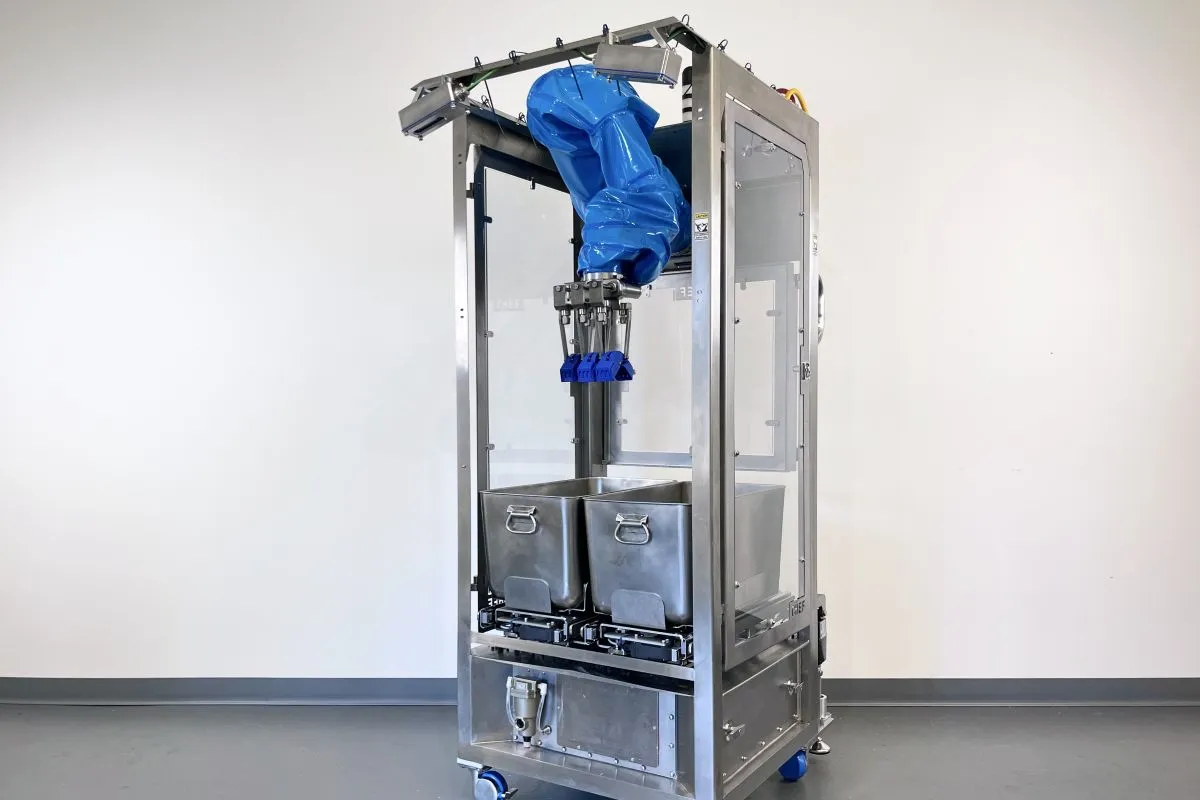 Chef Robotics is teaching a single model to understand how to manipulate food across different ingredients, meals, and environments (Image credit: Chef Robotics).
“Chef Robotics designs physical tools that allow our robots to handle food safely and reliably. An area we’re investing in heavily is the development of our specialized utensils that can handle hundreds of different ingredients with varying shapes, sizes, textures, and fragility,” he adds.
”AI helps us iterate on utensil designs more efficiently by allowing us to evaluate different design options before building physical prototypes. That shortens development cycles and allows us to bring better utensils to customers more quickly.”
Looking into the future
Aicomp’s Chomsé argues that what is new in AI and machine learning in packaging development is the availability of data: companies can now properly capture production data and use it to make predictions, which wasn’t practical in the past.
“Language models add something different — they make the process more dynamic and open up automation that was not possible when everything had to be specified in advance,” he adds.
“EU Packaging and Packaging Waste Regulation moves packaging toward using less material per pack — and being able to evidence why that is the minimum. Minimizing material is an optimization problem, and evidencing it is a data problem.”
Bhageria predicts that AI could make a big impact on sustainability by optimizing designs to reduce material use and manufacturing costs, improve transportation efficiency, and lower carbon emissions.
“AI is shifting design from a largely manual, iterative process to one that’s increasingly data-driven and optimization-focused. Instead of producing a single design and refining it through many rounds of testing, engineers can now evaluate many possible solutions much earlier in the process.”
“We’ll continue moving from narrow AI systems that solve one specific problem to foundation models that can generalize across many related tasks, plus hardware that’s still specialized for each industry or use case.”
“The shift toward general-purpose AI systems could define the next generation of engineering and industrial automation,” he concludes.