

Alaska to ban single-use foam foodware in restaurants and government buildings


Key takeaways
- Alaska’s HB 25 bans single-use PS foodware in restaurants and government buildings from 2027.
- The law encourages reusable alternatives, aiming to reduce pollution, litter, and ocean impact.
- Support of the bill spans party lines, aligning with broader US moves in California, Oregon, and Washington.

In the US, Alaska’s state senate has voted to ban single-use polystyrene (PS) foodware from restaurants and government buildings, starting from January 1, 2027. The Disposable Food Service Ware bill (HB 25) aims to encourage reusable options and raise awareness about the environmental impact of PS.
The types of packaging banned under HB 25 include containers, bowls, plates, trays, cartons, cups, lids, or other single-use items made from PS, as well as various manufacturing techniques for creating expanded foam.
On Monday, the Alaska State Senate reportedly voted 13 to 7 in favor of the ban, while in April, the State House voted 25 to 15 in favor. The bill will be sent to Governor Mike Dunleavy for executive approval.
“This action has support across party lines,” Christy Leavitt, senior campaign director at Oceana, tells Packaging Insights.
“As more governments, businesses, and institutions move away from single-use plastic foam, it presents an opportunity for more sustainable, safer, and reusable products and packaging.”
The bill aligns with the broader legislative trend banning PS packaging in the US, including Washington, Oregon, and California.
Reuse as the alternative?
The good news, says Leavitt, is that there are many other packaging alternatives to single-use packaging foam that offer product integrity as well as “better protection” of oceans and public health.
“The best alternatives are non-toxic, reusable, and refillable products. For foodservice items such as cups, plates, and bowls, switching from single-use plastic items, including foam, to reusable ones can reduce waste, litter, and pollution,” she adds.
The economic cost of switching to reusable packaging is minimal, attests Leavitt.
“Often, businesses even see economic benefits after making this switch. The start-up costs for reuse systems, including purchasing reusable products and dishwashers, can be recouped in only a few years, and businesses can also save on garbage collection fees.”
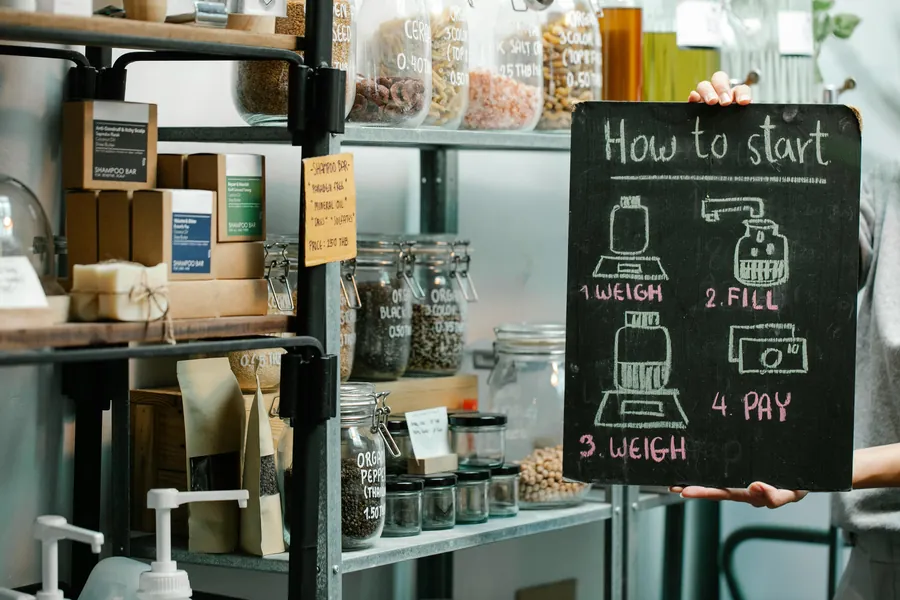 Leavitt suggests reusable packaging as an alternative to single-use foam foodware.Reusable packaging innovation is increasing as consumers push for reduced plastic consumption, though the industry has noted that widespread adoption is limited due to scalability and consumer awareness concerns.
Single-use regulations
PS is a lightweight material, typically valued in packaging for its strong product integrity and heat retention properties. While it is technically recyclable, it cannot go into standard household recycling bins and requires a specialized sorting facility.
Last year, Ineos Styrolution completed its first project of a mechanically recycled PS-based yogurt cup.
Leavitt argues that single-use plastic foam is “unnecessary, unsafe, and virtually unrecyclable,” an increasingly common industry opinion as legislation across the globe continues to limit single-use options.
PS also contains multiple chemical additives that give it its shape, color, and texture, which are then exposed during chemical recycling processes. A South Korean study revealed that PS nanoparticles can affect red blood cell development in zebrafish embryos, suggesting potential ecological and human risks.