

Aluminum can makers rethink design as circularity meets consumer convenience


Key takeaways
- Aluminum can innovation is being shaped by sustainability, cost pressures, compliance, branding, and consumer convenience.
- Brands are using aluminum packaging to create premium, design-led formats, while smaller portion sizes and recyclability are also driving interest.
- Canovation, Henkel, and Sonoco are advancing resealable cans, water-based sealants, lightweighting, and digitalization to improve efficiency and circularity.
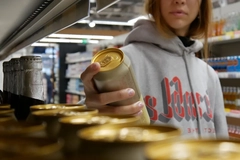
Aluminum can designs are evolving to meet consumer and manufacturing demands. Canovation, Henkel Adhesive Technologies, and Sonoco tell Packaging Insights how resealable all-metal cans, water-based sealants, lightweighting, and digital process optimization are helping can makers improve efficiency and circularity.
“We see five key drivers shaping the next generation of aluminum can innovation: sustainability, economics, health and safety compliance, branding and marketing, as well as consumer experience,” Jeff Grajewski, chief operations officer at Canovation, tells us.
“Sustainability remains foundational, though solutions struggle to succeed due to reluctance to implement without a clear return on investment. Packaging innovation must also be economically attractive, comply with evolving regulatory standards, offer a point of differentiation for brands, and deliver premium value and convenience to the consumer without the premium cost.”
Meanwhile, Rut Jordana, business development manager for EIMEA Metal Packaging at Henkel, spots circularity, lightweighting, and high-speed manufacturing as notable current trends.
“Aluminum cans are increasingly chosen for their recyclability and low carbon footprint, while brand owners demand lighter designs without compromising performance. Further, can surfaces are leveraged as brand assets, while can sizes and shapes, like sleek cans, are becoming more diverse, increasing complexity in production.”
She argues that the rapid growth of aluminum packaging is driven by sustainability and consumer preference.
At the same time, she sees persistent challenges such as balancing lightweighting with packaging stability, integrity, and durability, while ensuring food safety and long shelf life, as well as maintaining high-speed production efficiency. She adds that seal integrity, corrosion protection, and compatibility with different contents remain critical technical requirements.
“Aluminum cans offer a unique opportunity for circular packaging, as the material is virtually infinitely recyclable and can return to the market as a new product in as little as 60 days. Aluminum already has a strong recyclability rate in many EU markets, which we expect to be further supported by the upcoming EU Packaging and Packaging Waste Regulation (PPWR).”
Premium can visuals
Francesco Giannolo, VP for Commercial at Sonoco Consumer Packaging EMEA and APAC, tells us that the company’s latest aluminum packaging developments reflect how brands are using metal packaging to respond to evolving consumer expectations through innovation such as convenient portion formats and elevating traditional categories with premium, “design-led” packaging.
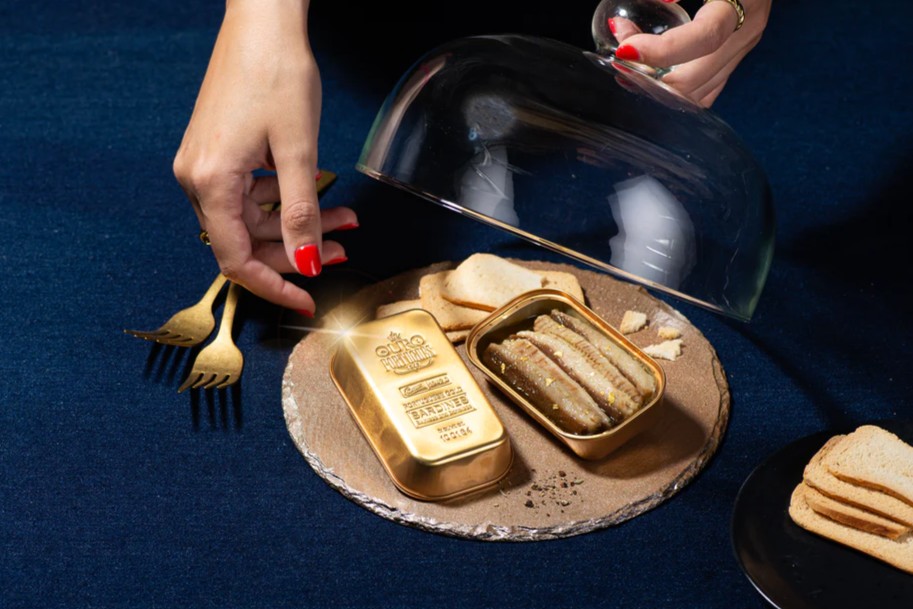 Sonoco's solution for Fábrica de Conservas da Murtosa on Portuguese Gold sardine tin (Image credit: Portuguese Gold).“A recent example is our collaboration with Fábrica de Conservas da Murtosa on the Portuguese Gold sardine tin. By combining high-quality lithographic printing with embossing and debossing directly on the aluminum surface, we reimagined the traditional sardine tin as a premium, giftable pack that celebrates Portuguese heritage while appealing to today's consumers,” Giannolo highlights.
Sonoco is also seeing a growing interest in 85 g aluminum cans for wet pet food, driven by the expansion of the category and by the evolving sustainability landscape.
“As the PPWR accelerates the transition toward more circular packaging solutions, many brands are reassessing material choices and exploring alternatives to multi-material flexible pouches. In this context, aluminum offers a compelling solution,” he continues.
Giannolo says that aluminum’s “excellent” barrier properties, infinite recyclability, and well-established recycling infrastructure make it well-suited to support circular packaging ambitions while maintaining the protection and shelf life required for high-quality wet pet food.
“The 85 g format also aligns with consumer demand for convenient portion sizes that help minimize food waste. Sonoco invested in metal packaging for wet pet food with the opening of a new line in Outreau, France.”
Resealable cans made possible
Grajewski says that Canovation is responding to the current aluminum can design trends with its CanReseal, an all-metal resealable can.
The company notes that CanReseal targets can design trends by combining:
- The “long-sought” resealability function in cans.
- Circularity through its single-alloy architecture.
- Compatibility with existing value chains and regulations.
- New branding and product offering opportunities.
- “Enhanced” consumer experience.
Daniel A. Zabaleta, chief technology officer at Canovation, outlines: “CanReseal is designed to combine the desirable features offered by cans, bottles, and cups. It provides consumers with a wide, cup-like drinking experience, while adding twist-on and twist-off resealability for portability, freshness, and spill prevention. For brands, it creates a premium, functional packaging differentiator that aligns with their consumers’ preferences for sustainability and convenience.”
“A key element of our approach is that CanReseal is intended to leverage existing can manufacturing, rather than requiring an entirely new packaging system. Our goal is to deliver meaningful innovation within the established can-making ecosystem.”
Water-based sealants for cans
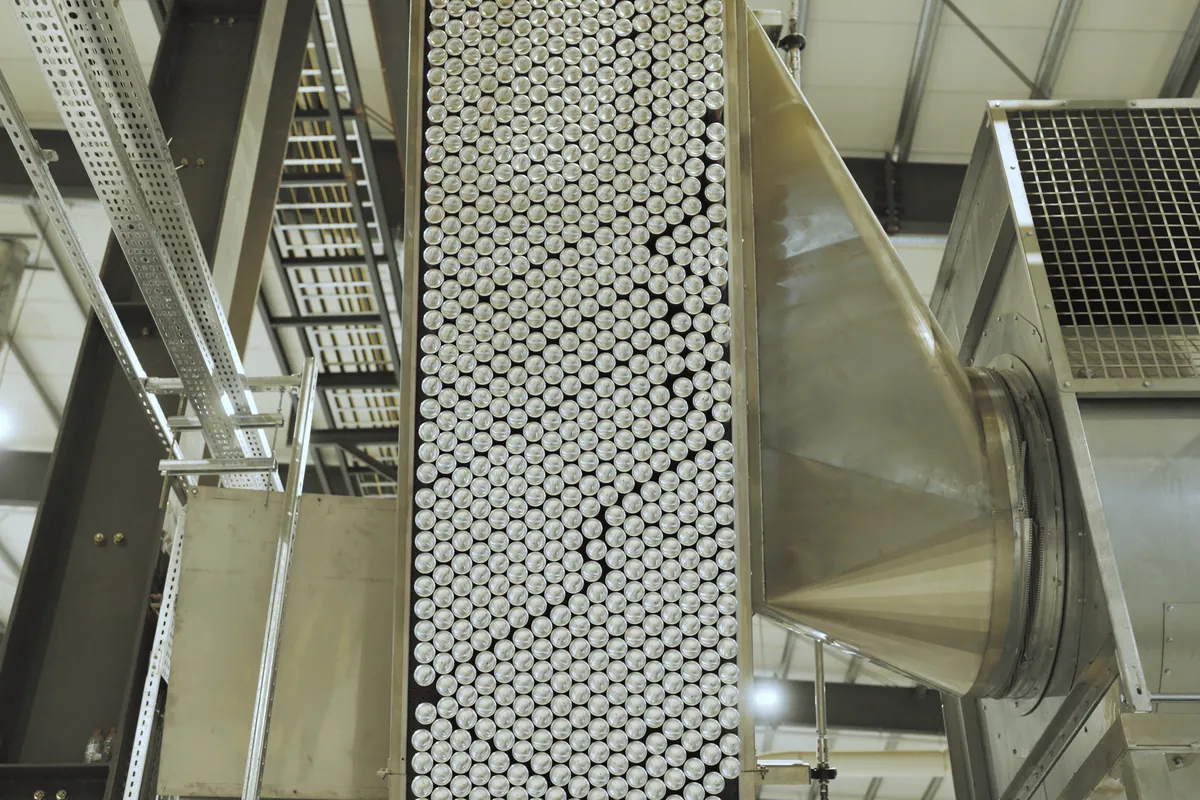 Henkel’s solutions for the aluminum can sector are in the field of can sealants (Image credit: Henkel).Henkel’s solutions for the aluminum can sector are in the field of can sealants. It has recently introduced its Darex WBC 4020 new generation water-based sealants for beer and beverage cans.
“This first-of-its-kind can sealant has excellent application properties and is supplied cross-regionally. It has a single, global formulation and is manufactured regionally based on the same latex backbone and equivalent, locally sourced raw materials to ensure consistent performance and reduce supply chain risk,” says Jordana.
“Furthermore, Henkel is introducing Darex WBC 833 to the EIMEA region, a cost‑efficient, water‑based food can sealant that boosts productivity while maintaining excellent application properties.”
Jordana adds that its high total solids deliver strong lining performance with reliable resistance to aqueous, acidic, and oily or fatty environments. This is said to result in a high‑performance, water‑based solution that combines improved yield with consistent lining quality for demanding food can applications.
“Henkel is committed to providing safe and future-ready can sealants. This is exemplified in the introduction of the allergen-free version of our leading water-based food can sealant WBC 9000 in North America, as well as by the new generation of Darex COV sealants in EIMEA, which are free from phthalate-based plasticizers and reduce energy consumption and carbon footprint.”
Latest tech in can processing
Jordana and Grajewski agree that technological developments play an important role in making can production more efficient and less polluting.
“For example, Henkel’s Bonderite C‑IC 72000 series enable low‑temperature cleaning at around 43 degrees Celsius instead of the conventional 60–70 degrees Celsius, significantly reducing energy consumption and associated CO2 emissions,” explains Jordana.
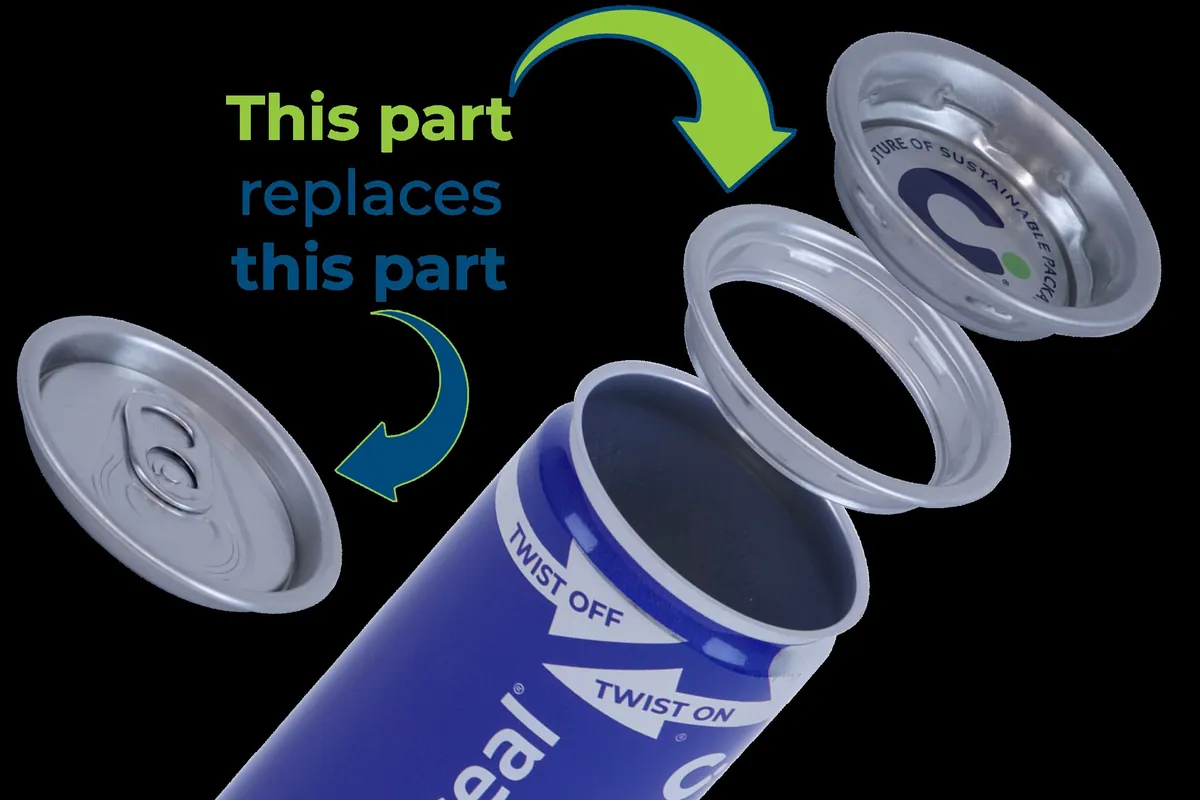 CanReseal features a ring-end double-seamed to a can, which is capped with a threaded closure (Image credit: Canovation).“At the same time, our low‑foam formulation improves process stability by minimizing foam-related disruptions, supporting continuous washer operation, stabilizing rinsing, and reducing both water usage and maintenance efforts. The strong synergistic effect and compatibility within Henkel’s lubricants and cleaner portfolio can be leveraged to ensure strong frontend performance while allowing for efficient cleaning in the washer.”
Digital technologies further enhance performance and transparency in can manufacturing, continues Jordana. Henkel’s Bonderite E‑CO equipment portfolio enables intelligent process control with real‑time data, automated reporting, and precise process optimization, she elaborates.
“This leads to improved line stability even at peak capacity. With advanced controllers, modular retrofit solutions, and extended remote services, these systems make production more transparent, robust, and efficient. Complementing our industry expertise and technical services with digital tools such as our CanLine audit application, they support continuous improvement, failure detection, and proactive, preventive maintenance.”
Discussing the technical development of Canovation’s releasable can, Grajewski says that “in simple terms CanReseal is nothing more than a redesign of conventional can ends to make two components: a threaded ring-end that is double-seamed onto commercially available can bodies, and a corresponding threaded closure for capping the finished and filled ‘bottle.’”
“In many ways, technological advancements have already helped Canovation’s CanReseal, as it is based on decades of industry investments in high-speed and efficient can manufacturing and filling infrastructure.”