

June in review: Top Packaging Trends 2026, FIFA’s foodservice policies face scrutiny


Key takeaways
- Our Top Packaging Trends 2026 webinar highlighted how circularity, regulation, and consumer expectations are reshaping F&B packaging.
- FIFA World Cup 2026 foodservice policies sparked debate over single-use packaging, reusable systems, public safety, and plastic pollution at major events.
- Regulatory pressure intensified as US states advanced EPR frameworks and EU packagers prepared for PPWR implementation.
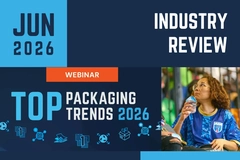
Last month, Packaging Insights’ webinar, Top Packaging Trends 2026, explored how brands can thrive in a fast-changing market, with packaging industry experts highlighting the forces shaping the future of F&B packaging.
The FIFA World Cup 2026 kicked off, sparking discussions about the future of single-use foodservice packaging at large-scale venues, as well as the safety considerations associated with some reusable formats.
Additionally, we explored the latest developments in EPR in the US and how packagers in the EU are preparing for the looming Packaging and Packaging Waste Regulation (PPWR) August deadline.
We look back at the biggest stories of the month.
Webinar preview: Top Packaging Trends 2026
Ahead of Packaging Insights’ Top Packaging Trends 2026 webinar on June 11, we sat down with our expert speakers, Nerida Kelton, vice president for Sustainability and Save Food at the World Packaging Organization, Paul Foulkes- Arellano, circular growth consultant, and Alisa Selezneva, market research consultant at Innova Market Insights.
FIFA to use disposables at Toronto matches despite 1M plastic reduction potential
As Toronto, Canada, prepared to host the FIFA World Cup 2026 matches, an analyst at the Toronto Environmental Alliance told us that transitioning to reusable cups and foodware at the events could prevent more than one million single-use plastic packaging items. However, FIFA did not adopt a reusable foodservice system at the matches in Canada.
FIFA’s bottle policy raises safety and plastic pollution debate at World Cup 2026
 2.webp)
FIFA’s reusable bottle policy for football matches at the 2026 World Cup prompted questions about the balance between public safety and plastic pollution prevention at large events. After initially banning reusable bottles, FIFA amended its water bottle policy, allowing fans to bring “one, soft, plastic, 590 mL, factory sealed disposable water bottle into any World Cup 2026 match in the US and Canada.”
US consumers back bans on AI grocery pricing and ESLs, poll finds
The United Food and Commercial Workers (UFCW) International Union released a poll from GBAO Strategies, showing bipartisan support in the US for banning surveillance pricing and electronic shelf labels (ESLs) in grocery stores. According to UFCW, ESLs allow corporations to utilize AI and algorithms to set prices based on shoppers’ personal data, the weather, or a variety of factors.
New York packaging EPR bill stalls for third year amid industry-NGO divide
In the US, New York’s Packaging Reduction and Recycling Infrastructure Act failed to pass for a third consecutive year. The EPR bill would require producers to fund recycling infrastructure and reduce packaging, but New York’s legislative session ended before it could be put to a vote, despite the bill having cleared the Senate.
US packaging EPR landscape expands as states move beyond California’s SB 54
While California’s SB 54 and New York’s stalled EPR legislation have dominated packaging headlines, packaging EPR laws are expanding elsewhere across the US, with seven states now adopting laws that shift the cost of waste management to producers. Sahar Mehrabzadeh, chief revenue officer at Bay Cities, said that a lesson emerging from the early EPR adopters is the value of phased implementation, particularly for smaller producers.
EU simplifies CLP rules for packaging sector with flexibility and legal clarity
The EU Council and the European Parliament reached a provisional agreement simplifying the rules of the classification, packaging, and labeling of chemicals (CLP) regulation, as well as for cosmetics and fertilizing products. For packaging products, the provisional agreement made amendments to labeling readability, exemptions, and transitional periods for relabeling.
Nestlé, Danish researchers & partners to transform plastic waste into packaging
 (1).webp) Aura Global on packaging strategy gaps and the role of dataNestlé and the Danish Technological Institute launched the InFact project to facilitate chemically recycling household plastic waste into new flexible plastic packaging, including food-safe packaging. The partners are working alongside fourteen other companies and organizations. The partnership is a response to the EU’s PPWR.
Aura Global on packaging strategy gaps and the role of dataNestlé and the Danish Technological Institute launched the InFact project to facilitate chemically recycling household plastic waste into new flexible plastic packaging, including food-safe packaging. The partners are working alongside fourteen other companies and organizations. The partnership is a response to the EU’s PPWR.
Bio-based plastic packaging under PPWR: EU study sparks debate over recyclability & toxicity
The Publications Office of the EU published a study co-authored by the German Nova-Institute concluding that bio-based plastic packaging can support the climate-neutrality goals of the PPWR. In response, advocacy groups addressed a letter to the EU calling for alignment between bioplastic policies and circularity objectives. We spoke to the Nova-Institute and some of the advocacy groups to find out more.
Refillable packaging under PPWR: Personal care & e-commerce packagers accelerate adoption
Major packaging companies are increasingly looking to develop refillable and reusable alternatives to single-use packaging as the August 12 implementation deadline of the EU’s PPWR approaches. We spoke to Amcor, DS Smith, and the NGO Zero Waste Europe to explore the future of refillables and reusable packaging under the PPWR.
Alupro urges UK to retain recycled aluminum as export risks divide industry
Securing the supply of aluminum is critical to the material’s future as a continued driver of the UK’s circular economy, according to the Aluminium Packaging Recycling Organisation (Alupro). In a manifesto, Alupro, an industry-funded trade body, outlined five themes that can increase the supply of used aluminum packaging in the UK.
UK recycling capacity gap puts domestic plastics processing under pressure
A Viridor-commissioned report warned that the UK’s plastics recycling capacity is shrinking, just as circular economy policies are expected to increase the amount of plastic collected for recycling, highlighting the risk that the UK may collect more plastic than it can process domestically.