

Amcor links packaging innovation with changing US consumer habits

Key takeaways
- Amcor highlights how changing US retail, snacking, and convenience trends are shaping packaging requirements across foodservice, food, health, beauty, and pet care.
- Growing demand for on-the-go snacks, portion control, protein-rich products, and e-commerce is driving innovation in flexible packaging, barrier films, and convenient formats.
- Emerging US EPR legislation is encouraging brands to consider their packaging choices, with Amcor using LCA tools to help customers evaluate environmental impacts and potential cost savings.
 (Image credit: Amcor).
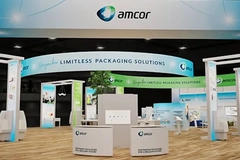
At Pack Expo 2026, Amcor showcased its range of packaging innovations responding to changing US consumer habits. The company’s senior director of marketing for Flexibles North America, Mary Johnson, discussed how shifting retail and snacking trends, growing demand for convenience, packaging equipment automation, and more sustainable packaging are impacting the company’s offerings.
“We are showcasing our full range of retail packaging, including consumer and end-user packaging,” Johnson told Packaging Insights. “We also offer equipment designed to bring together our films and packaging machinery, alongside our technical services, to create the most optimized packaging solution at the lowest total packaging cost.”

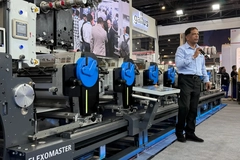
She highlighted foodservice, health and beauty, food and nutrition, and pet care as the major focus points for Amcor at Pack Expo. The packaging giant demonstrated its Amcor Liquiflex VFFS packaging system for high-output flexible solutions for foodservice products and the Moda Bag on-demand vacuum shrink bag making and printing solution for meat and cheese packaging.
Amcor also displayed its stretch film portfolio. “Regardless of the market or where a company sits in the supply chain, businesses also need stretch films to support their operations,” Johnson noted.
Changing consumer habits
Retail fragmentation in North America stands out as an important consideration for Amcor’s customers, according to Johnson. She argued that the days when consumers would go to a single grocery store to buy everything they needed are long gone.
 Mary Johnson, senior director of marketing for Flexibles North America at Amcor (Image credit: Amcor).“Today, people shop across different channels. They visit grocery stores, shop online, and buy from convenience stores, dollar stores, warehouse retailers, and club stores. This means packaging requirements are changing. Brands need to accommodate different retail environments and display configurations.”
PakTech CEO Brandon Rogers similarly emphasized the growing importance of store packaging solutions for the North American market.
Johnson gave an example: “A product might need a stand-up pouch that goes directly onto a shelf, a retail display box, or multipacks designed for bulk purchasing. ”
“When it comes to warehouse and bulk shopping, brands must be able to bundle multiple products together while ensuring that the packaging can withstand demanding distribution conditions.”
In some cases, pallets are placed directly on the warehouse floor, so the products need to remain stable and maintain their visual appeal and branding, she continued.
“There are many different packaging formats and technologies that can address these needs. However, the important thing for our customers is understanding the consumer behavior, where their packaging will be sold, how it will be displayed, and what requirements it needs to meet.”
Snacking trends and convenience packs
The way consumers eat is also changing, Johnson pointed out. According to Amcor, Gen Z and millennial consumers place a strong emphasis on snacking and products they can consume on-the-go.
“Portability and portion sizes are very important,” she asserts. “Consumers want products in convenient, appropriately sized formats for their individual lifestyles.”
Convenience and portion control are driving demand for smaller snack packaging formats, according to Tetra Pak, SIG, and TNA Solution, which we also spoke with at the show.
“Food pairings are also becoming increasingly popular.” For example, as you can see on the display, it's no longer just about buying yogurt. Consumers might want granola to go with it, all in one package.”
“We’re also seeing snack packs containing hummus or other dips alongside crackers, meat and cheese,” added Johnson. “These trends create additional packaging requirements.”
“Oxygen and moisture barriers need to be carefully considered depending on where the different products sit within the package and tray. Brands therefore need a packaging partner that understands these requirements and can provide lidding films and containers that help preserve product quality.”Changing health priorities
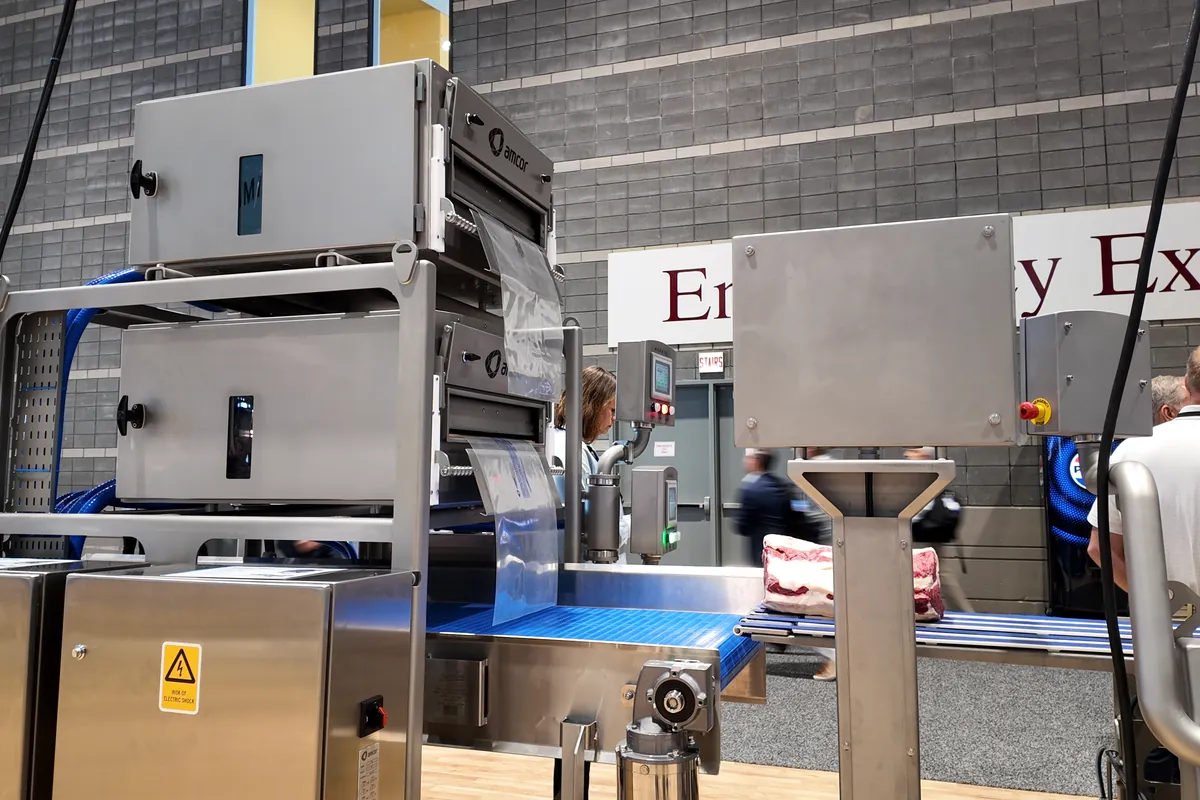 The Moda Bag on-demand vacuum shrink bag making and printing solution for meat and cheese packaging.Consumers are also more focused on their health, highlighted Johnson. She said that GLP-1 medications are a big part of this conversation about how the packaging industry tackles the needs of the food and nutrition sectors.
“Nearly 20% of adult Americans have either used GLP-1 medications in the past or are currently using them. Many of these consumers, as well as the wider population, are more focused on increasing protein intake as a result,” she shares.
“Around 53% of US adults are making an effort to increase their protein consumption, while 40% are focused on fiber. Protein has been a major trend for some time, but fiber is a growing area of interest.”
Many of the top-selling retail categories are strongly focused on protein, according to the expert. “Consumers are clearly interested in incorporating more protein into their diets.”
Discussing health and beauty packaging trends, Johnson stated that 26% of purchases are made online, and that channel for the market is growing. “Their packaging is well suited to e-commerce because it makes it convenient to send products directly to consumers.”
Packaging formats provide a convenient way to get products into consumers’ hands while maintaining the integrity of the product. E-commerce is an important part of this category.”
“Again, there’s a strong focus on convenience and portability,” she continued. “Consumers want products they can take with them and keep in their bags in case they need them later. We manufacture the rigid containers, caps, blister packs, flexible packs, seals, and the fiberboard box or sleeve that goes around them.
“We also manufacture medical packaging for use in clinics and hospitals. We call these end-user applications because the consumer is not the person opening the package. Instead, a healthcare professional opens it during a medical procedure.”
Johnson highlights sterility, safety, and ease of opening as “incredibly important” in these applications.
North American EPR legislations
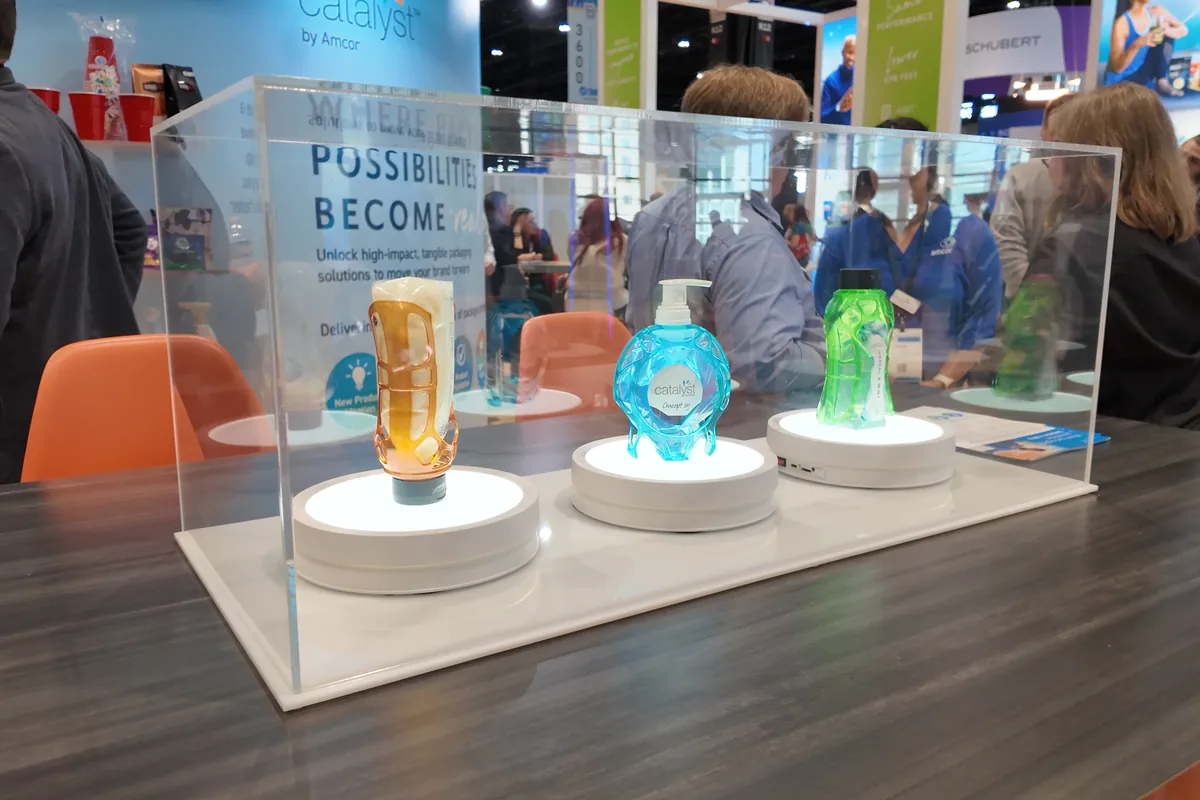 Amcor presented a range of rigid and flexcible packaging for health and beauty products, including containers and caps.On the importance of sustainability credentials for packaging in North America, Johnson pointed out that when consumers show a preference for more eco-friendly packaging, brands will prioritize it.
“We're also now seeing EPR legislation come into effect in several key US states. Oregon, Colorado, and California are launching their EPR programs,” she adds. “We now have a better understanding of the fees associated with different packaging types and how they change with the sustainability attributes of the package.”
“What we’ve done this year is take our proprietary Amcor Asset LCA tool and organize it by market, so customers can look at the information in terms of how their own businesses operate.”
“For example, if you're a dairy producer, you can select the relevant packaging category and compare different options. You might find that moving from a baseline roll stock to a recycle-ready roll stock could reduce your carbon footprint.”
Johnson said that this is valuable information, adding that when it comes to EPR, Amcor is also able to provide some directional EPR fee analysis. “The exact figures will vary depending on the individual product and customer requirements, but we can use basic packaging examples to illustrate the potential total cost savings to brands.”
“The important point is that EPR makes the end-of-life scenario the responsibility of the brand owner. That's a significant change in North America. We may find that a more sustainable film, which could initially appear slightly more expensive, actually offers a lower total packaging cost once EPR fees are factored in.”
Also at the event, LyondellBasell, Mondi, Plastic Ingenuity, Pregis, and Shurtape told Packaging Insights that the “patchwork” of EPRs in the US is driving innovation in the packaging space, while at times also making long-term investment decisions more difficult.