


SIG and Siegwerk: Filling and sealing innovations drive packaging efficiency and circularity

Key takeaways
- Siegwerk’s Cirkit Novaseal coatings support reliable heat sealing for recyclable fiber-based packaging.
- SIG’s Neo filling platform reduces downtime, waste, and filling costs through faster changeovers and improved automation.
- The companies expect that future filling and sealing technologies will prioritize automation, faster production, greater flexibility, and circular packaging design.
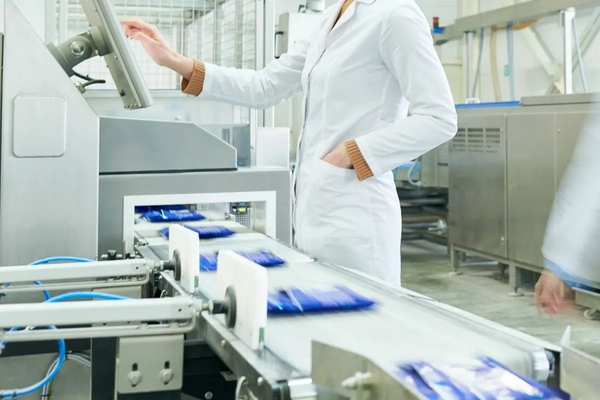
In the packaging industry, hardware and material innovators are aligning to create streamlined, highly adaptable filling and sealing operations.
Packaging Insights speaks to SIG and Siegwerk about how the latest advancements in filling platforms and heat-sealing coatings address costs, downtime, and the circularity challenges of fiber-based packaging.
Gilles Le Moigne, head of circular economy coatings at Siegwerk, tells us: “As the industry moves toward more recyclable monomaterial and fiber-based solutions, sealing technologies will need to deliver the functionality traditionally provided by more complex structures, but within simpler packaging designs.”
Boosting performance
This year, Siegwerk unveiled the heat-sealing lacquers portfolio within its Cirkit coatings brand. The company says that Cirkit Novaseal is a milestone in strengthening its coating offerings for sustainable packaging.

“The transition to fiber-based packaging is not only about replacing one material with another. The packaging still needs to deliver the functionality required for its application, and sealing is a critical part of that,” says Le Moigne.
 Gilles Le Moigne, head of circular economy coatings at Siegwerk.“Cirkit Novaseal is designed to provide reliable heat-sealing functionality within fiber-based packaging structures, supporting packaging concepts where recyclability and reduced reliance on conventional sealing structures are key design goals.”
“The portfolio combines consistent heat-sealing performance with solutions tailored to different substrates, application processes and end-use requirements. This allows converters to approach paperization without treating sealing performance as a compromise. Cirkit Novaseal, therefore, acts as an enabling technology, helping bring together the functional requirements of the pack and its circularity objectives.”
Improving flexibility
Siegwerk shared that one of the main challenges converters face when replacing conventional sealing structures with heat-seal lacquers is that there is no single heat-sealing requirement across all applications.
“Converters have to consider factors such as seal initiation temperature, hot tack, bond strength, line speed, substrate, and the coating or printing process. A solution that works for one packaging format or production set-up will not necessarily work for another,” Le Moigne explains.
He shares that Cirkit Novaseal is developed as a portfolio rather than a single product. “Different grades offer different performance profiles, including low seal initiation temperatures, strong hot-tack performance for high-speed operations, high seal bond strength at low coating weights and solutions suited to either gravure or both gravure and flexographic application.”
“The objective is to give converters enough flexibility to select the sealing technology around the specific packaging and process requirements, rather than forcing the application around one coating.”
Enhancing efficiency
In high-volume F&B manufacturing, balancing product safety with machine utilization remains a primary operational challenge. Holger Schmidt, head of global product management technology at SIG, shares that the demands start directly at the mechanical interface where cartons are formed and filled.
Last month, SIG launched two filling machines for aseptic cartons as part of its SIG Neo platform. They feature SIG’s Neo Shield for improved sterile airflow and shielding during bottom sealing and pre-folding. Holger Schmidt, head of global product management technology at SIG.
“SIG Neo is designed for high-SKU environments where fast changeovers and high equipment utilization are critical: pack size or format changes can be completed in less than 15 minutes without changing machine parts, minimizing downtime between production runs,” Schmidt tells us.
“At the same time, high output, a waste rate of less than 0.5%, and efficient use of labor and utilities help lower the cost per pack. For example, SIG Neo Slimline 15 Aseptic can reduce total filling costs by up to 15% compared with SIG’s standard multi-serve aseptic carton filling machine, while maintaining the flexibility to handle diverse production needs.”
Schmidt highlights that SIG Neo Shield can reduce incoming contamination by removing up to 95% of airborne particles from the air during bottom sealing and pre-folding. “This supports consistently high product quality and food safety. The even cleaner environment enables longer production cycles, helping manufacturers maximize uptime and production efficiency. For customers, this means greater line availability and ultimately more efficient and cost-effective production.”
Looking ahead
Siegwerk‘s Le Moigne predicts that sealing technology will become increasingly important as packaging structures are redesigned for circularity.
“At the same time, converters will continue to demand efficiency. This means we expect increasing focus on technologies that can seal at lower temperatures, perform reliably at high production speeds, and work across established application processes.”
“Low seal initiation temperature and high-speed performance are already explicit development and performance areas within the Cirkit Novaseal portfolio,” he adds.
“We see the future of sealing not as a standalone functionality, but as one part of the broader move toward packaging where performance, processability, and circularity are designed together from the outset.”
Schmidt from SIG shares that the company expects filling machines to become “faster, more flexible, increasingly automated, and digitally enabled, as manufacturers look to produce more SKUs efficiently and flexibly while keeping costs and waste low.”
“At the same time, a compact machine footprint is becoming imperative, as customers want to boost productivity and flexibility within their existing production space, without costly plant expansions. SIG Neo platform is designed around these needs, combining high output, rapid changeovers, low waste rates, and compact machine concepts.”
“Looking ahead, SIG will continue to expand the platform to help customers achieve more output and flexibility from the space and resources they already have,” he concludes.