



EU risks missing municipal waste targets amid weak enforcement and market pressures


Key takeaways
- EU auditors say many member states are falling behind reuse and recycling targets.
- Limited recycling infrastructure, facility closures, and cheap plastic imports are undermining the viability of the EU’s recycling market.
- The report urges assessing harmonized landfill and incineration taxes and expanding economic incentives to reduce waste.
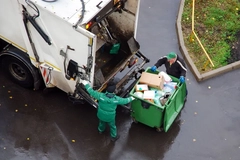
A recent publication by the European Court of Auditors (ECA) has found that many EU countries are struggling to meet the targets for reusing and recycling municipal waste.
The report argues that while EU waste management legislation has created a strong regulatory framework, weak enforcement and unclear funding systems have stalled circular progress.
The auditors also find that municipalities rely “too heavily” on landfill because of “financial constraints” and “weak” waste management systems.
Moreover, it outlines the current challenges the EU recycling market faces, such as low-level separate waste collection and ineffective consumer disposal tariffs.
“During our audit, we found that European plastic recyclers warned of a crisis, listing various issues, such as rising operational costs, unverified import of virgin/recycled plastic, and a lack of demand. Each of these issues can have their own solution,” Stef Blok, the ECA member responsible for the audit tells Packaging Insights.

“Circularity is a key enabler for realizing the EU’s sustainable development goals. To achieve these goals, the EU should create the conditions necessary for a viable recycling industry.”
The report recommends the EU assess the feasibility of harmonizing landfill and incineration taxes across member states.
However, Blok explains that the ECA does not “interfere” with EU policy and decision making. Therefore, he stresses that the court does not make “concrete proposals” but informed suggestions.
“Before any decision, there is a need for an analysis of both demand and supply-side challenges — this is what we ask for. Only then can an informed decision be taken on how to best enhance the competitiveness of the EU’s recycling industry.”
Enforcing targets
Despite EU legislation and funding targeting reuse and circular investments, the report argues that there are “significant differences” in how EU member countries reach waste management goals.
It also states that the European Commission is now initiating infringement cases against countries missing their targets, albeit slowly.
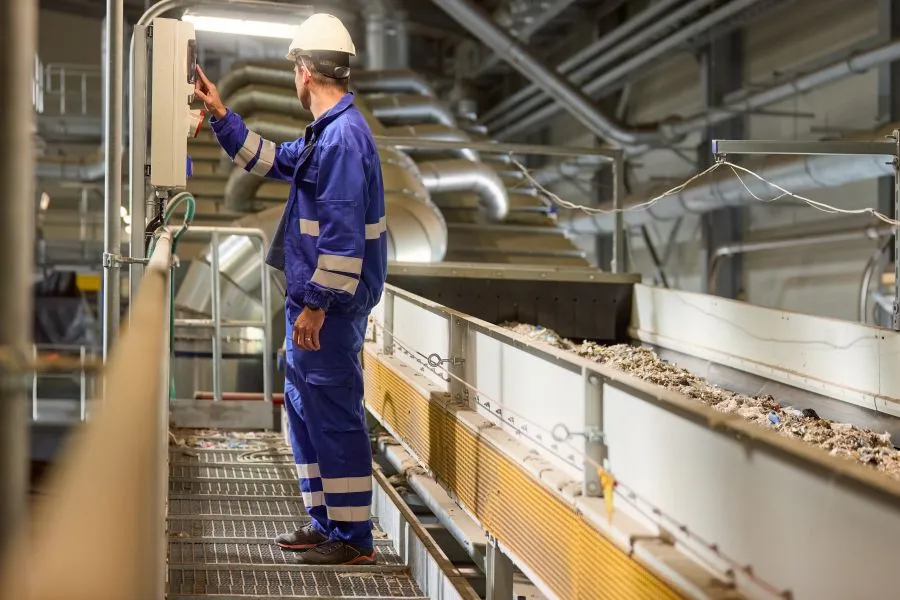 Auditors also flag the recycling industry’s viability, noting that limited facilities make targets harder to meet.Blok adds: “Any delay from the side of the EC to exercise its enforcement powers, like through the initiation of infringement proceedings, risks delaying and hampering the implementation of the EU policies at national level.”
“If there is no consequence for being late in complying with a target, there is no strong incentive for member states to move forward by making the necessary investments. It may also send a wrong signal to the first movers and frontrunners.”
Challenges to recycling
Another challenge the auditors outline is the “viability of the recycling industry” — an increasingly prevalent dilemma for the EU’s waste-management goals.
The report explains that limited recycling facilities mean targets are less likely to be met. Recycling facilities in the EU are closing due to rising costs, poor demand for their output, and imports of cheaper plastic from outside the EU, say the auditors.
For recycling to succeed as an effective waste management strategy, the ECA auditors advocate for a “necessary” business case for recyclers, which highlights demand and supply challenges that can impact the single market for circular products and secondary raw materials.
Waste management analysis
In the report, the auditors analyzed waste management strategies funded by the EU, finding “implementation delays and cost overruns.”
“In Greece, Poland, Portugal, and Romania, progress toward effective municipal waste is slow because of insufficient public funding and an inability to fully utilize economic instruments, such as implementing deposit return schemes, increasing the landfill tax, and applying a waste tariff based on the volume or weight of waste generated,” says the report.
Blok adds: “Citizens and businesses play a crucial role. Fiscal incentives, as well as requiring citizens to pay for the volume or weight of waste they generate, can encourage them to separate and reduce waste.”
The auditors recommend that the EU assesses the feasibility of harmonizing landfill and incineration taxes across the bloc.