



Cirkla to open US facility for molded fiber MAP meat trays


Key takeaways
- Cirkla will open a molded fiber meat tray facility in Georgia, US, with commercial production scheduled for Q1 2027.
- Its MAP technology combines molded fiber with a peelable high-barrier liner to meet oxygen, moisture, sealing, and shelf-life requirements for fresh meat.
- Cirkla says its trays can support up to 28 days of shelf life while cutting plastic use by up to 90%, with potential additional benefits for reducing food waste.
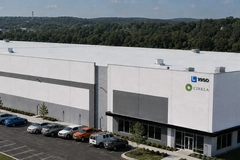
Cirkla will establish a molded fiber meat tray production facility in Gainesville, Georgia, reportedly the first of its kind in the US, to serve large-scale processors.
On-site production of the patent-pending Cirkla Modified Atmosphere Packaging (MAP) will commence in the first quarter of 2027.
Packaging Insights speaks to Vaibhav Goel, CEO at Cirkla, to find out more about the new facility and the capabilities it aims to bring to the US.
Goel says: “As US demand has grown, so has the case for a domestic footprint. This facility brings that same capability closer to our customers, built for the national rollouts ahead.”
Georgia’s Governor Brian P. Kemp comments: “Cirkla’s choice to build their packaging solutions facility in the heart of one of Georgia’s strongest export hubs is a testament to our state’s logistics capabilities and assets.”
“Investments in infrastructure by the Georgia Ports Authority, including the brand-new Gainesville Inland Port, are helping deliver products to markets all over the world, and we look forward to Cirkla’s success as a result.”
Making fiber MAP feasible
Cirkla’s patent-pending technology uses a lamination process to bond a high-barrier, multi-layer liner directly to the fiber substrate, in a way that allows it to be easily peeled off by consumers after use, details Goel.
 Vaibhav Goel, CEO at Cirkla.“That architecture is what allows the tray to deliver the oxygen, moisture, and gas-flush performance apart from high top seal strength, while making the trays recyclable and compostable once the lamination is peeled off.”
Last year, Ankur Gupta, Cirkla’s co-founder, told us more about the trays’ recyclability.
The India-based packaging technology company argues that fiber packaging has been a category of failed experiments. “Cirkla is the first to make it commercial at scale with high-barrier fiber trays that actually work, validated on platforms covering the majority of the US protein processor installed base,” Goel continues.
Discussing what specifically prevented previous fiber MAP solutions from scaling, Goel says that the challenge has always been solving barrier performance, structural strength, and zero-capex compatibility with existing lines: “all at once, at a competitive price.”
“MAP demands a strong oxygen and moisture barrier with reliable gas-flush and seal integrity, trays that survive a real supply chain, and drop-in compatibility with equipment processors already run. Historically, only plastic checked every box.”
“Fiber packaging that’s scaled so far has solved the easy version of that problem in food service and takeout, where shelf life requirements are low enough that in-pulp additives or a sprayed-on coating get the job done.”
“Those approaches don’t hold up under MAP’s barrier and durability demands, which is why fiber has stayed locked out of high-performance packaging. That’s the part we solved.”
Tackling food waste
Prolonging product shelf-life and reducing waste are key benefits of MAP, especially when it comes to food. According to Cirkla, its MAP meat trays and overwrap applications have been validated for up to 28 days of shelf life, putting them in the performance range required for fresh protein retail applications.
“That is critical because sustainability can’t come at the expense of product performance or shelf life,” asserts Goel.
“We are also seeing some initial promising results of increased shelf-life in fiber trays vs plastic trays because fiber is a better insulator than plastic, so meat packed in fiber trays goes through less temperature variations on the refrigerated shelf.”
“This keeps the meat fresher for a longer duration and can potentially help add one to two days of shelf-life, which will be a huge benefit for the processors and retailers in reducing food waste and lowering costs.”
Goel highlights that Cirkla’s goal is to change how fresh food gets packaged on the shelf. “We started with the hardest application first: trays for raw meat, especially poultry, which is tough on packaging due to high moisture content. We knew that if we could solve that, everything else would be easier.”
“We’ve since launched fiber trays for ready meals and fresh produce, and we're in early conversations on customized fiber packaging for CPG applications as well. The goal is simple: up to 90% less plastic, one category at a time.”
US manufacturing base
At full capacity, Cirkla’s Gainesville facility is expected to employ over 100 people and contribute to the regional manufacturing economy and enhanced supply chain resilience.
Tim Evans, president and CEO of the Greater Hall Chamber of Commerce in Gainesville, states: “Cirkla’s decision to locate in Gainesville-Hall County reinforces the competitive advantages of our region's food processing, equipment manufacturing, and packaging supply chain.”
“As the Poultry Capital of the World and home to one of US’s strongest concentrations of food manufacturers, our ecosystem provides the customers, workforce, and industry partnerships that innovative companies like Cirkla need to succeed. We welcome Cirkla to our thriving business community.”
Pat Wilson, Commissioner at Georgia Department of Economic Development, says: “Gainesville and Hall County have done an incredible job of building a business community that supports multiple complementary industries, allowing them to create more job opportunities for Georgians while also benefiting existing industries.”
“Georgia’s farmers provide fresh ingredients to hundreds of food processing companies across the state, and Cirkla's innovative packaging solutions, as well as the connectivity Georgia offers, will support those companies in getting products to market across the country.”