
Deutsche Bahn reusable cup dispute tests Germany’s packaging law

Key takeaways
- DUH is appealing a court decision, alleging that it exempts DB’s disposable onboard cups from Germany’s reusable-offer obligation.
- The dispute centers on whether beverages sold on trains are consumed onboard or taken away by passengers after leaving the train.
- Tomra argues that convenient, scalable return systems are essential for reuse in high-traffic transport environments.

An ongoing case between Environmental Action Germany (DUH) and national rail operator Deutsche Bahn (DB) is highlighting tension between single-use packaging regulations and the practical implementation of reusable systems in high-traffic settings.
Last year, DUH sought an injunction to compel DB to comply with Germany’s reusable offer obligation in Section 33 of the country’s Packaging Act. From January 1, 2023, businesses that fill drinks into single-use cups for immediate consumption, like coffee or tea, have had to offer a reusable container version.
However, DUH alleges that DB unlawfully sells takeaway beverages on long-distance trains only in disposable cups — with no reusable alternative on offer — and does not factor in where passengers might consume the beverage.
It urges DB to offer reusable cups for passengers purchasing an on-the-go beverage right before leaving the train, which can be easily returned.
The case pivots on the legal status of what constitutes on-board consumption. DB offers reusable porcelain and glass containers for on-site consumption in the restaurant carriage and in first-class. Disposable packaging remains on offer for on-site consumption under the Packaging Act.
According to DUH, in March, the Frankfurt Regional Court dismissed the injunction as it considers beverages sold in disposable cups on trains as solely intended for on-site consumption and therefore not subject to Section 33 of the Packaging Act, which mandates reusable alternatives be offered for takeaway beverages.
Packaging Insights speaks to DUH about the case, which is now appealing the decision to the Higher Regional Court of Frankfurt am Main.
DB was contacted for comment, but had not responded at the time of publication.
DB’s onboard-catering information states that passengers can have drinks filled into their own reusable cups. In 2022, it announced that porcelain and glass options are available on its long distance trains. However, these measures do not provide the portable, widely returnable reusable cup system sought by DUH.
We also speak to Tomra, the multinational recycling technology provider, who recently installed two automated reusable-cup return machines in Freiburg Central Station, to understand how reusable systems can be effectively implemented in high traffic areas, like trains and stations.
Consumer reality
The case is testing how Germany’s reusable-offer requirements apply to beverages sold on trains.
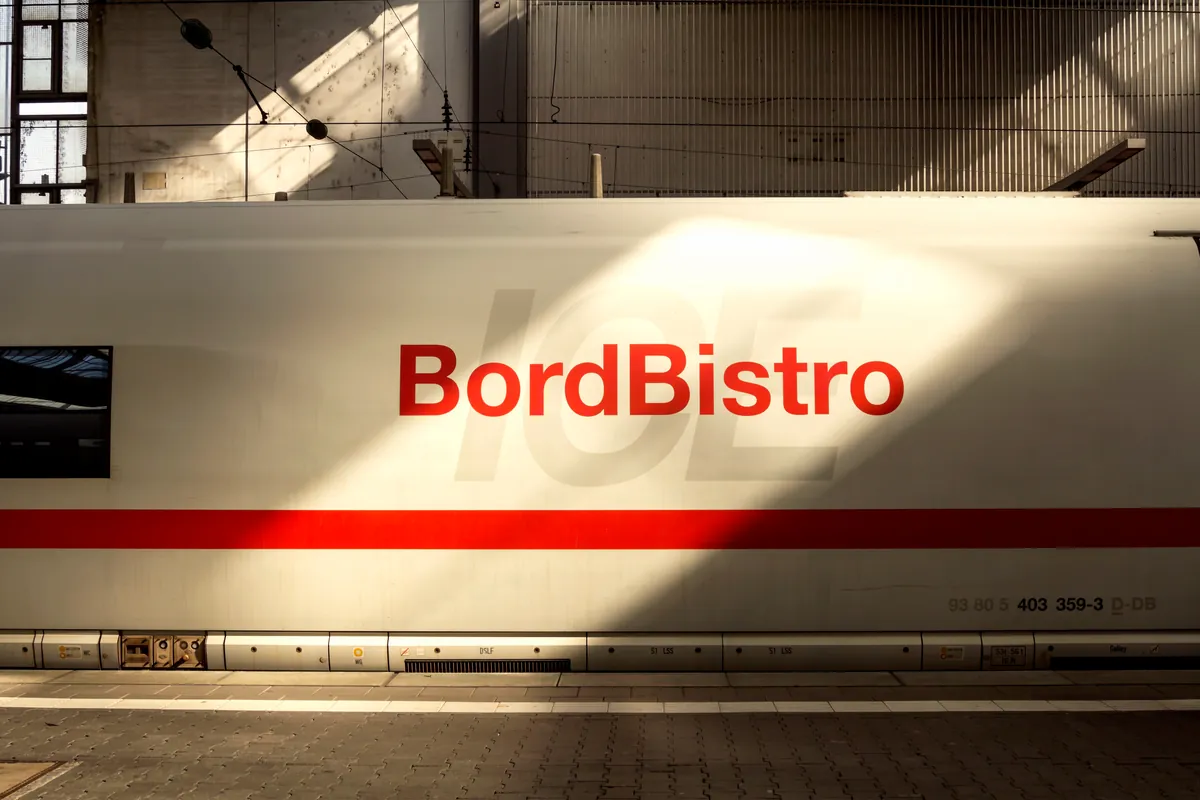 Porcelain and glass options are available on long-distance trains, but they do not meet DUH’s call for a portable, widely returnable cup system.Thomas Fischer, division head for Circular Economy at DUH, tells us that the association rejects the regional court’s decision to dismiss the injunction on the grounds that it “ignores the reality and consumption habits of many rail travelers” who often take their beverages off the train.
“The Frankfurt am Main Regional Court has confirmed that Deutsche Bahn is subject to the requirement to offer reusable cups. For us, this means that passengers who want to grab a coffee to go before getting off the train must be served in a reusable cup. Anything else raises the question: Why does Deutsche Bahn even offer disposable cups on its trains?”
Fischer says that, if all beverages on DB trains are intended for on-site consumption, then porcelain or glass cups should “suffice,” and disposal options needn’t be an option.
Moreover, he suggests that, under the regional court’s logic, any foodservice company could claim that beverages in disposable cups are only for on-site consumption.
Critically, in a 2022 press statement about its switch to reusable tableware, DB explained that if a passenger has not finished food or drink, they are allowed to take it off the train in the reusable tableware.
It also stated that the reusable tableware can be returned at a DB Lounge in stations or during another DB journey.
Reuse in high-traffic areas
A spokesperson from Tomra tells Packaging Insights that in order to scale refillable cup systems in high-traffic, on-the-go settings such as train stations and airports, reuse must be “convenient, efficient, and transparent.”
The DUH advocates for DB to adopt a reusable cup system for takeaway beverages consumed off the train.
“Porcelain cups can be used just fine inside the train. However, heavy porcelain cups are completely impractical for takeout consumption outside the train,” says Fischer.
“DB could join a large reusable cup system in the food service industry and place reusable cups on its trains — for example, the ReCup-System. This would allow travelers to receive their coffee in a practical, reusable plastic cup for which a deposit is charged.”
DB has a partnership with ReCup, a reusable tableware system, for staff restaurants and employees, which it highlights “sustainably reduces single-use items” and “makes a significant contribution to sustainability and resource protection.”
However, the ReCup system is not available for passenger F&B consumption.
The Tomra spokesperson adds: “It is important that reusable takeaway packaging systems are introduced in places and situations where they replace or significantly reduce our consumption of single-use packaging.”
“This is where the reuse option will provide the greatest environmental benefit and contribute to reducing overall pressure on resources.”
The spokesperson notes that reuse systems must also accept a range of packaging formats and be planned with scalability in mind. They add that a reuse system must have a high level of integrity.
“We believe there is reason to believe these principles would also apply to a rail environment.”