




Packaging industry turns to data and technology for EPR compliance

Key takeaways
- Global EPR requirements are pushing packaging companies to adopt more data-driven systems for regulatory reporting, traceability, and transparency.
- Recyda and Constantia Flexibles highlight unified packaging data, automated calculations, and design-stage forecasting as key tools for managing compliance risks and eco-modulated fees.
- Flint Group is developing deinkable, low-migration, and traceability-supporting ink technologies as recyclability, chemical safety, and food-contact rules tighten.

EPRs targeting the packaging industry are taking shape globally and pushing companies to adopt a more data-oriented approach toward the environmental aspects of their business, according to experts across the industry.
Packaging Insights interviews Recyda, a provider of software solutions for packaging regulation compliance, Constantia Flexibles, and packaging ink provider Flint Group, to explore the technological solutions packagers are turning to in order to ensure EPR compliance.
“Technology is becoming a key enabler in navigating regulatory requirements, particularly when it comes to data generation, traceability, and transparency,” says Thomas Schulz, VP of Group Marketing Communication at Constantia Flexibles.
“Packaging regulations are expected to become more data‑driven, outcome‑oriented, and interconnected, with a stronger emphasis on recyclability at scale, climate impact, and producer responsibility,” he continues. “Reporting and verification requirements will continue to increase, making reliable data and cross‑value‑chain collaboration even more critical.”
Rather than one-size-fits-all approaches, Schulz says he expects compliance to increasingly require market-specific solutions, supported by globally aligned principles and local expertise, while recognizing that the Packaging and Packaging Waste Regulation (PPWR) applies specifically to the EU market.
Vivian Loftin, co-founder and managing director at Recyda, argues that technology is no longer optional; it is a necessity for managing complex EPR requirements on a global scale.
“Manual tracking simply cannot keep pace with an environment where Producer Responsibility Organizations (PROs) update fees multiple times a year, or where different countries price the exact same packaging design differently,” she adds.
“Digital solutions strip away this multi-border complexity. Technology automates the tracking of regulatory updates, handles thousands of data variations instantly, visualizes future financial forecasting, and creates a transparent, auditable trail that protects brands from compliance risks and reputational damage.”
EPR compliance tools
 Constantia Flexibles highlights product carbon footprint calculations and digital data management systems for compliance.Schulz highlights that tools such as product carbon footprint calculations and digital data management systems help translate regulatory requirements into measurable and verifiable information.
“At Constantia Flexibles, these tools support internal decision‑making and customer reporting needs, while also enabling closer collaboration with machine manufacturers and partners to test and optimize packaging solutions under real production conditions.”
Loftin says Recyda turns packaging data complexity into compliance readiness through four main pillars: data unification, automated and up-to-date calculations, data gap identification and enrichment, and declaration-ready export.
“Packaging data is typically scattered across ERPs, product lifecycle management, and disconnected spreadsheets. Recyda consolidates this disparate data via API (Application Programming Interface) imports or file-based mapping into a single, reliable source of truth,” she states, discussing data unification.
With regard to automation and calculations, Loftin says that instead of compliance teams manually interpreting complex, moving rules, Recyda’s platform automatically calculates EPR obligations and fee structures based on country-specific criteria.
“Recyda tackles data gap identification and enrichment by highlighting what data is missing to complete an eco-modulation assessment for EPR calculations, using logic-based heuristics to help teams enrich that data efficiently. Regulations now require highly granular data such as opacity, label size, and component separability,” explains Loftin.
On declaration-ready exporting, she says that Recyda provides audit-ready, country-specific reports tailored to the format required by individual PROs, highlighting what data is missing to complete an eco-modulation assessment for EPR calculations, using logic-based heuristics to help teams enrich that data efficiently.
Eco-modulated EPR concepts
Loftin asserts that the “wait-and-see” approach to EPR is officially over. “We are moving rapidly toward the institutionalization of eco-modulation globally, heavily accelerated by secondary legislation and guidelines tied to the EU PPWR.”
“Crucially, this shift extends far beyond Europe. We see non-EU markets adopting eco-modulated EPR concepts at an accelerated pace, particularly across North America.”
 Recyda aims to simplify compliance through data unification, automated calculation, data gap identification, and declaration support.Consequently, Loftin anticipates a “massive” industry push toward “design-for-EPR.” Instead of assessing EPR costs after a product is launched, leading companies will use software during the early R&D and packaging design stages to simulate and forecast future EPR liabilities, ensuring financial and environmental efficiency before a package ever hits the production line, she elaborates.
Last month, Recyda launched its PPWR Navigator to support packaging companies in dealing with aspects of the PPWR, namely Declarations of Conformity and Technical Documentation. At Interpack 2026, Loftin told us how Recyda supports packaging companies in responding to regulations and EPR schemes across regions.
Schulz adds that EPR should not be seen purely as a compliance obligation. “When approached collaboratively, it can act as a catalyst for smarter packaging design, stronger partnerships, and solutions that balance regulatory requirements with real-world performance.”
“For us, open dialogue across the value chain remains essential to ensuring that regulatory ambitions translate into packaging solutions that work in practice, for recyclers, brand owners, and consumers alike.”
Inks tailored for EPR
Flint Group, a provider of inks and coatings, tailored solutions, digital print consumables, and digital engines for the packaging industry, tells us how technological developments in the ink sector can support compliance with emerging EPRs.
“Technology is fundamental to translating regulatory requirements into practical, effective solutions, and we work tirelessly to upgrade our ink portfolio by implementing new technologies across our product line,” says Sarah Young, global regulatory affairs director at Flint Group.
“A key focus for us is developing ink systems tailored for specific regulatory requirements, such as optimized migration inks for food contact packaging and deinkable solutions that support recycling processes.”
Flint Group is seeing a growing interest from customers in technologies that support traceability and waste management. “For example, digital watermarking, high-resolution QR codes, and special effect inks. These solutions support improved sorting and identification within recycling streams and help to improve overall quality control and supply chain transparency,” Young adds.
“The pace of regulatory change is increasing, particularly around sustainability, chemical safety, and food contact compliance, and that is directly guiding development of our ink systems. We are seeing increased demand for solutions that actively enable recyclability, not least of which are deinkable systems that support material recovery.”
Bio-based and lower-impact raw materials are becoming more prevalent in ink formulations as manufacturers seek solutions to lower their carbon footprint, according to the ink company.
“At the same time, tightening restrictions on chemical substances are encouraging reformulation to remove or replace materials that no longer meet regulatory acceptance. Migration performance for food contact packaging is an area where expectations are tightening particularly quickly, resulting in a need for more precise formulation and robust testing protocols.”
In response to these changes, Flint Group Packaging Solutions has committed to embedding compliance into product design from the outset rather than treating it as a downstream requirement, Young states.
“We also proactively collaborate with industry associations, regulatory bodies, and our customers to better anticipate change and translate requirements as they evolve into practical, scalable ink technologies that support greater compliance.”
Regulating inks
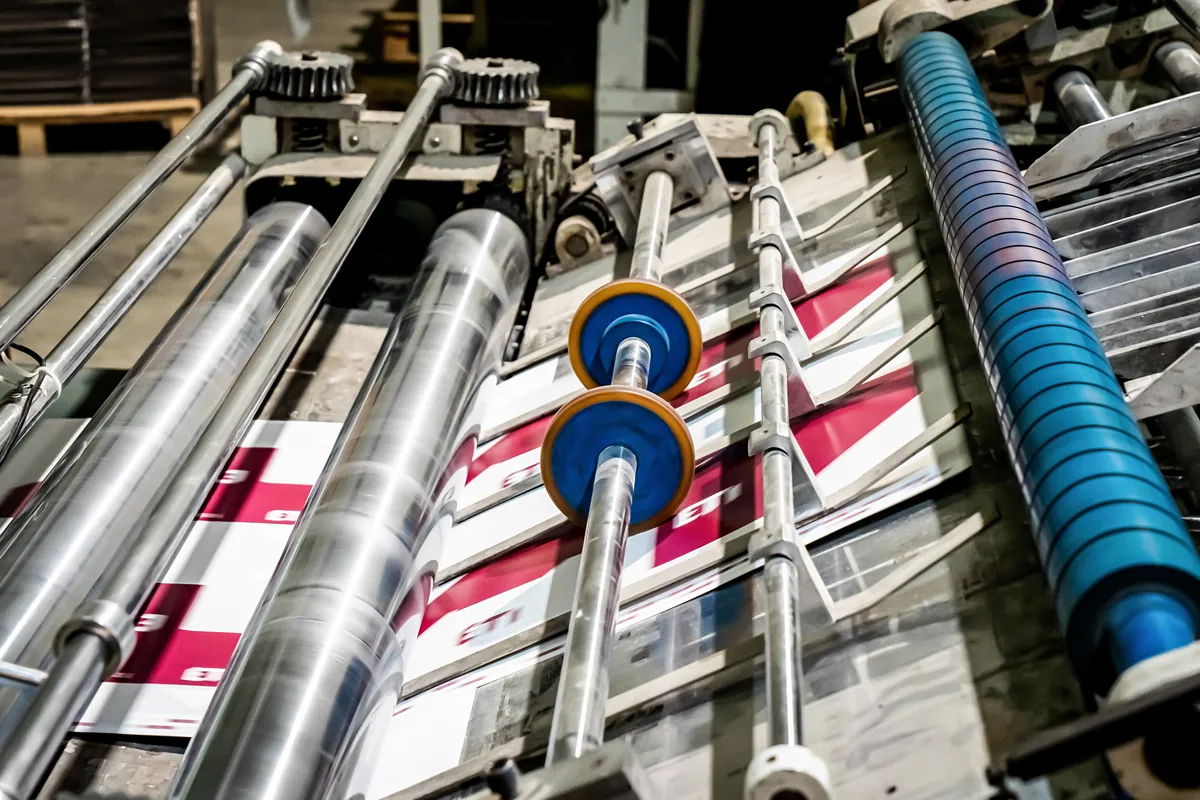 Flint Group says it develops ink systems tailored for specific regulatory requirements.Flint Group further outlines that the overall direction for packaging regulations is trending toward stricter requirements and a broader scope. “We are often seeing customers looking for solutions that can work across multiple markets.”
“However, such solutions are difficult to find when regulations continue to vary by region in terms of how materials are defined and restricted,” Young continues.
At the same time, the number of approved raw materials is gradually decreasing as more substances come under review, she adds. “This trend is resulting in fewer available chemical tools for ink formulators to meet technical demands for effective packaging solutions. Continued innovation will be required to develop alternatives that offer high technical performance while aligning with regulatory expectations.”
Looking ahead, Young says that closer collaboration between industry and regulators will be essential to continue supporting consistency and clarity. For the ink company, this means continuing to invest in regulatory expertise and innovation, ensuring that it can anticipate change and help to guide practical pathways forward for the packaging industry.
“We treat regulation as a launchpad for innovation rather than a barrier. Regulatory change may introduce complexity, but it can also provide a starting point for advancing ink technology and strengthening collaboration across the value chain,” she indicates.
“Our regulatory and R&D teams work in close partnership to ensure that new solutions meet current requirements while also being resilient to upcoming changes.”