



Carbios and Wankai partner on major PET biorecycling expansion in Asia


Key takeaways
- Carbios and Wankai will build a €115 million (US$134 million) PET biorecycling plant in China, with construction starting in 2026 and operations in 2027.
- Wankai will hold 70% ownership and receive exclusive rights to license Carbios’ PET biorecycling technology in Asia for three years, extendable based on additional capacity commitments.
- The partnership marks an expansion of large-scale PET biorecycling in Asia.
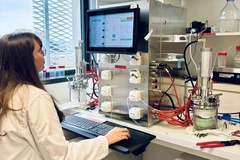 (All image credits: Carbios).
Carbios and Wankai New Materials (Wankai) are partnering to build and run a PET biorecycling plant in China. The construction value is estimated at €115 million (US$134 million).
The companies signed a definitive agreement this week, establishing a strategic partnership for the large-scale deployment of Carbios’ PET biorecycling technology in Asia. The first step is the construction of a PET biorecycling plant in China.
Wankai is a listed subsidiary of Zhink Group, the third-largest PET producer in China and fourth-largest globally.
“The signing of this agreement marks the achievement of a major strategic partnership with Zhink Group. We are taking a decisive step forward to accelerate the international deployment of our technology, a key innovation in the fight against plastic pollution,” says Vincent Kamel, CEO at Carbios.

“This is a major milestone in bringing our licensing model to life: together, we will help build a more sustainable future.”
Construction begins next year
The facility will hold a processing capacity of 50,000 metric tons of PET waste. It will be located in Haining, Zhejiang province. The site is provided by Wankai, which is already equipped with infrastructure, such as equipment and waste treatment, reducing the investment cost.
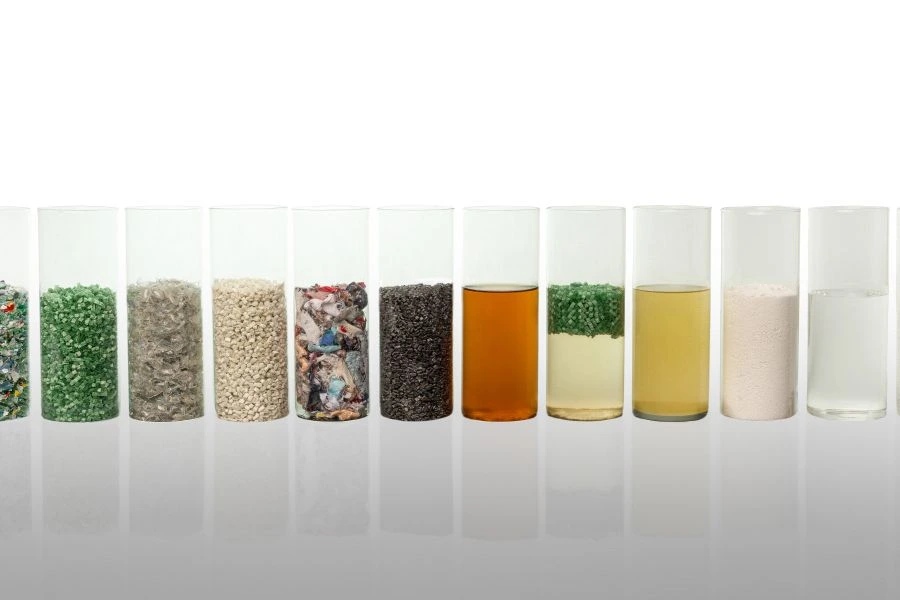 Carbios’ full PET biorecycling process.
Construction is said to begin in the first quarter of 2026, with commissioning targeted by the first quarter of 2027.
Wankai will be the majority shareholder, with a 70% stake, while Carbios will hold the remaining 30%, according to the companies. The financing of the plant’s construction will reportedly be covered 30% by equity and 70% by debt, with all debt guaranteed by Wankai.
Packaging Insights recently interviewed Goutham Jain, the director general at India’s Association of PET Recyclers Bharat. We discussed how legislation has successfully boosted India’s PET recycling industry, accelerating food-grade usage and recyclate exports.
PET recycling news
Carbios and Wankai furthermore plan to build and operate several PET biorecycling plants in Asia.
Carbios agrees to exclusively license its PET depolymerization technology in Asia to Wankai for three years, “subject to signing licenses with the latter for at least 100 kt per year of additional capacity,” according to the biotechnology company.
The term will be extended in five-year increments if additional licenses for at least 200 kt per year of extra capacity are signed, says Carbios.
Earlier this year, Birch Biosciences, an AI-driven plastic recycling technology start-up, entered a global patent license agreement with the US Department of Energy’s National Renewable Energy Laboratory to expand its enzymatic deconstruction technology that breaks down PET.
Meanwhile, Avery Dennison launched “the first” RFID label recognized for PET recycling, and Recoup provided market and policy insights to PET recycler Enviroo for its recycling plant in England.