

IFCO and Whole Foods Market expand reusable packaging to cut cardboard waste

Key takeaways
- IFCO and Whole Foods Market are expanding reusable packaging across the retailer’s US fresh produce supply chain.
- According to IFCO, the partnership has helped eliminate nearly 4 million pounds of cardboard waste since 2022.
- IFCO’s reusable crates are collected, washed, and sanitized for repeated use.
The International Food Container Organization (IFCO) has strengthened its partnership with Whole Foods Market to expand reusable packaging throughout the grocery retailer’s fresh produce supply chain in the US.
The program, launched in 2022, is said to have helped eliminate nearly 4 million pounds of cardboard waste since its start.
Kaity Robbins, senior program manager for Diversion at Whole Foods Market, says: “When we stop treating waste as an inevitable byproduct and start seeing it as a signal of inefficiency or untapped value, we unlock a different set of outcomes.”
“By working with collaborators to design waste out of our operations and create systems that keep resources in circulation, operational efficiency and sustainability can become the same goal.”

Cutting single-use packaging waste
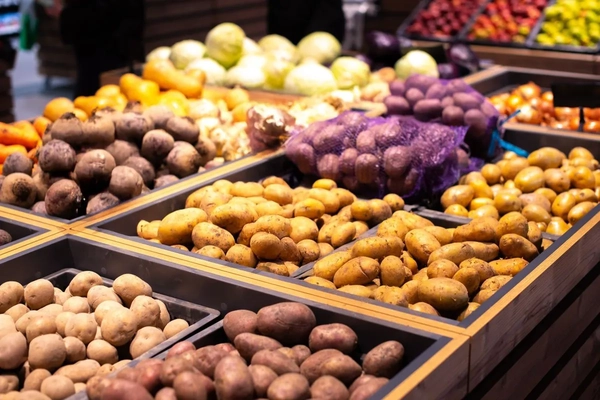
Whole Foods Market and IFCO introduced a pilot replacing single-use cardboard boxes with reusable crates for potatoes, onions, carrots, and root vegetables. After the pilot, Whole Foods Market entered into an agreement with IFCO to expand the program across their supply chain and convert additional fresh produce products into reusable packaging containers (RPC).
According to IFCO, the partnership has led to a 1,000% increase in the use of IFCO reusable packaging within the Whole Foods Market supply chain. The organization shares that instead of discarding single-use packaging, IFCO collects, washes, and sanitizes crates before they are returned to the supply chain. At end of life, the crates are then recycled into new reusable packaging containers, reducing reliance on one-way transport packaging.
IFCO also highlights that its RPCs are developed to protect fresh produce during transportation and handling and assist in maintaining product quality as fresh fruits and vegetables move through the supply chain.
Jon Brooks, senior VP for Sales at IFCO North America, says: “The growth of this program shows what can be achieved when retailers, suppliers, and packaging partners work together toward a shared goal. We’re proud to support Whole Foods Market as it continues to scale reuse across its supply chain and turn its sustainability commitments into measurable action.”
Previously, IFCO provided Latvia-based Rimi, a Baltic region retailer, with its RPCs, replacing one-way cardboard boxes previously utilized for 95% of its fresh fruit and vegetable flows. The remaining 5% replace rigid crates.
The organization also expanded its support for FareShare and The Felix Project, two food redistribution charities in the UK, to facilitate healthy fresh food delivery to people in need.