




Japan urged to strengthen packaging circularity policies, shifting from disposal to design


Key takeaways
- Stronger policy incentives are needed for packaging waste prevention, reuse, and higher material circulation in Japan.
- AI can help optimize waste collection, sorting, and monitoring, while aligned ESG investment and policy frameworks could scale recycling systems.
- Advancing circularity requires economically viable incentives and coordinated governance across stakeholders.

Policy frameworks in Japan must place stronger emphasis on packaging waste prevention, product longevity, and design for reuse and recycling — not solely on proper disposal, says Shunichi Honda, programme officer at the UN Environment Programme’s International Environmental Technology Centre.
At SEMICON Japan 2025, Packaging Insights speaks to Honda about Japan’s waste management strategies and its potential future pathways to advance packaging circularity.
On the show floor, Honda presented how collection, sorting, and monitoring can be optimized using AI, and highlighted how ESG investment can scale safer national recycling.
He argues that waste pollution could be tackled through the integration of AI, alongside the development, revision, and strengthening of relevant laws and policy frameworks.

“In my view, advancing circular economy practices in Japan requires moving beyond a focus on end-of-pipe solutions and strengthening incentives across the entire value chain,” says Honda.
Efforts and challenges
Honda shares that Japan has invested heavily in intermediate treatment infrastructure, particularly thermal treatment with energy recovery, which can be used for packaging waste. “It has helped reduce landfill dependency.”
“Japan’s waste management system is often seen as technically advanced and operationally reliable. Collection coverage is high, illegal dumping is relatively rare, and waste separation at the household level is deeply embedded in daily life.”
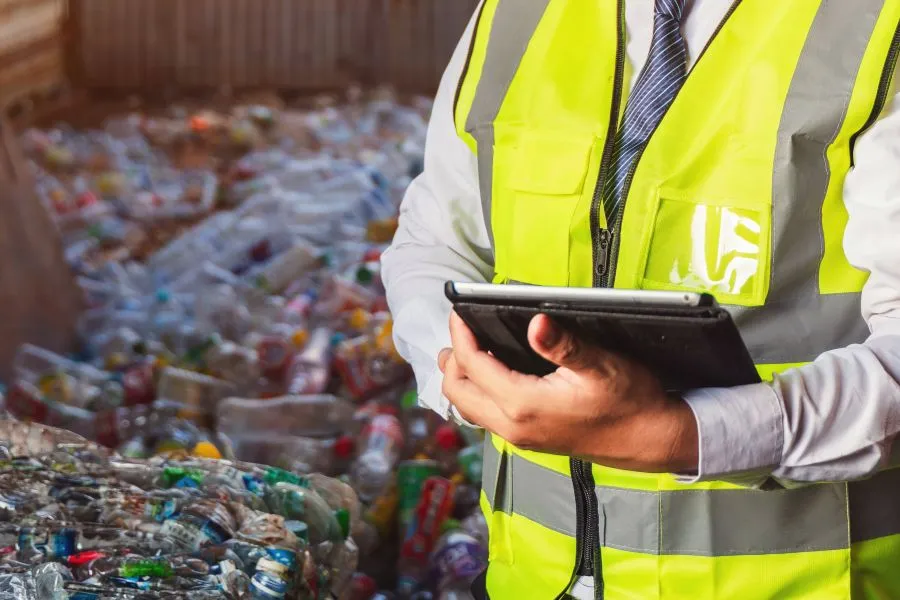 The application of AI technology in waste sorting could enhance solid waste management efficiency.“At the same time, Japan faces several structural challenges. Material circulation rates remain modest compared to policy ambitions, and the system still relies significantly on incineration rather than upstream waste prevention.”
“Demographic change, especially an aging population and declining workforce, is placing pressure on municipal waste services. In addition, global disruptions have exposed vulnerabilities in recycling markets, reminding us that even well-organized systems must continuously adapt.”
Economic rationality
Honda highlights that circular practices will scale only if they are economically rational for businesses and local governments.
According to the program officer, critical economic signals include “clearer market incentives for secondary materials, better alignment between environmental policy and industrial policy, and support mechanisms for small and medium-sized enterprises that often drive practical innovation but face higher risks.”
“Equally important is governance. Circular economy transitions depend on coordination across ministries, municipalities, industries, and consumers. Transparent data, shared responsibility, and long-term policy consistency help build confidence for investment and innovation.”
“Ultimately, the circular economy is not just a technical agenda but a societal choice. Policies work best when they reinforce a shared understanding that resource circulation is part of long-term economic resilience and competitiveness,” concludes Honda.