

Lion pilots digitally tracked returnable beer bottles in New Zealand


Key takeaways
- Lion is piloting a digitally tracked returnable crate and bottle system for Steinlager at 48 Super Liquor stores in Auckland, New Zealand.
- The system removes the traditional deposit model, allowing consumers to borrow and return crates and bottles.
- The returnable glass system, evaluated by Toitu Envirocare, has the potential to slash overall carbon emissions by 64% over its entire lifecycle?.
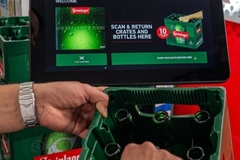 (Image credit: Lion).
Lion, a beverage company headquartered in Sydney, Australia, has begun piloting a returnable crate and bottle system for Steinlager, a lager-style beer, in New Zealand.
Lion says it is “the first in the world” to successfully combine circular beer bottles and digital tracking. The pilot is developed to modernize the classic Kiwi Swappa Crate by eliminating the deposit and adding digital tracking to help consumers manage reusable bottles easily.
The pilot is now available at 48 Super Liquor stores across Auckland, New Zealand.
John Steiner, strategy director at Lion, says: “To scale and modernize the traditional circular beer bottle model, we had to tackle several challenges. By digitizing and simplifying borrowing and returns, removing the need to pay a deposit, and updating the format to 330 mL bottles, we’ve reimagined the experience for consumers.”
Improving circular model
Lion says its new returnables scheme functions like a library system for beer, instead of purchasing the crate and the bottles, consumers borrow and return them.
Under the new system, consumers complete a one-time in-store registration using their name and phone number, then receive a barcode to manage crate checkouts and returns. The digital tracking is said to enable Lion to monitor the crates in circulation while keeping the experience fast at the checkout.
Lion collaborated with Datacom to help create the technology platform underpinning the pilot. “We’re collecting data, understanding behaviors, and continuing to refine the experience. The long-term ambition is to understand how a system like this will work at scale across New Zealand,” says Steiner.
The system also introduces a smaller 330 mL bottle format, different from traditional 745 mL Swappa beer bottles. The new packaging aims to better suit modern drinking occasions and consumer preferences.
Lion says the durable returnable bottle is designed to withstand repeated reuse cycles, alongside crates made entirely from recycled plastic.
The Auckland pilot is being treated as a “test and learn” phase, engineered to navigate how consumers engage with the system in real-world conditions before considering broader expansion, according to the company.
Evaluated by Toitū Envirocare, the new returnable glass system could cut lifecycle carbon emissions by 64% compared with Lion’s existing single-use cans and bottles.