


China enforces express delivery packaging rules to reduce waste


Key takeaways
- China’s first mandatory national standard targeting excessive packaging in express delivery came into force on July 1, setting limits on packaging layers and sealing tape use.
- The rules aim to reduce disproportionate parcel sizes, prevent small items from being shipped in oversized boxes.
- Chinese pickup station operators say excessive packaging adds waste-management pressure, as customers often leave cardboard, bubble wrap, and plastic bags behind.

China’s first mandatory national standard targeting excessive packaging in express delivery, the Requirements for Restricting Excessive Packaging in Express Delivery, came into effect on July 1.
The new national standard sets key indicators for the size and suitability of express packaging boxes, the number of packaging layers, and the amount of sealing tape used, defining the baseline requirements for limiting excessive packaging in express delivery, including e-commerce parcels.
A cap has been placed on express packaging layers, limiting non-fragile items to a maximum of two layers and fragile goods to no more than four.
Mu Yan, a community parcel pickup hub operator in Shenzhen, China, tells Packaging Insights: “Previously, excessive packaging for large products could significantly increase the overall volume of a single parcel.”
“On shelves where parcel pickup hubs have a fixed space, excessive packaging disproportionately consumes allocated shelf space. This disruption to the established category layout reduces total inventory capacity.”
Targeting logistics efficiency
The updated national standard also mandates a reduction in overall tape consumption while promoting the adoption of eco-friendly alternatives. It also establishes an upper limit on the width for sealing tape used in express delivery services.
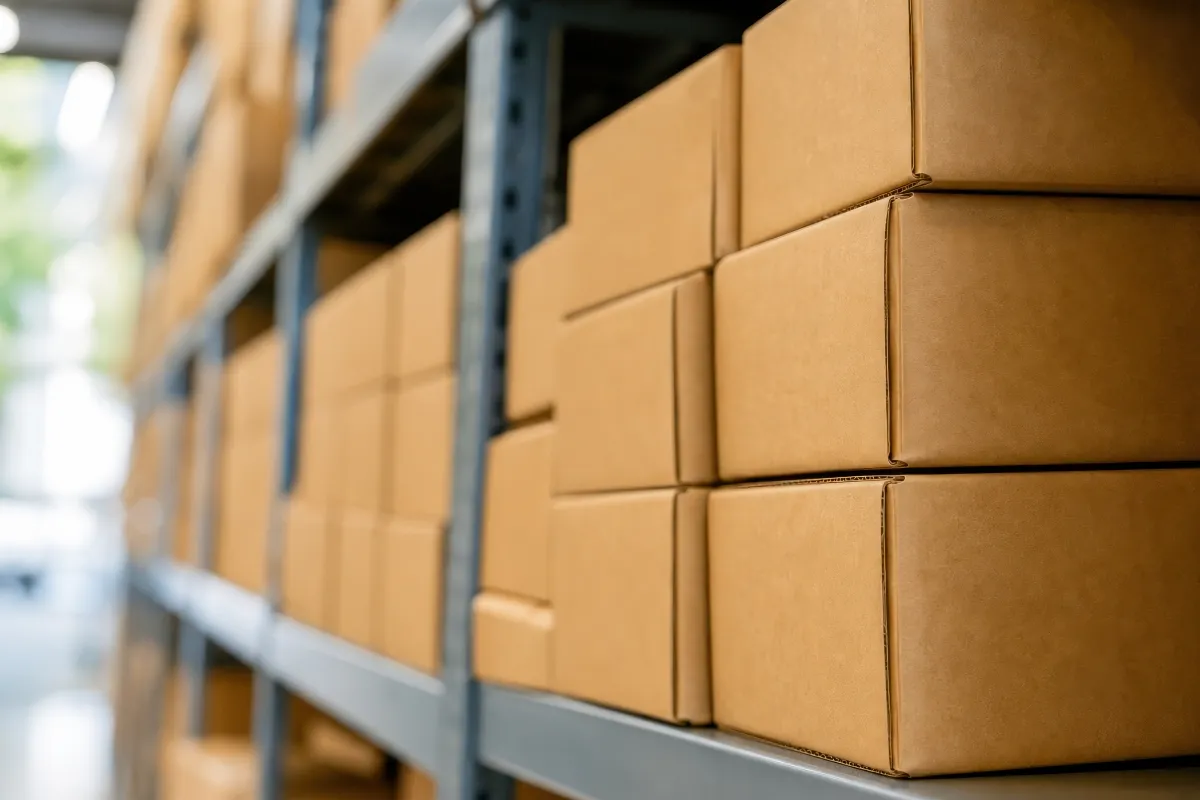 The standard requires packaging boxes to be right-sized to the contents, helping reduce waste and improve delivery efficiency.
The standard requires packaging boxes to be right-sized to the contents, helping reduce packaging waste and improve delivery efficiency.
Kafan Chen, a parcel pickup station manager in Fujian Province, China, tells us: “Cardboard boxes wrapped in thick layers of tape can hinder barcode scanning, which is essential for shipping, transportation, and logistics in the parcel delivery system.”
“The thick tape covers the QR code or courier barcode, making it impossible to scan, so staff have to manually peel off the tape. If the package is sealed too tightly, it is also difficult for pickup stations to promptly detect damage or missing items when registering it into storage.”
Furthermore, the standard aims to prevent small items from being packed in oversized boxes. The ratio of the weight or volume of packaging materials to the contents should be kept within a reasonable range.
Yan says that each community pickup hub handles boxes removed by consumers on-site differently. “A waste collector from the community assists me with the cardboard boxes. However, other excessive packaging materials removed by consumers are placed directly in the recycling bin, as my station does not have the space to store them.”
“Many customers open their parcels on-site at the pickup station every day. Most people leave cardboard boxes, bubble wrap, and plastic bags in the store after unpacking, while only a small number take the packaging away themselves,” shares Chen.
“The pickup station sorts and reuses some of the cardboard boxes and bubble wrap for packaging, but the remaining unusable packaging waste has to be handled by the station itself, adding extra workload.”
The State Post Bureau of China recently shared that the nation’s express delivery industry has made “steady progress” in reducing packaging waste and carbon emissions one year after a revised regulation on express delivery services took effect.