
Mycelium-based protective packaging could replace polystyrene, UK scientists say

Key takeaways
- UK scientists have secured £1.4 million to develop mycelium-based protective packaging as an alternative to EPS.
- The research will focus on improving moisture resistance, durability, and impact absorption while retaining the material’s biodegradable properties.
- Industrial partner Magical Mushroom Company will lead manufacturing trials to assess production consistency, scalability, energy use, and costs.
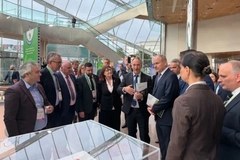
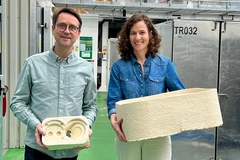 (All image credits: University of Nottingham).
Conventional expanded polystyrene (EPS) can pose challenges due to its fragmentation into microplastics, limited recyclability, and the fact that it is based on petroleum-based feedstocks, according to UK-based scientists who are developing an alternative from mycelium.
“Polystyrene protects much of what we buy online, but it lingers in the environment for centuries,” comments Almudena Ortiz-Urquiza, assistant professor in Horticulture at the School of Biosciences, University of Nottingham.
“Fungi can grow packaging from farm waste that does the same job and returns to the soil. Our challenge is to make it light, tough, and water-resistant enough to replace polystyrene in everyday use.”
The University of Nottingham has now secured funding of £1.4 million (US$1.9 million) for the two-year research partnership with Swansea University, the University of Bath, and industrial partner Magical Mushroom Company (MMC) to develop mycelium-based protective packaging.

The UK governmental agency Engineering and Physical Sciences Research Council is also supporting the project with technical expertise, staff, and manufacturing facilities, through its Materials Innovation Partnerships program.
According to the University of Nottingham, the project also responds to the UK’s tax on packaging made from virgin plastic.
Engineering functionality
The material and engineering research partners have set out to develop packaging surface treatments without fluorine to improve moisture resistance, surface durability, and resistance to biological deterioration.
The resulting material also needs to maintain mycelium’s biodegradable properties, the researchers elaborate. They will examine how a composite’s structure affects its ability to absorb impact and withstand repeated loading, while maintaining performance.
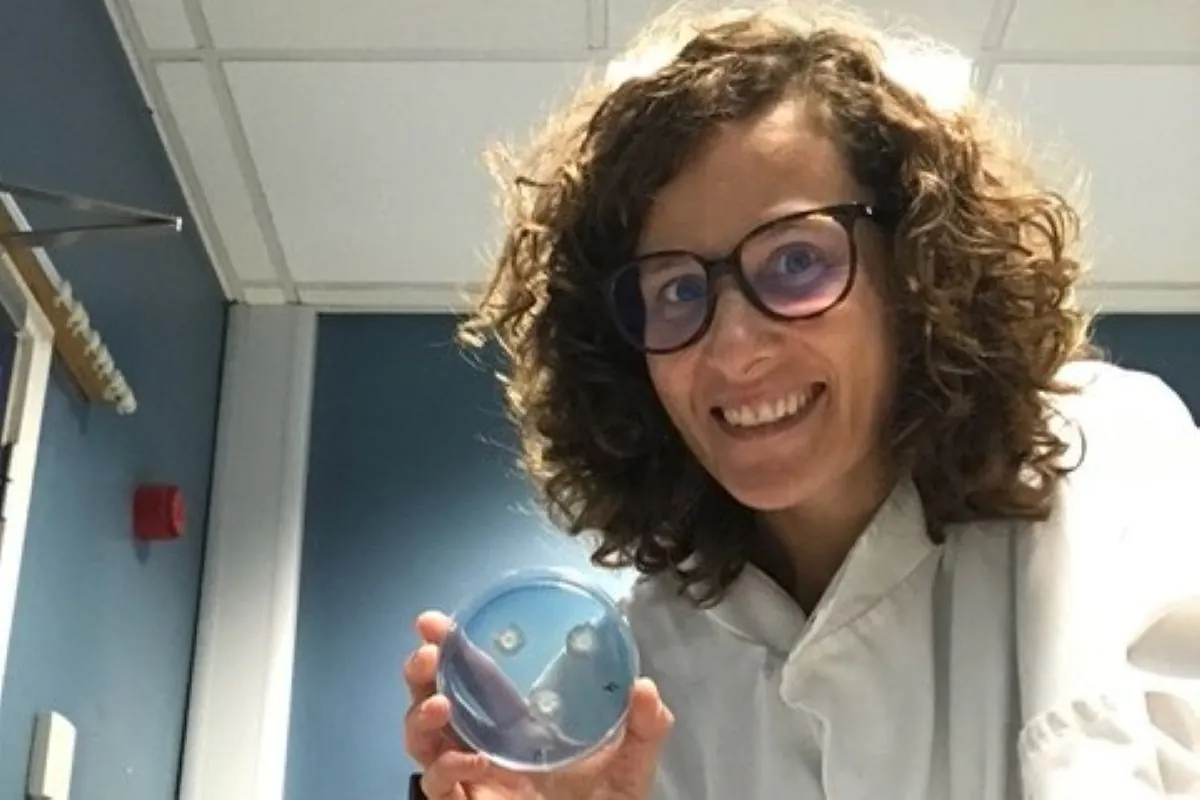 Almudena Ortiz-Urquiza, assistant professor in Horticulture in the School of Biosciences at the University of Nottingham.Dr. Shirin Alexander, associate professor and Head of the Department of Chemistry at Swansea University, says: “Swansea University is leading the work package focused on developing sustainable and robust coatings for mycelium-based packaging materials.”
“Working alongside professor Davide Deganello from Mechanical Engineering and professor Tariq Butt from Biosciences, we are combining expertise in materials chemistry, engineering, and biological systems to create environmentally compatible coatings that enhance durability and moisture resistance while maintaining the sustainability credentials of these innovative packaging materials.”
Dr. Juliana Calabria-Holley, associate professor and co-director of the University of Bath, adds: “By harnessing mycelium, a natural biodegradable polymer, My-Pack will develop high-performance, durable protective packaging for a range of consumer products.”
“At the University of Bath, we will apply our expertise in the structure-property characterization of porous biomaterials to optimize strength, water resistance, and long-term durability. Using nano-scale testing, electron microscopy, and cutting-edge sol-gel surface engineering, we will help ensure that next-generation mycelium packaging is not only sustainable, but also robust, resilient, and fit for real-world applications.”
Commercializing mycelium material
Industrial partner MMC says it took part in designing the project and that it will lead the commercialization aspect of the project, alongside its technical team. The researchers are set to conduct trials within MMC’s manufacturing environment to assess consistency between batches, throughput, defects, energy use, and costs.
Paul Gilligan, founder and CEO of MMC, says: “Sustainable packaging has to prove itself beyond the brochure and AI renders. MMC operates three facilities, including two in Nottingham, supplies established commercial customers, and puts our packaging through performance testing.”
“As we scale our business, our contribution centers on our team’s expertise and manufacturing facilities. We are excited about the opportunities to contribute further as the project evolves.”
“For the first time since MMC was founded, we now have two real quality engineers working alongside our science team. The program will support our scientists and engineers with academic expertise and testing, helping us strengthen product performance and manufacturing consistency.”
Last year, Packaging Insights spoke to the CEO of Myco, a company that is developing a biocomposite material from the mycelium derived from the root-like structure of Reishi mushrooms.
We also interviewed a researcher at McMaster University in Canada about his team’s cultivation of a mushroom species for a biodegradable material suitable for use in packaging.
“Mushroom mycelium-based materials offer a sustainable and biodegradable alternative to conventional packaging materials like plastics, styrofoam, and molded fiber,” Jianping Xu, a professor of biology at McMaster University and senior author of the paper, told us.