




PE packs can lower lifecycle impact, ExxonMobil and US scientists find

Key takeaways
- An LCA of 47 packaging systems has found that replacing PE packaging with alternatives could increase GHG emissions three to four times.
- Researchers from Michigan State University, Trayak, and ExxonMobil found that PE often had lower environmental impacts than alternative materials, including paper, glass, and metal.
- The study highlights the importance of LCAs in packaging design and policy, accounting for product protection, material use, and end-of-life management.
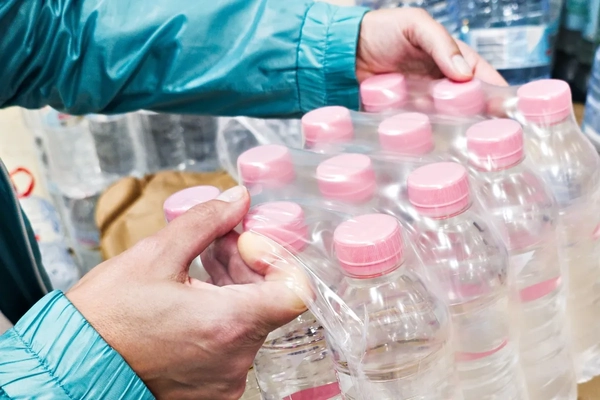
Research evaluating five common packaging applications and 47 packaging systems has found that PE can “often” lower environmental impact across a product’s full lifecycle. The study was conducted by researchers at Michigan State University, Trayak, US, and ExxonMobil, one of the world’s largest oil and gas companies.
“In many cases, the greatest contribution to the potential environmental impacts of packaging materials arises from raw material extraction, production, and conversion into finished packaging,” Rafael Auras, co-author and a professor at the Michigan State University School of Packaging, tells Packaging Insights.
“However, environmental performance also depends on material selection, packaging weight, manufacturing processes, transportation, and end-of-life management.”
The study, published in Environmental Impact Assessment Review, outlines that single-use PE formats had lower environmental impacts than most reusable formats. Glass and metal reusable formats had lower impacts than their single-use options. And pyrolysis-derived PE had similar or lower impacts than virgin PE, according to the research.
The authors of the paper call for robust LCAs in packaging development to inform decision-making and regulation development.
The research initially scaled the analysis to the hypothetical replacement of approximately 3 million metric tons of annual PE packaging demand in the US with alternative materials, including paper, glass, and metal.
Their results suggest that switching from PE packaging to an alternative could increase GHG emissions three to four times, while resulting in up to five times higher acidification impacts and as much as 29 times higher freshwater eutrophication impacts.
The PE packaging alternatives investigated by the scientists were further shown to require more water, land, and other resources.
The research team emphasizes that their findings apply to the applications, indicators, and assumptions they evaluated, and should not be understood as PE being preferable in every application.
Product protection is key
 Rafael Auras, co-author and a professor at the Michigan State University School of Packaging (Image credit: Michigan State).Packaging systems include primary packaging, secondary packaging for distribution, and tertiary packaging for transportation. The research team argues: “The most optimized primary packaging isn’t necessarily wrapped in the most optimized secondary or tertiary packaging.”
“Adding these components can sometimes reduce or even reverse the differences between primary packaging options.”
Auras tells us that packaging must be evaluated based on its intended function, including product protection and preservation. “Reducing packaging material does not necessarily result in a more sustainable packaging system if it compromises performance or increases product losses.”
“Companies should optimize packaging design to minimize material use while maintaining product protection, considering the environmental impacts of the entire product–packaging system,” he asserts.
Auras adds that his team’s findings suggest that policies promoting packaging reuse, recycling, and recycled content should consider the potential environmental impacts across the entire packaging lifecycle rather than focusing solely on material circularity.
A recent study funded by the South Korean Government similarly found plastic drinking straws to have a higher environmental impact across the entire product lifecycle.
“The environmental benefits of these strategies depend on factors such as collection and recycling efficiency, material quality, transportation, and the number of reuse cycles,” Auras continues. “LCAs can help guide policies toward solutions that deliver measurable environmental benefits while maintaining packaging functionality.”
He says that LCAs should guide packaging design and material selection to identify environmental trade-offs and ensure that proposed changes deliver measurable reductions in the potential environmental impact of the entire product–packaging system.
“Decisions should be based on scientific evidence rather than assumptions about the sustainability of individual materials or packaging strategies.”