

Malaysia launches reverse vending machines at transit hubs to boost recycling

Key takeaways
- Prasarana Malaysia has introduced RVMs at high-traffic LRT stations to promote recycling.
- The machines, including Klean and Atlas Ecopod, offer rewards for recycling plastic bottles and aluminum cans.
- Prasarana is open to strategic partnerships and private sector sponsorships to expand the installation of RVMs.
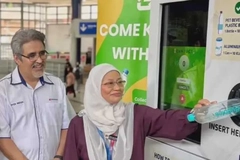
Prasarana Malaysia Berhad, a wholly-owned government entity that operates the urban public transportation in Malaysia, has introduced reverse vending machines (RVMs) to recycle used bottles and cans at selected Light Rail Transit (LRT) stations.
High-traffic stations such as Masjid Jamek and Kuala Lumpur City Centre were selected for the initial phase due to their strategic locations and high passenger volumes. The implementations are said to be in line with Prasarana’s sustainability roadmap, which targets a bottle and can recycling rate of 30% by 2030.
Idzqandar Abu Bakar, chief health, safety, security, environment and sustainable development officer at Prasarana Group, says: “This approach not only simplifies the recycling process, but also encourages positive behavioral change through the use of smart technology and reward systems. It also supports Prasarana’s efforts to build a more sustainable public transport ecosystem.”
Data-driven machines
Klean is one of the newly introduced machines. It is an AI-driven RVM designed to accept plastic bottles and aluminum cans. Users earn points through the Klean mobile application, which can be redeemed for vouchers from partner merchants, including Zus Coffee, Grab, and Jaya Grocer.
The Atlas Ecopod, which is recognized by Guinness World Records as the world’s thinnest RVM, has also been introduced. The RVM is paired with an Atlas vending machine. After recycling, users can receive instant digital rewards that can be redeemed at the adjacent vending machine.
The machines utilize data-tracking systems to monitor user engagement levels and the volume of recyclable materials collected.
According to Prasarana, it welcomes strategic collaborations and private sector sponsorships for the installation of RVMs at select rail stations.
Southeast Asian countries are actively working to reduce plastic packaging waste generation. Last year, the Vietnam National Plastic Action Partnership and the Norwegian Embassy in Vietnam conducted a study to explore the feasibility of implementing a national DRS and installing RVMs.
Meanwhile, Singapore will launch its Beverage Container Return Scheme on 1 April 2026. It will place a S$0.10 (US$0.07) refundable deposit on plastic bottles and metal cans, which consumers can reclaim by recycling empty beverage containers at RVMs.