


Global efforts to limit packaging waste pollution struggle at UNEA-7 but 2026 holds promise

Key takeaways
- UNEA-7’s outcome on pollution was diluted, with some progress on chemicals and waste management, but limited ambition.
- Despite setbacks, signs of hope for global plastic pollution action in 2026, with commitments to legally binding treaties.
- Growing public concern about pollution, particularly plastics and toxic chemicals, is driving industry change toward sustainable practices.
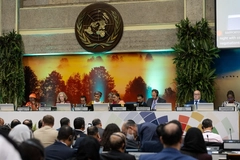 Image credit: UNEP.
The seventh session of the United Nations Environment Assembly (UNEA-7) took place in December 2025, resulting in the adoption of 11 resolutions and three decisions on climate change, pollution, and the circular economy.
Themed “Advancing sustainable solutions for a resilient planet,” the event discussed efforts to tackle waste, including from packaging, but the Center for International Environmental Law (CIEL) says “the resolution’s ambition was watered down during the negotiations.”
Packaging Insights speaks to Giulia Carlini, senior attorney and environmental health program manager at CIEL, who attended UNEA-7 at the UN Environment Programme (UNEP) headquarters in Nairobi, Kenya.
“UNEA-7 adopted a specific resolution on chemicals and waste. The resolution focuses on strengthening and building upon ongoing international work in several areas — including further work on certain heavy metals (lead, cadmium, arsenic, and organotins),” says Carlini.
She adds that policymakers made progress toward finalizing the long-anticipated update to the WHO–UNEP State of the Science report on endocrine-disrupting chemicals (EDCs).
Legislators also advanced discussions on the future operationalization of the Intergovernmental Science-Policy Panel on Chemicals, Waste and Pollution, which will meet for the first time in February.
“Unfortunately, the resolution’s ambition was watered down during the negotiations, and it represents only a baby step compared to the massive amount of work needed to address the toxic production, consumption, and pollution that are continuing to make people sick and poison the environment.”
“We witnessed watered-down language in virtually all negotiated documents. As denounced by CIEL, the tactics to derail and obstruct negotiations had a strong impact in preventing stronger measures that could otherwise move the global community toward effectively addressing the planetary crises.”
2026 signs of hope
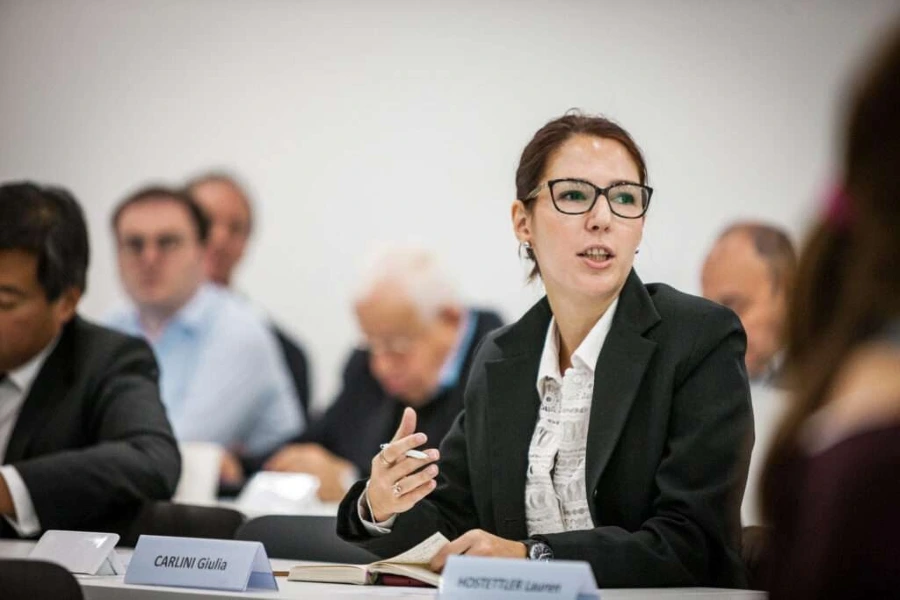 Giulia Carlini, senior attorney and environmental health program manager at CIEL (Image credit: CIEL).Concerning global legislation on plastic pollution, Carlini says CIEL sees “signs of hope for 2026.”
“Ministers of environment adopted a Ministerial Declaration recalling the UNEA-5.2 mandate to develop an international legally binding instrument on plastic pollution.”
The international group of ministers has now reaffirmed their “shared commitment to continue engaging constructively and actively, and with a sense of urgency and solidarity, in seeking to develop a fair, effective, balanced, and ambitious international legally binding instrument.”
“The majority of states engaged in attempting to secure “progressive and equitable action,” says Carlini.
However, progress was “repeatedly blocked” by “some of the same obstructionist tactics, and member states that we have observed over the years in international negotiations, including on the plastics treaty, chemicals, and climate.”
“In parallel to UNEA-7, we have seen many member states, civil society, and rightsholders engage in vibrant exchanges in side events and in the hallways over the implementation of existing agreements — including the chemicals and waste conventions — as well as on renewing the momentum over the plastics treaty’s future negotiations.”
“Policy discussions are laying out the foundations of potential future controls: this year, we are expecting several international meetings that can advance future rules.”
The upcoming discussions will cover the potential future action on plastic waste under the Basel Convention, a resumed session of the plastics treaty negotiations, and a PFAS report from the UN Special Rapporteur on toxics and human rights.
Also forthcoming is the WHO and UNEP’s updated report on the state of the science on EDCs, as well as the first sessions of the Intergovernmental Science-Policy Panel on Chemicals, Waste, and Pollution, and the Global Framework on Chemicals.
It is expected that key jurisdictions, such as the EU, will continue to advance chemical regulation, setting an example for other countries, according to Carlini.
Growing pollution concerns
.webp) CIEL calls on packaging producers to invest in designing products that are toxic-free and long-lasting.It is a challenging period for countries to agree on ambitious global rules but people’s awareness of “the plastics crisis and its toxic chemical impacts” keeps growing, says Carlini.
CIEL calls on packaging producers to invest in designing products that are toxic-free and long-lasting.It is a challenging period for countries to agree on ambitious global rules but people’s awareness of “the plastics crisis and its toxic chemical impacts” keeps growing, says Carlini.
“Nobody wants to see their kids getting sick from toxic products, air filled with microplastics, and by corporations and brands that put their profit over people’s health.”
“Winds of change are blowing, and producers, including packaging producers, should invest in designing and manufacturing products that are toxic-free and long-lasting, from cradle to grave, and don’t harm people’s rights, the environment, and future generations in the making.”
She notes that funding the implementation of the chemicals and waste legal instruments has historically been a challenge. The chemicals and waste resolution adopted at UNEA-7 includes paragraphs encouraging member states to continue to provide and mobilize scaled-up means of implementation for developing countries and to invite the private sector to contribute to this effort.
The adopted resolution also invites the Global Environment Facility “to consider the need for the sound management of chemicals and waste, as such hazardous chemicals and waste have serious impacts on human health and the environment.”