
Rice University touts Nivera edible coating that tackles food waste

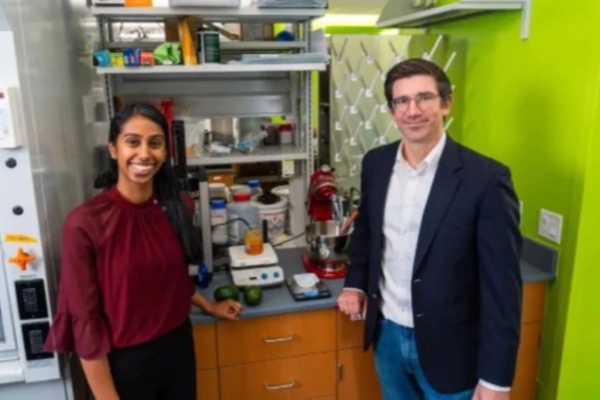
Nivera has developed an edible coating for fresh produce packaging, said to expand shelf life and reduce food waste. Neethu Pottackal founded the start-up Nivera based on her doctoral research project conducted at Rice University in the US.
The technology aims to slow ripening and spoilage processes using a thin, edible coating from naturally derived ingredients, such as proteins and fibers. Some are from agricultural by-products. According to Nivera’s testing, the coating can nearly triple the shelf life of certain fruits and vegetables.
“Anybody who’s bought a box of strawberries or an avocado can relate to it going bad before they can even eat it,” Pottackal says. “It points to a massive problem of food waste as well as access to fresh food.”

Rice University highlights that Nivera’s technology is based on Pottackal’s interdisciplinary research at the institution, where she collaborated with Rice co-advisers Pulickel Ajayan, professor of engineering, and Daniel Preston, assistant professor of mechanical engineering.
The resulting coating is said to offer a protective barrier that addresses three significant causes of spoilage: moisture loss, oxidation, and microbial growth. Its plant-based matrix and other natural components contribute to mechanical stability and antimicrobial properties, according to Rice University.
“Working at the intersection of materials science and mechanical engineering, we’re able to approach this problem from different perspectives. We’re looking at not only the materials but how they interact with each other,” Pottackal continues.
Packing produce
Nivera indicates that it is initially focusing on “high-value” fresh produce, such as avocados and berries. Extending the shelf life of these fruits could offer significant economic benefits, according to the start-up. It has already rolled out tests with avocados, showing “significant increases in shelf life.”
Preston points to a “substantial problem in food production and distribution,” adding that his research alongside Pottackal can address it. He says that according to the UN Environment Programme, more than one billion metric tons of food waste is thrown out globally each year.
He comments: “We’re targeting keeping fruits and vegetables fresher for longer so that they can last all the way from harvest to packaging, transit, and supermarket shelves before the consumer can finally purchase and consume them.”
Meanwhile, Pottackal explains that her research and interest in food science were in part shaped by her experiences facing severe food allergies and growing up in different countries and cultures. She received complementary expertise from two Rice laboratories for her doctoral work.
In particular, Ajayan’s materials science research guided the coating’s formulation, while Preston’s mechanical engineering lab provided expertise in spray-coating applications and translating laboratory discoveries into practical technologies, according to Rice University.
Set to scale
Rice University says that its entrepreneurship ecosystem helped Pottackal explore the technology’s potential beyond the lab and for commercial application, and Rice helped her make that transition. She participated in the Liu Idea Lab for Innovation and Entrepreneurship’s Innovation Fellows program and the Rice Venture Scholars initiative.
She also c consistent performance and economic value beyond the lab.
In similar developments, Notpla recently provided its edible Ooho packaging technology to smoothie maker Innocent. Each Ooho package contains 12 mL of Innocent’s Fiery Ginger shot in a thin seaweed-based membrane.
https://www.packaginginsights.com/news/notpla-and-innocent-pilot-edible-seaweed-packaging-for-ginger-shots.html
Meanwhile, Fresh Inset’s Vidre+ stickers are said to extend grape marketable life by an average of 4.95 days, as the technology helps delay stem browning, berry damage, and decay across multiple grape varieties, storage conditions, and packaging formats.
https://www.packaginginsights.com/news/vidre-table-grape-shelf-life.html
Rice University, Nivera, Edible Coating, Food Waste, Food Waste Reduction, Fresh Produce, Shelf Life Extension, Food Packaging, Plant-Based Materials, Produce Packaging, Spoilage Prevention, Food Preservation, Packaging ompeted in university-sponsored start-up competitions, securing a US$25,000 prize at the Napier Rice Launch Challenge as well as reaching the semifinals at the Rice Business Plan Competition, winning Overall Best Elevator Pitch and the US$25,000 Energy, Cleantech, and Sustainability Prize.
Since then, Nivera and Pottackal have been selected for the 2026 Activate Fellowship, which provides more than US$300,000 in funding to support scientists and engineers commercializing promising technologies. The company also secured a US$305,000 Phase I Small Business Innovation Research award from the National Science Foundation, with Preston’s lab participating as a subawardee.
Next, Nivera aims to scale its technology and demonstrate that its coatings can deliver commercialization.